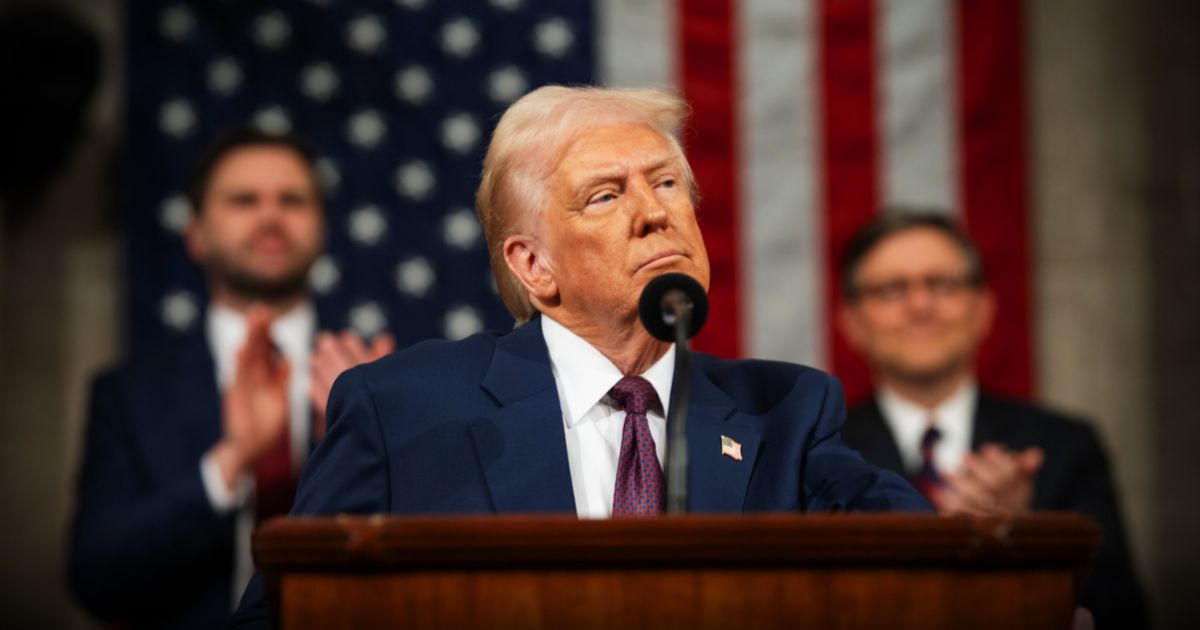
A White House official said on 29th May that President Donald Trump had called a meeting in the White House Situation Room to decide on the final approval of a deal to temporarily suspend the three-month-old Iran war but had not made a decision.
Trump earlier Friday said on Truth Social that he would be making his “final determination” during that meeting, after listing everything that Iran must do for him to approve a deal.
Trump’s post did not detail right away which of his “make or break” requirements are now being considered in a preliminary agreement for U.S. and Iranian negotiators to halt the war.
Iran “must agree” to never have a nuclear weapon, and the Strait of Hormuz must be
“immediately open” to unrestricted shipping traffic, with no tolls being imposed, Trump demanded in the Friday morning post.
He also stated that the retaliatory U.S. naval blockade against Iran in the Gulf of Oman “will now be lifted,” but he did not specify if that would occur only if the conditions he stated previously were fulfilled.
Enriched material buried at the location of the attacks on Iran’s nuclear facilities last year will be “unearthed” by the U.S “in close coordination and conjunction with the Islamic Republic of Iran, and the International Atomic Energy Agency, and DESTROYED,” Trump added.
“No money will be exchanged, until further notice,” Trump added. There have been other matters, of lesser significance, agreed.
“I will be in the Situation Room making a final decision,” he said.
Prices for oil plunged after Trump’s post.
Deal text disputes
What the deal is, isn’t specified.
Mohsen Rezaee, a member of Iran’s supreme leader’s cabinet, wrote on X that Trump was ‘betraying diplomacy’.
“By sticking to the naval blockade and imposing unjust demands in negotiations, he has once again demonstrated that negotiation is not in the cards for him and that he is looking for other goals,” said Rezaee.
Iranian state news outlet Fars, after Trump’s post on Friday, pushed back on the president’s assertion, saying it “raised issues that contradict the provisions of the agreement’s text.”
There is, however, “no such clause in the text of the agreement” despite Trump’s reference to a toll-free strait, Fars reported in a translated Telegram post, citing “informed sources.”
The draft deal that is being discussed also fails to mention Iran dismantling or destroying its nuclear material, Fars’ report noted.
The most crucial element of the deal, according to Fars, is the “immediate payment” of $12 billion of Iran’s “frozen assets.” Fars says Iran, hit by the red line, will reject any additional talks unless the payment is made.
The White House declined to comment on CNBC’s request to comment on Trump’s post and the Fars’ rebuttal.
The U.S. and Iranian negotiating teams signed a 60-day memorandum of understanding on Thursday that would continue the current ceasefire and pave the way for nuclear talks, a White House official confirmed Axios’ report.
Those restrictions would also be removed from the strait, and the U.S. would reciprocate by removing its blockade within 30 days, provided that Iran does the same.
The 60-day period will be dominated by issues of highly enriched uranium and Iran’s enrichment programs, Axios reports. The draft would also lay the groundwork for talks on sanctions lifted and frozen Iranian money released.
State of Strait
The Trump Administration’s latest move toward a U.S.-Iran peace deal is in contrast to recent economic and military tensions between the two nations, as well as the continued anti-U.S. rhetoric and posturing from Iranian officials and state media.
Kuwait, a target of Iran’s ballistic attacks, was struck by a ballistic missile and attack drones were deployed in and around the strait, the Pentagon said in a statement Thursday morning. Iranian media sources said late on Thursday local time that the Iranian armed forces shot missiles at unidentified targets.
The U.S. Treasury on Wednesday and Thursday issued fresh sanctions against Iran, including a set of sanctions against Tehran’s efforts to assert control over transit through the strait.
In a series of posts ahead of Trump’s statement Friday morning, Iranian officials seemed defiant toward the U.S., boasting about their relationships with their Middle East neighbours, including Oman, which has been the latest U.S. target of Trump’s threats.
Neutral Oman reportedly had talks with Iran over tolls for vessels transiting the vital oil-shipping route of the Persian Gulf, which has suffered an almost complete blockade by Iran since the war started.
Trump, at a Cabinet meeting Wednesday, said that “Oman will behave just like everybody else, or we’ll have to blow ’em up.” Oman was warned on Thursday by U.S. Treasury Secretary Scott Bessent that America will “aggressively target” those who “facilitate tolls” for the strait.
A social media account connected to Iran’s parliamentary speaker, Mohammad Bagher Ghalibaf, in a translated X post on Friday morning, gave a vague yet strident update on the progress of the negotiations.
“In concessions, we do not talk; we storm just as in negotiations, we let them understand.” Ghalibaf’s words said.
The post stated that they were not going to trust any guarantees or words, just action: “No action will be taken until the other side takes action.” The best man for war on the second day of an agreement is the winner.
Iran’s Foreign Minister Abbas Araghchi posted on Twitter that he spoke with his Omani counterpart, and that he expressed Iran’s solidarity with Oman in the event of threats.