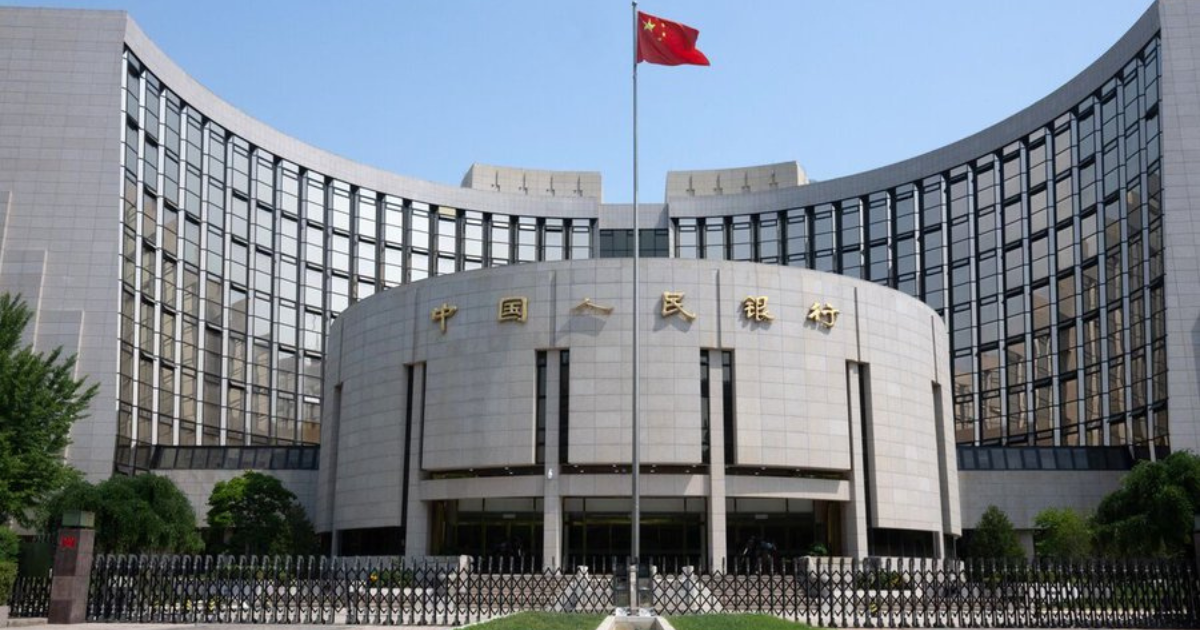
China’s central bank has given informal instructions to big state-run banks to push up their lending this month, Reuters reported. The rare “window guidance” highlights continued pressure on the economy from sluggish domestic demand while international energy prices have been soaring.
The People’s Bank of China (PBOC) cut back on money supply after the demand for both household and corporate loans unexpectedly declined in April. The contraction was the first since the central bank issued similar instructions earlier and was the biggest decrease in new yuan loans in nine months, falling short of market expectations.
Economic Pressures, Property Downturn, and Tightening Standards
China’s economy grew by 5.0% in the first quarter, which was at the high end of the annual growth band, but economic momentum is definitely on the decline in the second quarter. Household confidence has continued to be destroyed by the prolonged real estate crisis, and the lack of investor appetite has also affected private sector investments.
Moreover, the three-month-old U.S.-Israel conflict against Iran has contributed to raising energy prices noticeably. In this geo-political battle, the Chinese economy is vulnerable to the outside world at a time when domestic demand is still very weak. Technology and green energy are emerging key areas of focus for policymakers, yet the demand for credit in these areas is not yet strong enough to drive credit and lending volumes in total.
But banks are aggressively tightening their lending policies, making it even harder. Financial institutions have been forced to tighten their credit standards for small and midsize private enterprises, as well as for individual households, because of the rising default rate.
As regulators seek to promote bank lending to consumers from a low level, preventing banks from taking undue risk is a priority at this time, Xiaoxi Zhang wrote in a research note for Gavekal Dragonomics. For this reason, some banks have been buying commercial short term bills to comply with a requirement imposed by the central bank to lend.Some banks, therefore, have tried to buy short-term commercial bills to fulfil the central bank’s mandated lending targets in the face of a lack of demand in the real economy.
In spite of these issues, analysts don’t anticipate that the PBOC will adopt a sweeping policy easing, as inflationary pressures are starting to emerge. Financial News, which is managed by the central bank, asked markets to take the credit slowdown in April “rationally”. The outlet highlighted that the total social financing has remained at a reasonable level, albeit with a smaller share of traditional loans, despite the significant increase in direct financing in recent years.