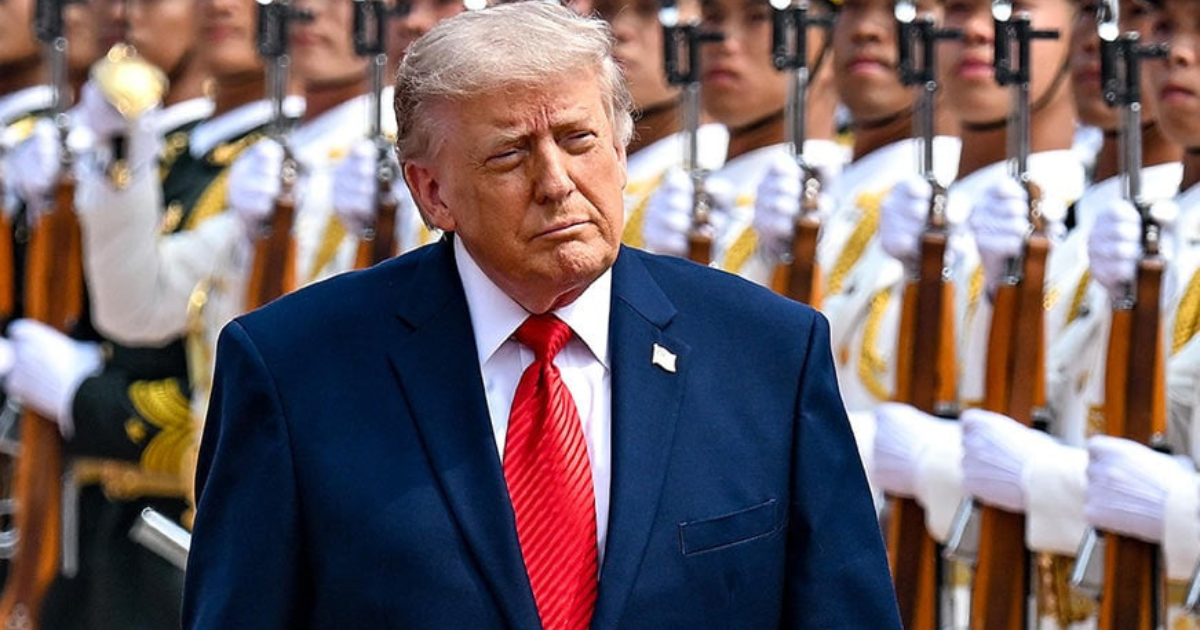
During a very high-stakes summit in Beijing, Chinese President Xi Jinping sent a sharp warning to U.S. President Donald Trump, saying mishandling disagreements over Taiwan could shove bilateral relations into an “extremely dangerous place” and basically not allow a way back.
They met for about two hours behind closed doors at the Great Hall of the People, and inside that context, the overall vibe looked rather different from what was shown publicly, with pomp and pageantry on full display, plus a lavish 10-course state banquet. Chinese state media stressed the harsh cautions about Taiwan, but the official U.S. recap of the talks sort of sidestepped it completely, choosing instead to talk about trade and the wider global energy crisis.
Tensions Over Taiwan Midst Diplomatic Pageantry
The People’s Republic of China keeps seeing the democratically governed island of Taiwan as part of its territory, and it hasn’t really ruled out using military power to push that claim. At the same time, the United States stays legally tied to give Taipei defensive backing.
U.S. Secretary of State Marco Rubio, while traveling with the president, said Taiwan was on the table during the conversations. He added that even though Beijing always brings up the same point, the U.S. stance on Taiwan hasn’t shifted, or not in any meaningful way.
Taipei then reacted to the summit, saying that China’s continuing military pressure is the real danger for regional calm. The disagreement over a pending $14 billion U.S. arms sales package for Taiwan still looks big, especially because Taiwan is the United States fourth-largest trade partner.
Still, under all those geopolitical frictions, the leaders tried to keep things kind of cooperative. And according to China’s Ministry of Foreign Affairs, trade talks held in South Korea before the summit came out balanced and positive, which helped preserve that fragile trade truce set up last October.
Trade Truces, Advanced Tech, and the Iran War Crisis
A big focus for the American side was basically to lock in economic wins, so that domestic pressure eases, because the war with Iran keeps going. The White House really wants to land big Chinese orders for Boeing planes, farm products, and energy supplies, to chip away at the long-time bilateral trade gap. And in exchange, Beijing is pushing for the loosening of U.S. export limits on advanced semiconductors and the machinery used to make chips, like chip-making equipment and all that.
The technology gap showed up pretty clearly when top U.S. executives were in Beijing, including Elon Musk, plus Nvidia CEO Jensen Huang. Even though Washington had already cleared around ten Chinese companies to buy Nvidia’s H200 AI chips, some reports say that there has not been a single delivery yet. So, cleared doesn’t mean moved, not in practice.
And it wasn’t just tech. The energy crunch, linked to the war in Iran, weighed heavily on the talks. Trump told Xi to use China’s ties with Tehran to reopen the Strait of Hormuz, which is a key shipping corridor that carries roughly a fifth of the world’s oil and gas. Analysts, of course, are skeptical that China will fully walk away from its strategic partner, but early reports suggest there could be some sort of deal that allows a portion of Chinese vessels to get through the strait, even if it’s still in a blocked state.
When the summit wrapped up, President Trump invited President Xi to Washington for an official reciprocal stop on September 24, and that date would also be Xi’s first visit to the U.S. capital since 2015.