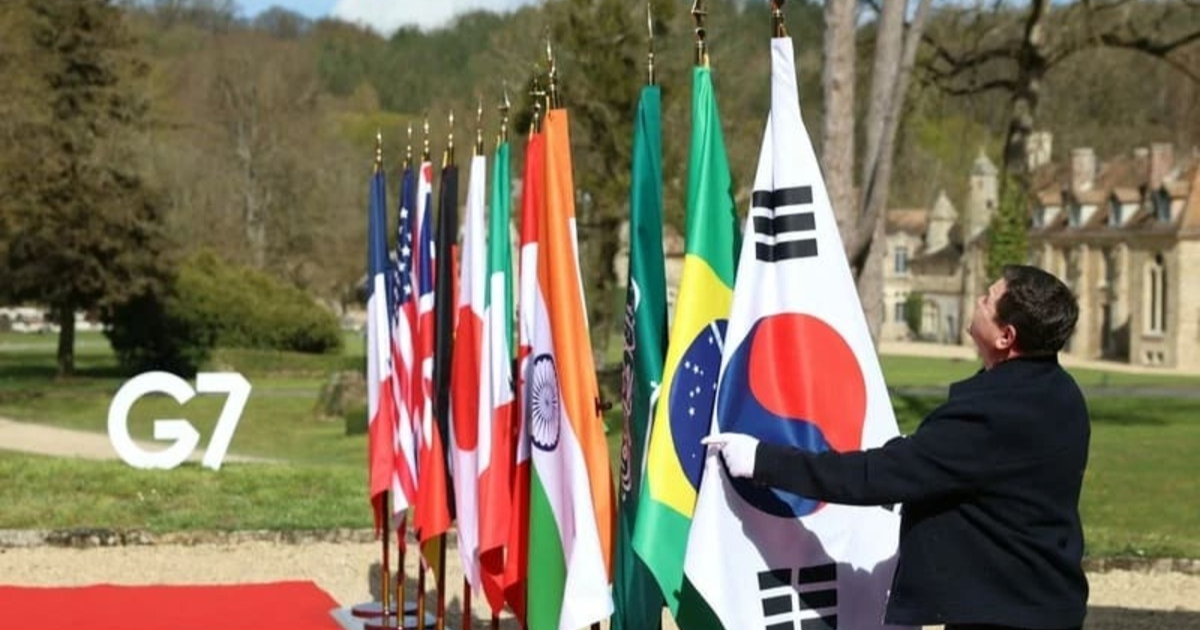
The foreign ministers of the world’s most developed democratic countries have assembled in France for a critical meeting which centers on the current conflicts in Iran and Ukraine and the worldwide economic instability and the increasing concerns about United States diplomatic changes. The two-day summit takes place at the historic 12th-century Abbaye des Vaux-de-Cernay, located southwest of Paris. The Group of Seven (G7) nations which include Britain Canada France Germany Italy Japan and the United States will send representatives to the event together with European Union delegates.
The coalition which started its first meeting at Rambouillet fifty years ago has lost its historic unity because its members now use different methods to address worldwide economic and political issues. The return of Donald Trump to the presidency in 2025 has created a new American foreign policy that brings confusion to both its allies and enemies.
U.S. Policy Shifts Spark Global Unease
The international community has faced difficulties during the last year because Washington has implemented sudden changes to its trade tariff policies and its responses to the Ukrainian conflict and the ongoing Middle East crisis. European diplomats believe that the United States currently operates without specific goals and an effective method to end its ongoing diplomatic efforts. The French army chief and other prominent figures have declared that the United States diplomatic position creates instability throughout the international system. The officials chose to abandon the standard process of issuing a unified final communique because they wanted to stop public displays of diplomatic tensions.
The summit’s main purpose is to conduct a private debriefing session with U. S. Secretary of State Marco Rubio. The G7 partners are urgently requesting information about the current status of U.S. and Israeli military operations against Iran and their diplomatic efforts to resolve ongoing conflicts. The ministers placed special emphasis on their work regarding the Strait of Hormuz. The Iranian government has completely closed this essential waterway which has resulted in worldwide oil supply shortages that are currently disturbing international economic systems. The non-G7 major powers which include ministers from Brazil, India, South Korea, and Saudi Arabia are joining the G7 countries to find solutions for their interconnected emergency situations.
Safeguarding Ukraine’s Future
The peace negotiations in Eastern Europe have become a major source of disagreement between two opposing parties. European officials fear that Washington might force Kyiv into a disadvantageous peace agreement with Russia ahead of the upcoming U.S. midterm elections. European leaders together with the Ukrainian government are advocating for stronger economic penalties against Moscow because they want to counter this situation. Italian Ministry of Foreign Affairs officials together with their allies have declared that they require permanent military assistance and immediate protection of Ukraine’s energy systems because of the upcoming winter season.
The upcoming G7 leaders’ summit which will take place in the French Alps next June will depend on these vital talks. The French government has created an agenda which will address the multilateralism crisis and solve worldwide economic disparities and strengthen ties with China and establish a new G7 task force dedicated to fighting international drug trafficking.