Thousands of migrants have surged across the border from Morocco to the Spanish enclave of Ceuta and at least 18 have died in the process.
The crisis escalated on Thursday and continued through the night, with images of burning cars appearing on Spanish state TV (RTVE) on the Moroccan side after clashes were reported. The situation is a “serious humanitarian crisis,” said Rachid Sbihi, head of a local workers association for Civil Guard officers.
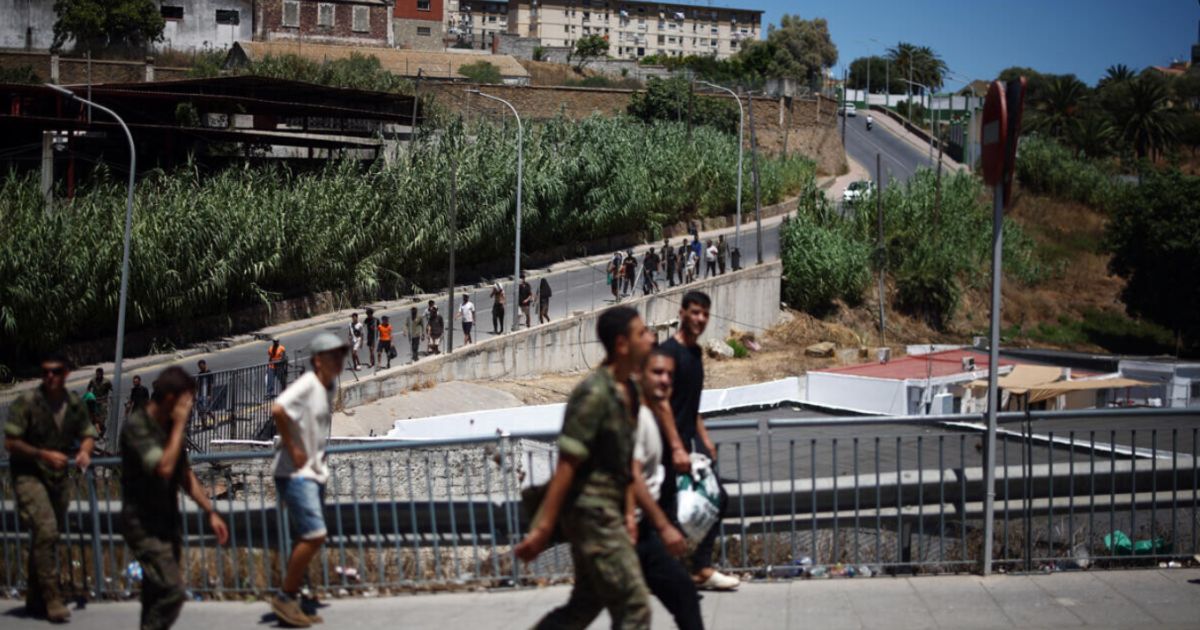
“Meanwhile, thousands of migrants — including unaccompanied children — were left sleeping in parks and on sidewalks while others walked the streets of the city,” said Sbihi. Reinforcements coming into Ceuta were primarily to help wounded individuals and assist with humanitarian operations, he said.
Of the 18 who died, several have been reported as drowning. Others lost their lives when they tried to cross a breakwater fence at Tarajal beach near the border with Morocco in a stampede.
By Friday morning, the waters close to the border fence were dotted with buoys, while big groups of people – mostly young men – were seen near the crossing point. Witnesses pointed to video of migrants making their way onto local roadways from the breakwaters. Some migrants also reportedly tried to go back to Morocco, with families with women and children also crossing.
Spanish Prime Minister Pedro Sánchez was to be accompanied by Spain’s interior minister Fernando Grande-Marlaska to visit Ceuta. France also stated that it would be increasing its border controls with Spain. France’s interior minister Laurent Nunez reported he had called out the Rapid Intervention Border Force.
Moroccan authorities have not made any public comment on the crossings, while the country’s Interior Ministry did not immediately respond to requests for a comment.
What sparked the sudden mass movement was not known. Spain is a key entry point into Europe for migrants looking for better economic opportunities or to escape conflict and violence.
Ceuta is located on the northern coast of Africa, which is bordered by Morocco. It is swum by migrants from the Moroccan town of Fnideq (some 5km away) or visited by migrants who get close to Belyounech.
Migrants Also Attempt to Enter Melilla
The riots also extended to Melilla, Spain’s other colony on the northern shores of Africa. Migrants reportedly clashed with police in Bni Nsar, Morocco’s town on the border with Melilla, throwing rocks at police and setting police vehicles on fire. Injuries to security forces and dozens of arrests were reported by local media and rights groups.
Omar Naji from the Moroccan Association of Human Rights said that attempts to enter Melilla have been happening for weeks, although the latest onslaught seemed related to Ceuta.
Melilla is an autonomous city of Spain on the coast of Northern Africa, similar to Ceuta. Migrants often try to cross by scaling the 6m high fence across the border. Thousands of migrants from sub-Saharan countries tried to cross the sea in 2022, with dozens dying.
Authorities Seek Emergency Measures
Crossings into Ceuta, with a special increase in attempts by sea, led to an escalation. The rise had been attributed to a recent decision by Spain’s Supreme Court in favour of the government, which blocked the “immediate return” of some migrants who had arrived on the country’s coasts without legal proceedings. But in Morocco, activists wondered if the migrants would have been aware of the legal ruling.
Ceuta’s regional leader, Juan Jesús Vivas, urged Madrid to declare an emergency and bring in more police officers, and to possibly send the army in to seal the border. He cautioned that reception centres were already struggling, and hundreds of migrants were sleeping outside.
The Spanish Interior Ministry confirmed that the number of migrants entering Ceuta was not immediately known but that police were working to coordinate their response and that further data on migration would be released.
Ceuta has been under Spanish rule since 1580. Today, it is home to a multi-ethnic population of Spanish and Moroccan people, Christians and Muslims, who live enclosed behind a fortification that is still a destination for migrants hoping to find a better or safer life in Europe.