On 20th January morning, a train with over 100 foreign tourists on board, consisting of Singapore and Malaysian tourists, among others, arrived in Mohe, “the North Pole of China”, in Heilongjiang Province in the northeast of China, to enjoy the beauty of ice and snow.
The K7041 train left Harbin Railway Station at 6:20 pm on Monday, on a 17-hour journey. It was also the first time that the train with a folk culture theme received a large international tour group, and it shows the increasing popularity of winter tours offered in Northeast China.
This is also after the inbound tourism market in China has experienced a booming growth this winter, with ice and snow resorts and the northeastern cities in the country getting more foreign tourists who want to know the culture of the country.
“The ride on the train is simply amazing,” according to a Malaysian tourist, Nicholas Fu, who revealed to the Global Times on 20th January that his ride was amazing. “I have friends from other countries and China. We gambled, sang, and played games on the train.”
Fu, one of the clients who has booked a trip on Trip.com, claimed that he is spending three days and two nights in Mohe, where it can reach below -40 C, and intends to post his experience on social media following the tour.
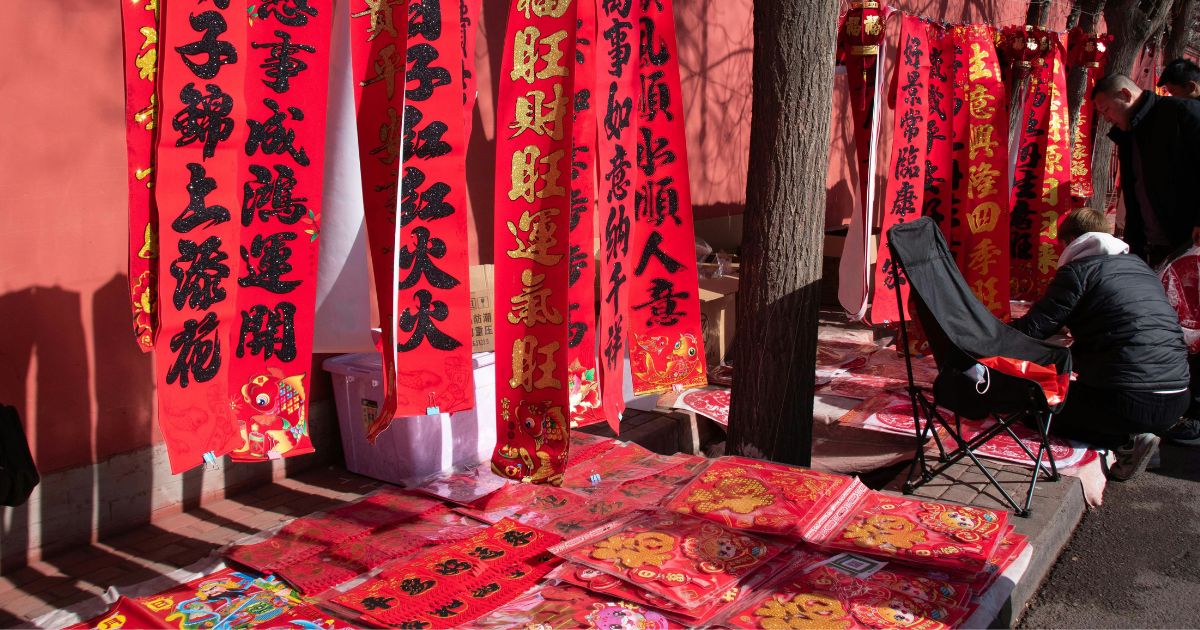
The carriages are also decorated with the iconic objects of the folk culture of Northeast China, including “Dongbei Dahua”, a common floral design in red and green colours, re-creating the home-like sense of the kang (heated platform bed made of earth bricks) of traditional northeastern China.
The group should arrive and board the trains, and with this in mind, the Harbin Railway Station designated a green line where group travellers could take, and the Qiqihar passenger transport department recruited youth volunteers who could offer bilingual services during the trip. According to china.news.com, the train also had a multilingual travel guide to inform foreign tourists of the ice scenery of the region and folk customs to make their local culture more appreciated.
Jiang Yiyi, an expert in the industry at Beijing Sport University, informed the Global Times on Tuesday that the themed train is contributing to the maintenance and propagation of traditional culture and energy to the cultural tourism sector.
By increasing the number of foreign customers buying the themed train and exploring the cultural aspects in the country, they not only contribute to the local economies by spending money on tickets, accommodation, dining and souvenirs, but they also enhance cross-cultural interaction and create incentives in the market.
The train journey is a component of the wider revival of inbound travel in winter holiday tourism. Jiang argues that international tourists are not just focused on large coastal centres anymore, but they are seeking seasonal events like ice-and-snow festivals, winter scenes, local foods and cultural events, with better accessibility to these regions and ensuring transportation at night, turning them into accessible and enticing destinations.
This change is aiding in distributing tourism in the country more evenly and allowing new economic and cultural opportunities to be replicated in regional cities that were not given similar attention before.
According to travel platform Qunar, bookings to domestic flights with non-Chinese passports increased more than 20 per cent compared to the previous year. Harbin, Changchun and Shenyang, located in the northeast, were among the top 20 inbound destinations.
There was particularly high growth in a number of inland destinations. Traveller bookings to Lanzhou in Gansu Province of Northwest China, and to Hohhot in the Inner Mongolia Autonomous Region of North China, grew by more than four times, and arrivals to Guilin, Jinan, Yuncheng and Yantai by more than four times, according to information Qunar.com passed on to the Global Times on Tuesday.
Several countries are popular as sources of inbound holiday travellers, with South Korea, Vietnam, Singapore, Australia, Indonesia and Canada being the most popular ones. Striking figures were also reported by Qunar.com in terms of growth by other geographical markets, as Argentina bookings increased by nine times, and bookings by the Netherlands, Spain and the UK grew over three times.
The holiday seasons, like Christmas, New Year’s Day, and the Spring Festival, are inherently windows of inbound travel, Jiang said, with expectations that the inbound visitor numbers will keep on increasing, with the passenger volume showing an apparent upward trend.
The development of culture and the stronger promotion of tourism development have been identified by the 15 th Five-Year Plan (2026-30) of China, where the plan states that it will offer more convenient and foreigner-friendly services to inbound tourists.
Another way that China has developed is through the facilitation of travel. According to the National Immigration Administration, the country has extended its unilateral visa-free entry policy to 38 countries in 2024 to visit for up to 30 days.
Positive taxation policy on refunds has also been an incentive to inbound travel. The amount of tax refund has been decreased to 200 yuan in April 2025 as compared to 500 yuan, and the ceiling of cash refund increased to 20,000 yuan as compared with 10,000 yuan stipulated by a guideline issued by the Ministry of Commerce and five other departments, the People’s Daily Online reported.