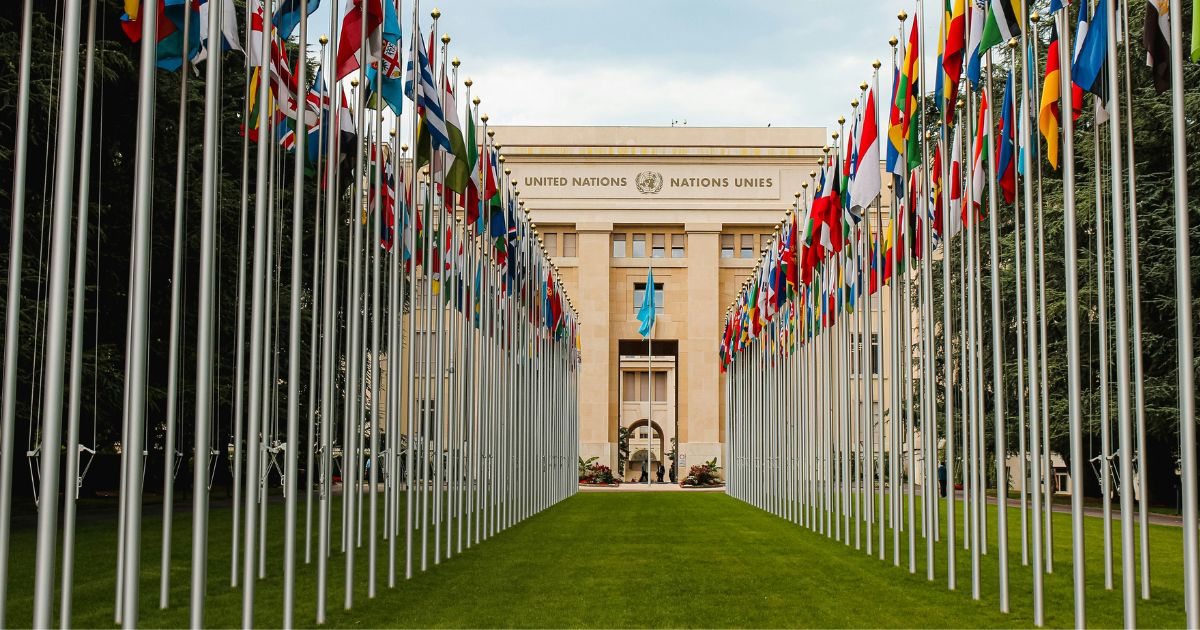
Sitting in New York on 18th February, a day sooner than initially set, not to conflict with the Trump Board of Peace conference in Washington, UN diplomats took the occasion to insist on the central role of the UN in resolving the Israeli-Palestinian dispute, despite a new US-led initiative in the process of remaking the work of global mediation.
The point was characterised by UN Under-Secretary-General for Political and Peacebuilding Affairs, Rosemary DiCarlo, as a moment to change direction by the region, after over two years of war. But she warned that it will all depend on the decisions that are made in the next few weeks.
That urgency was also felt through the UN assembly, where British Foreign Secretary Yvette Cooper cautioned that Gaza should not be left suspended between “peace and war.”
Other council members also criticised the recent developments of Israel in the efforts to extend its control over the West Bank, with Pakistan terming the situation as null and void according to international law.
Palestinian ambassador Riyad Mansour termed what he termed an existential threat as a gradual de facto annexation, not merely to Palestinian statehood, but to peace in general, including that under discussion in Washington.
Expanded ambitions
These utterances indicated mounting insecurity over what is viewed by many as an alternative diplomatic course being taken beyond the UN framework. Trump has a Board of Peace that started as a small team to manage the reconstruction of Gaza, but has grown through ambition to be a wider conflict-solving platform.
That development has also concerned diplomats. The critics raise the question whether the initiative poses a threat to weaken the existing multilateral structures, especially after the president of the US still holds a tight rein on the membership and decision-making.
The split was marked at the Security Council. Although the US ambassador, Mike Waltz, commended the new body as a body that is not talking but doing, several nations increased their support to the UN structure.
Over 80 countries, in the same week, signed a joint statement denouncing any kind of annexation in the West Bank and demanding that Israeli actions be immediately reversed. The message was clear – to a large extent, the international community, the UN has been the main platform through which legitimacy and coordination are carried out.
But the major issues are still daunting, including disarming Hamas, the establishment of an international stabilisation force and the reconstruction of a territory that has been left in shambles. Trump has stated the participants will commit to spending $5 billion and inject thousands of personalities as well, though the specifications are still vague, and analysts warn the actual bill will be much bigger.
France and allies retain their distance
In case there was some form of unity in the UN chamber, then the Washington picture was more disjointed: there were significant absences, especially of the European nations.
France has chosen not to be a founding member of the Board of Peace, which is in line with a larger group of old US allies who are concerned about the structure and the purpose of the initiative.
France, which is also supported by Spain, Belgium and Ireland, also expressed its concern over the decision by the European Union to attend as an observer.
Germany and Italy are delegates in that regard with a split European strategy. The EU itself will be there, but in an unofficial capacity, that is, without approving the project.
This hesitant attitude highlights a further French inclination towards UN-centred diplomacy. French officials have on numerous occasions indicated that any permanent resolution of the Israeli-Palestinian conflict should be pegged on well-known multilateral arrangements.
In other regions of the world, there are other large players that are maintaining a distance. China has not indicated its interest but restated its loyalty to the UN system, and Canada invited but retracted the invitation, and the Vatican has not been invited and refused to go.
Motivations are different even among the participants. In addition to allies of the US like Israel, the meeting will consist of the presence of other countries like Hungary and Argentina, other Arab countries like Egypt and Jordan, who have a direct stake in the future of Gaza. Indonesia has said that it might provide its full potential stabilisation force of up to 8,000 soldiers.
What has been produced is a very wide and patchy forum – governments which do not have the same priorities, and raise questions of coherence and credibility.