The next generation of iconic museums will be built in 2026 and will revolutionise skylines and cultural landscapes of diverse areas across the globe. Such mega projects as Los Angeles to Tashkent show that museums can transform cities, draw international visitors and stimulate economic development, otherwise known as the so-called Bilbao effect, as happened with the Guggenheim Museum in Spain in 1997. Housing works of art and history by the finest architects of the world, backed by billion-dollar investments, these institutions are anticipated to not merely exhibit art and history, but also define identity, community-building and destination themselves.
Lucas Museum of Narrative Art, Los Angeles
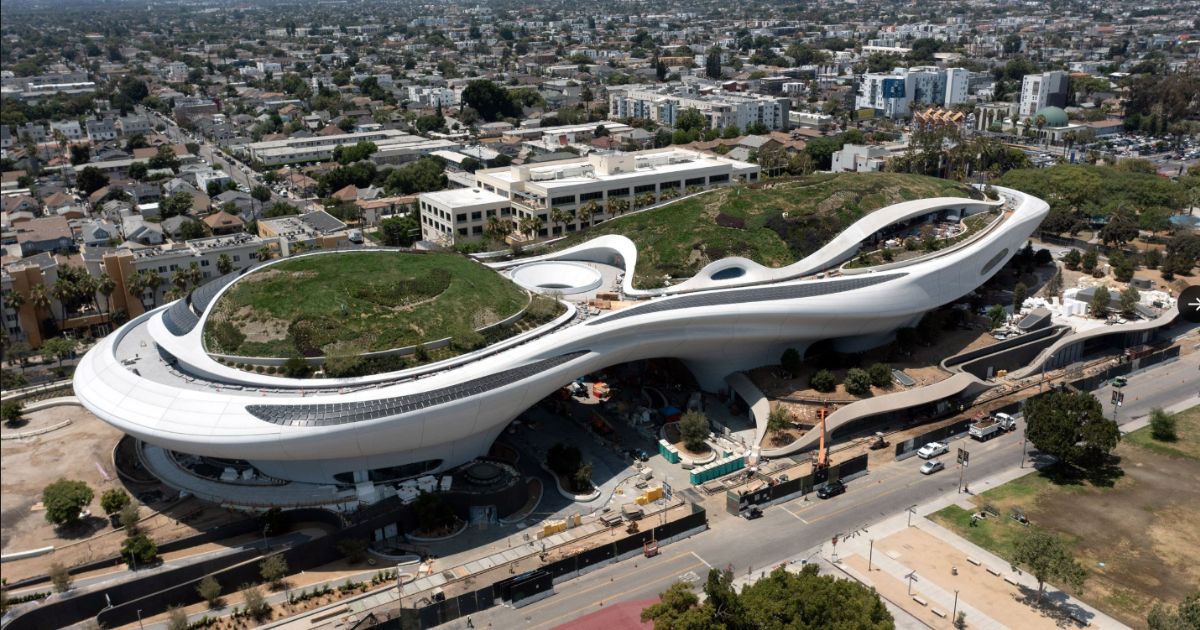
One of the most anticipated cultural events of the year is the Lucas Museum of Narrative Art in Los Angeles, which opens in September. The futuristic five-storey building was established by filmmaker George Lucas and Mellody Hobson, and it is designed to look like a giant flying saucer, a tribute to the person who made the Star Wars franchise.
The 300,000-square-foot museum is a costly building that was built at a cost of 1 billion dollars, and it will concentrate on narrative art in various media. Although it will carry iconic Star Wars props and even costumes, its overall portfolio comprises more than 40,000 works in painting, illustration, comics and film. There are artists in the style of Norman Rockwell, Frida Kahlo, Diego Rivera and Beatrix Potter, and comic-book heroes Jack Kirby and R Crumb. The museum is found in Exposition Park, which is an 11-acre campus that has gardens, theatres and public gathering spaces, which further underlines the fact that the museum is a cultural and community hub
Guggenheim Abu Dhabi, UAE
Guggenheim Abu Dhabi is a long-awaited establishment that is likely to open on Saadiyat Island in Abu Dhabi. The complex, which covers 450,000 square feet, was designed by the late architect Frank Gehry and has dramatic metallic forms that are linked together by glass bridges and catwalks.
As a part of Abu Dhabi’s growing cultural hub, already comprising the Louvre Abu Dhabi, the museum will help to solidify the image of Abu Dhabi in the world as a major destination for the arts. The shows will emphasise the modern and contemporary art produced between the 1960s and the present day, including the names of Jackson Pollock, Andy Warhol and Jean-Michel Basquiat. Notably, artists of West and South Asia and North Africa will also be given a focus in the museum, which will also put the Western tradition of art behind the narrative.
Darwin Larrakia Cultural Centre
The Larrakia Cultural Centre will be inaugurated in September in the sacrosanct land of the Larrakia people in the Northern Territory of Australia. The building at the harbourfront has a roof shaped like a bird in flight, symbolising an ancestral spirit and transitioning to Indigenous-owned and operated museums.
The centre will feature traditional and ceremonial artefacts at a cost of A$60 million, which are in large numbers and have recently been repatriated by overseas institutions. It will act as a place of truth-telling, cultural education and celebration, whereby there will be galleries, art studios, an outdoor ceremonial area and a restaurant that serves Indigenous cuisines. The project is a product of decades of work by the Larrakia people to establish a place that would be a gateway to their heritage and open it to more people.
Obama Presidential Centre, Chicago
To be opened in June, the Obama Presidential Centre is a tribute to former US president Barack Obama, but is also aimed at renewing the South Side of Chicago. The architects Tod Williams and Billie Tsien created the 19-acre campus, which combines civic space and cultural exhibition.
The eight-storey granite museum contains the artefacts of the Obama presidency, a complete replica of the Oval Office and exhibits of the contributions of Michelle Obama. In addition to the museum building itself, there is also a library, a playground and a basketball court, which should be easily accessible to the community. Sky Room and a view of Lake Michigan, and art installations that are publicly placed, additionally position the centre as a landmark and neighbourhood component.
Kanal-Pompidou, Brussels
Kanal-Pompidou, a giant 40,000-square-metre art gallery built out of a former Citroen factory, will be welcomed in Brussels. The adaptive reuse project that converts a 30s industrial Art Deco structure into a light-filled cultural complex opens in November.
It is planned to open the museum with 10 exhibits, with 350 works loaned out by the Centre Pompidou of Paris, which is under renovation until 2030. Such artists as Henri Matisse, Pablo Picasso and Piet Mondrian will be prominent. Besides galleries, the venue will also feature a community library, bakery, rooftop restaurant and performance spaces, with the addition to the Brussels developing cultural area and the architectural heritage.
Islamic Civilisation Centre, Tashkent
The Islamic Civilisation Centre is expected to be launched in March in the capital of Uzbekistan, Central Asia. Topped with an expansive turquoise structure, the museum is supposed to emphasise the historical significance of the area as a location on the Silk Road and as a seat of intellectual activity.
It has a Qur’an Hall at the centre, which is anticipated to showcase the renowned 7th-century Qur’an of Uthman, one of the oldest Qur’anic books in the world. The centre will also contain over 2,000 manuscripts and artefacts, including recently repatriated ones. An interactive exhibition of VR and AI technology will trace the history of Uzbekistan, back to the pre-Islamic times, till the present day. Other facilities in the complex consist of a 200,000-volume library, a children’s museum, workshops and restoration workshops, which position Tashkent as a tourist destination as well as a scholarly one.
An International Cultural Renaissance
Collectively, these six museum openings demonstrate how cultural organisations are changing their approaches to exhibition spaces instead of the traditional ones. They are also architectural marvels, tourist hubs, educational institutions, and cultural forums. Cinematic narrative in Los Angeles, Indigenous history in Darwin, contemporary art in Abu Dhabi and Brussels, presidential history in Chicago or Islamic study in Tashkent, these projects are a contribution to a worldwide agenda to preserve the past and invent the future.