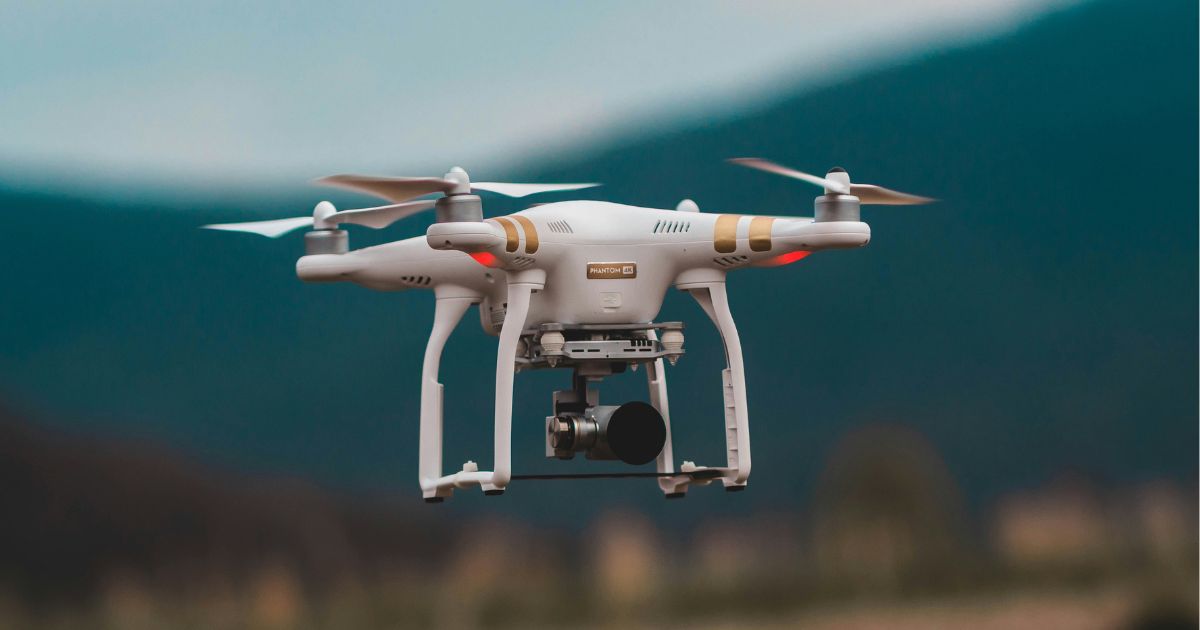
On 25th February, a Swedish intercept and jam of a suspected Russian drone occurred in the Öresund Strait off the port city of Malmö, where French aircraft carrier FS Charles De Gaulle (R91) is docked.
On Friday, a drone launched by a nearby Russian ship was flown in the direction of the French aircraft carrier, which was visiting the port, a port in which Swedish and French officials were visiting, before the drone was detected by a Swedish Navy patrol vessel, the Swedish Armed Forces said. The suspicious drone was spotted flying off on the Russian signals intelligence ship Zhigulevsk in the Öresund.
The Swedish Armed Forces reported that its Navy made a rapid response to block the drone. The news release continues by stating that contact with the drone was later lost, and no additional observations of the drone have been detected since then.
The Swedish Armed Forces is currently looking into the possibility of the incident being a breach of the Access Ordinance. The Access Ordinance demands that foreign state aircraft, military helicopters, non-commercial flights and naval vessels need to request permission to enter Swedish waters and airspace.
Dmitry Peskov, a spokesperson of the Kremlin, told Moscow media that the Swedish claims were absurd, but could not say more.
According to the French military spokesperson, Guillaume Vernet, the drone was spotted 10 kilometres away from Charles de Gaulle on Friday.
Friday, Swedish PM Ulf Kristersson and Defence Minister Pål Jonson paid a visit to the carrier together with French Foreign Minister Jean-Noelt Barrot, Swedish FM Maria Stenergard and French DDM Alice Rufo.
This is a great military ship, which contributes to the deterrence and defence operations of NATO. France and Sweden are very powerful contributors to European security, growth and competitiveness. Kristersson wrote on the social media platform X after the visit: together we defend Ukraine, the rules-based world order and Europe.
The French Foreign Minister Barrot, in a press conference on the carrier, referred to the incident as a ridiculous provocation.
“In case such an incident, to which the Minister of Defence of the [Swedish] Government hinted, does have a Russian root. It would be a preposterous provocation,” Barrot said.
Charles De Gaulle and Royal Netherlands Navy frigate HNLMS Evertsen (F805), which is part of the French Carrier Strike Group (CSG), docked Tuesday in Malmo. It is the first occasion that Charles de Gaulle and its aircraft carrier battle group have made a visit to Sweden. In the past, the US amphibious assault ship USS Kearsarge (LHD-3) had paid a visit to Sweden in 2022, and the British aircraft carrier HMS Queen Elizabeth (R08) had done the same in 2023.
The other elements of the French CSG are anchored in Copenhagen, Denmark. The French CSG is now on its first leg of its deployment Mission Lafayette 26, which is taking the strike group to the Baltic and North seas.
Drones are becoming a cause of growing concern among the majority of militaries because they can be employed during illegal surveillance or transformed into a weapon to commit an attack. Of particular susceptibility is civilian infrastructure, which is not designed to defend itself.
The most recent implementation of a Sharpshooter training programme by the Royal Navy, where warships and their embarked helicopters train on responding to a simultaneous drone, missile and air attack, was a training exercise involving RN destroyer, the HMS Duncan (D37) and the Wildcat helicopters of 815 Naval Air Squadron, off the coast of Wales, to train in defending critical national infrastructure.
This scenario in Aberporth Range, Cardigan Bay, involved the destroyer and the helicopter being under fire by swarms of surface missiles, air missiles, and virtual missiles, over a period of 72 hours. The Sharpshooter training is levelled to simulate real-life scenarios like the HMS Diamond (D34) conditions in the Red Sea when Houthis launched drones and missiles in Yemen.
The warfighting situation put the destroyer in a hypothetical task force that safeguarded essential national infrastructure, where the ship needed to rehabilitate maritime security in a conflict area. The training was provided by the specialist Fleet Operational Standards and Training teams of the RN and defence contractors QinetiQ and Inzpire.
Hammerhead Uncrewed Surface Vessels that can achieve a water speed of up to 50 miles per hour, and QinetiQ Banshee Whirlwind aerial drone with a speed of 200 miles per hour were the opposing units. The destroyer also fired at simulated maritime targets, aircraft, and simulated cruise and ballistic missiles in addition to firing its own Sea Viper surface-to-air missile system and the Wildcat helicopter of the ship fired at targets with its Martlet anti-ship missiles.
According to the release, Duncan achieved its overall goals of Sharpshooter, of monitoring and eliminating five air targets and sinking two Hammerheads.