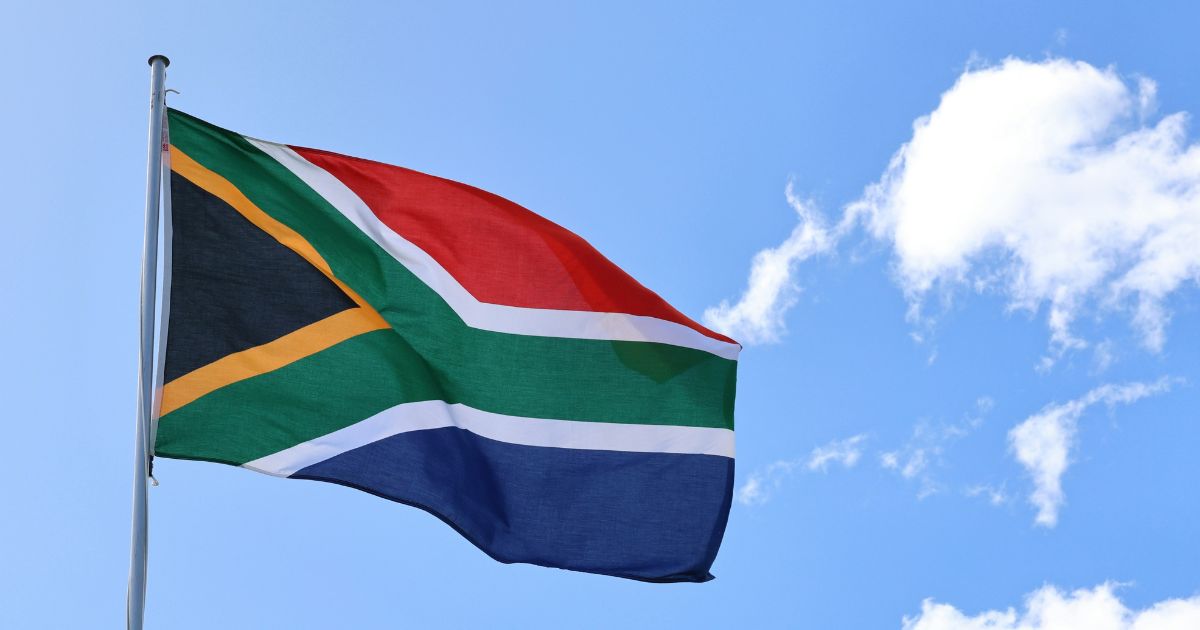
In the next Venice Biennale, the South African pavilion will be vacant in 2026, a representative of the Department of Sports, Arts and Culture (DSAC) of South Africa has informed The Art Newspaper.
This follows the ruling of the high court in South Africa that rejected the appeal by artist Gabrielle Goliath to appeal the cancellation of her proposed space project.
The curator Ingrid Masondo and Goliath were to introduce a new form of the three-part project, video-based Elegy, a project that was initiated in 2015 and has focused on femicide and LGBTQI+ murder in South Africa. The one destined to be shown in the Venice Biennale also dealt with violence against women in Namibia and Gaza, and it was the new Gaza-related section that sparked the controversy.
On 22nd December, Gayton McKenzie, a South African right-wing sport and arts and culture minister, wrote a letter to the organising committee, where he referred to the Gaza-related suite, dedicated to the death of Hiba Abu Nada, a Palestinian poet who was assassinated by an Israeli airstrike in October 2023, as very divisive in nature. The section was requested to be changed by McKenzie; Goliath rejected this, and the minister cancelled her plans on 2 January.
Judge Mamoloko Kubushi of the High Court of South Africa, on Wednesday, 18 February, turned down an urgent application by Goliath and Masondo to have the cancellation of the pavilion overturned. Judge Kubushi made no reasons for her judgment, which only read thus: “Since I have read the papers submitted on record, heard counsel and observed the case, it is ordered that: the application be dismissed.” Goliath told The Art Newspaper that her crew was challenging the decision.
Following the decision of a spokesperson of the DSAC, Stacey-Lee Khojane, that there would not be any government-supported exhibition in the South African Pavilion. When asked what such a comment would do to the image of the country, she replied: Such a comment would be speculative.
After cancelling the work of Goliath, the DSAC resumed the work of bi-annual planning in closed doors and allocated at least one group of artists to work on the pavilion of the country. In January, a 30-artist group known as Beyond the Frames informed The Art Newspaper that it had been discussing with the department the Venice Biennale.
However, the spokesperson of the Cape Town-based group, Hannes Koekemoer, told The Art Newspaper last week that they had been notified that the DSAC had resolved not to host the Biennale any longer.
Goliath is asked about the possibility of applying to the biennial with Elegy, even though it might mean placing the piece in a new location. He responds: “Absolutely. The demands of Elegy are conditions of care, and it is not tied to a certain platform. I have already shown it in galleries, museums, churches, and halls, not only in South Africa but all over the world. In case Ingrid and I could meet somewhere in Venice and mourn, renounce and think the world over, we will do so.”
The art world in South Africa responds to leadership
In the meantime, the art community in South Africa has been outraged by the decision of the high court, and most of them believe that it was an attack on the right to freedom of speech.
In a statement to The Art Newspaper, Candice Breitz, the South African and the representative of South Africa at the 2017 Venice Biennale, states: “This utter lack of fidelity to the highest integrity that South Africa has been exhibiting in pursuing Israel with regard to the ongoing genocide that Palestinians are facing is fatally compromised by the fact that the same South African government has been unable to come to the defence of the basic constitutional rights of a South African artist who has made a decision in her creative practice to protest against the endless war crimes committed by Israel.”
Later in 2023, the South African government filed a case in the International Court of Justice accusing Israel of genocidal crimes committed in Gaza. Israel denies the accusations. The case is ongoing.
Breitz goes on to suggest that “the South African government is not only putting a farce of its own actions on the geopolitical stage by letting a rogue minister de-platform and legitimise an artist whose position is not only absolutely principled, but is also absolutely consistent with international humanitarian law, but is also engaging in a fatal miscalculation about the significance of culture in determining nationhood.”
A different censorship controversy has centred upon the South African artist Steven Cohen when 11 of the 20 artworks in his retrospective at the Iziko South African National Gallery in Cape Town were veiled with black cloth immediately before the exhibition opening last year. The museum asserted that the works, including portraits of performances with the late Nomsa Dlamini, who worked as the domestic worker in the Cohen family since childhood; and photographs of shoes created with the help of human skulls, provoked unresolved issues about the representation of Black women, the cultural values of the dignity of aging people, the agency and authorship, and decades-long dedication of Iziko to the ethical management and repatriation of ancestral human remains. The curator of the show, Anthea Buys, stated that the pieces had been misinterpreted severely by the management.
Cohen writes to The Art Newspaper: “To me as an artist, the verdict in the case of Gabrielle is something more than something to be lamented; it is a cry to protest–more so now in these times of risk-aversion in which freedom of speech is becoming increasingly suppressed.”
Ismail Mahomed, who heads the Centre of Creative Arts at the University of KwaZulu-Natal, says: “This is definitely news that the arts sector is receiving with dismay, anger and extreme disappointment.”
The Campaign for Free Expression (CFE), which joined the case as a friend of the court, indicated that the decision would “make everyone very alarmed about the state of artistic freedom in the country.”
Nicole Fritz, the executive director of CFE, adds: “To punish the applicants with the costs, which are precariously placed in this country, at the time when the precarious case of artists in the country was presented to the court, is, to put it mildly, terrifyingly inappropriate.”
The presidency of South Africa failed to comment on a request.