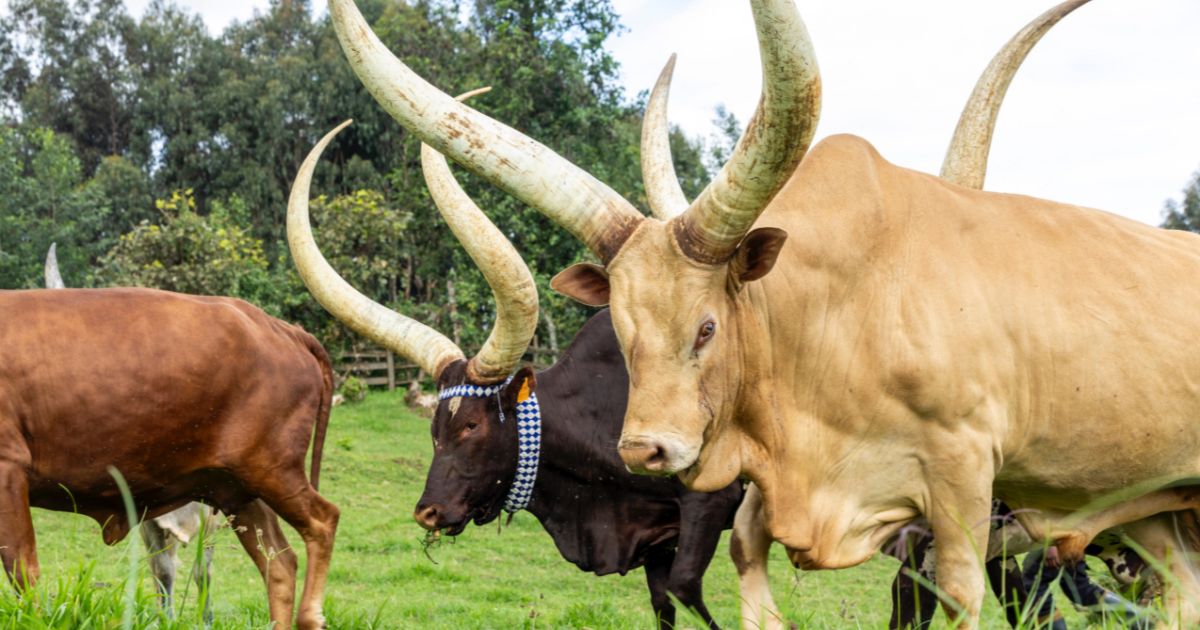
Rwanda is trying to have its local breed, Inyambo cattle, recognised by the United Nations Educational, Scientific and Cultural Organisation (UNESCO) as a measure of conserving the local breed.
The relocation will depend on the adoption of a draft law that governs animal husbandry, animal health, and fisheries, the Ministry of Agriculture and Animal Resources, Minagri officials have indicated.
On Tuesday, March 17, Jean Claude Ndorimana, the Director General of the Animal Resources Development at Minagri, informed the Parliamentary Committee on Governance Affairs and Gender that the legal structure is the last prerequisite to presenting the application.
His reply was in response to issues that MP Etienne Mwanasana had expressed on the need to preserve indigenous livestock breeds.
According to Nadorimana, Rwanda has already fulfilled the majority of requirements for international recognition, such as the formation of breeders’ associations, research, and development of conservation machinery.
He mentioned, “there exist national associations of various breeds, like the traditional breeds, such as Inyambo, which have been proven to be very productive by some farmers.”
“A farmer reports having Inyambo cows that yield up to 10 litres of milk, which is a challenge against the view that they yield low milk.” He also added that “they are very disease-resistant.”
He emphasised continuous conservation programmes under the Rwanda Agriculture and Animal Resources Development Board, such as breeding programmes at Karama station in Nyagatare District and Songa station and gene bank, which is the preserve of pure genetic material.
The UNESCO requirements stated that the breed must be distinctively Rwandan, that there was an institutional structure to manage it, and obviously, there should be conservation strategies, which Rwanda has met.
“What is left is his passing of the law that governs animal husbandry, which will complete the process,” he said.
This awareness would aid in protecting the identity of Inyambo cattle in the world, which would mean that they would be officially recognised as the product of Rwanda.
There are similar breeds in other countries like the United States, Poland, South Africa and Uganda, where the Ndorimana breed is sometimes mistaken with the Inyambo, and that is where there is a problem of misidentification.