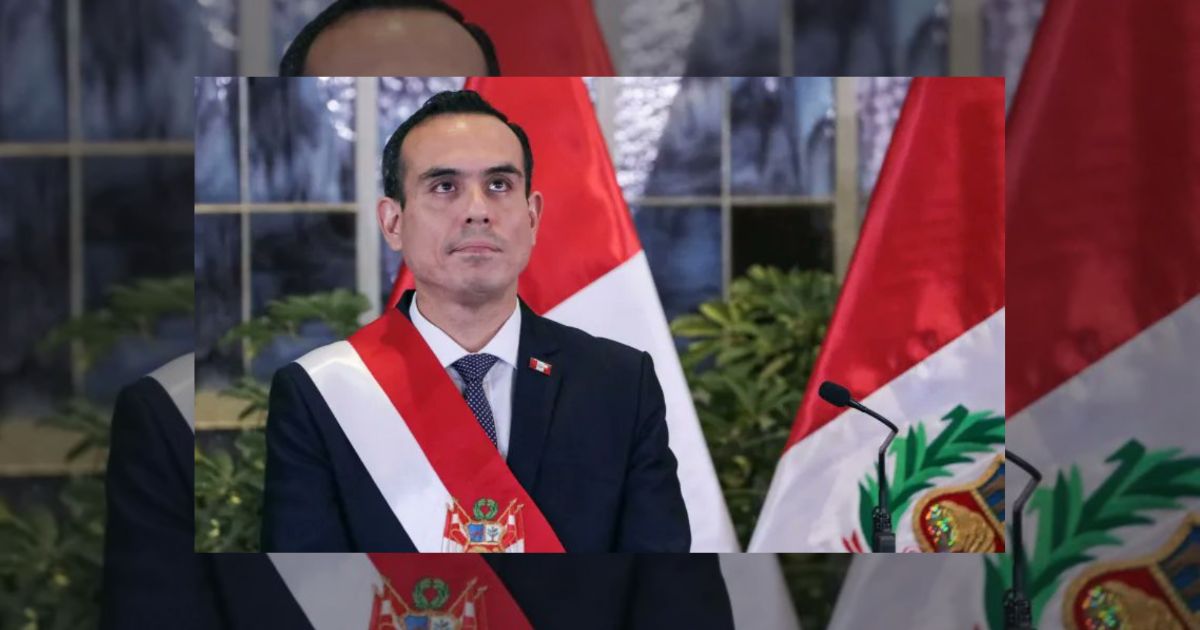
The Congress of Peru voted on 17th February to oust interim President Jose Jeri, who is accused of corruption, a move that has caused another political turmoil in the South American country, days before the presidential and congressional elections in April.
Jeri is currently under preliminary investigation of corruption and influence peddling due to a series of unexplained meetings with two Chinese executives.
Peru’s law-making body voted 75 in favour, 24 against and 3 abstentions to oust Jeri from the post he had taken hold of on October 10, when his predecessor, Dina Boluarte, was removed on account of a crime wave that was in the country.
Jeri losing office has become the latest development in a long-running political crisis of a country that has had seven presidents since 2016, and is to hold a general election when the country is in an uproar over the high level of violent crimes.
The members of the legislature will elect another president to rule until July 28, when the interim leader will place the position in the hands of the holder of the April 12 presidential election. Jeri will continue serving in his legislative position until 28 July, when the new Congress also assumes office.
On Wednesday, the interim leader will be voted for after lawmakers have registered their own candidates.
The charges against Jeri were based on the leaked report on the secret meeting in December with two Chinese executives. One of the attendees is a current government contractor, and the other one is being investigated because he was suspected of having participated in an illegal logging business.
Jeri has denied wrongdoing. He claimed to have held a Peruvian-Chinese party with the executives to plan a party, but his rivals have alleged that he was corrupt.
The economy of Peru has been stable despite changes in the face of the president. In 2024, the public debt to gross domestic product ratio stood at 32 per cent, one of the lowest in Latin America, and the government has been open to foreign investment in spheres such as mining and infrastructure.
With Peru entering the general election this year, a large number of political contenders are competing, including Rafael Lopez Aliaga, a conservative businessman and former Lima mayor, competing with Keiko Fujimori, a renowned former legislator, whose father had been the President of Peru in the 1990s. In case neither candidate receives 50 per cent of the votes, they will have a runoff in June between the two leading ones.
In Peru, lawmakers have enjoyed growing influence over the executive arm of the government within the last ten years through corruption probes to oust their leaders who have failed to develop majorities in the congress.
The Peruvian constitution provides that the president can be removed during the occurrence of a case of “moral incapacity” of the president to govern the country; this has been widely construed by the lawmakers, and it has been employed several times to vote out the president.
Boluarte, who preceded Jeri, also served nearly three years in office and survived bloody demonstrations that witnessed the killing of dozens of demonstrators by the police. However, she was later removed on moral incapability grounds, using the high crime rate and corruption scandals as the reasons given by the lawmakers.
A leftist union leader who won the 2021 presidential election, Pedro Castillo, was voted out of office by legislators at the end of 2022 after attempting to dissolve Congress to avoid anti-corruption investigations. Castillo was imprisoned last year for 11 years of incarceration after the attempt to overthrow the institutions in the country.