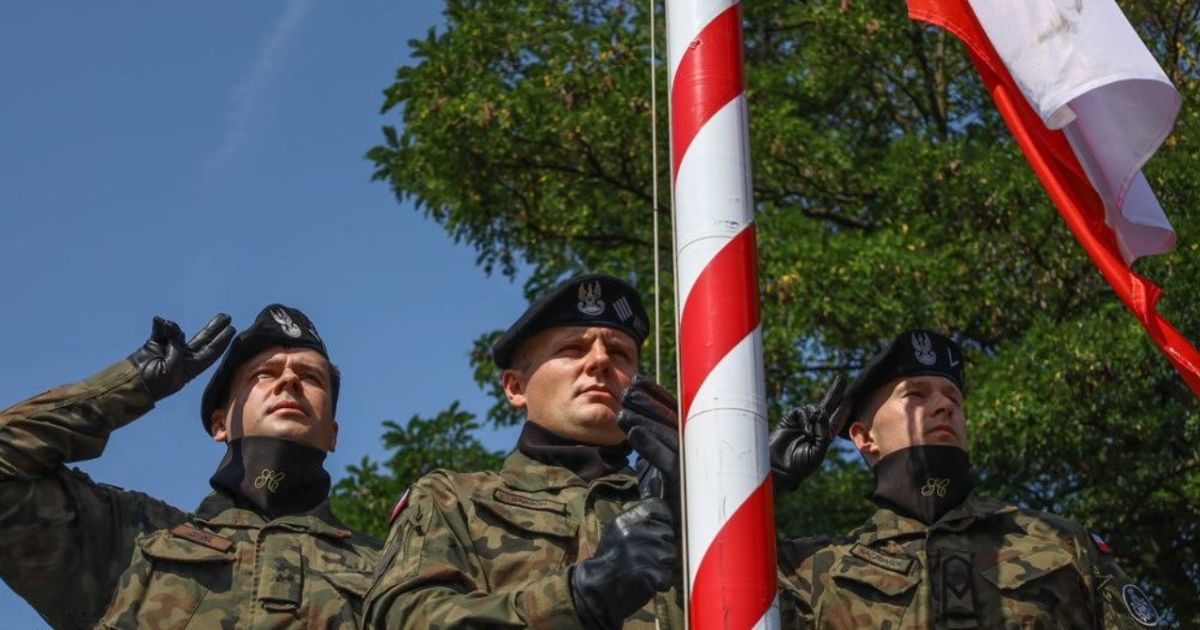
On November 6, Defense Minister Wladysaw Kosiniak-Kamysz announced what, according to Polish media TVP Info, Poland has declared to be the largest national defense training program in the history of the country- a massive training initiative to impart basic military, medical, and cyber-resilience skills to its resident population, to a total of 400,000 citizens.
The new program, which will be named wGotowości (Ready), will make voluntary military and crisis-response courses accessible to every individual who can offer his/her contribution to the program, starting with students and ending with retirees. The pilot stage will be held during the current month, where training will be provided in over 130 units of the Polish Army and Territorial Defense Forces.
The modules available to the participants will be basic military training, first aid, survival, and cybersecurity. By 2025, it is predicted to have approximately 20,000 graduates. Students of civilian universities who will volunteer to be part of the reserve will receive monthly stipends of $250.
During the launch of the program in the Polish General Staff headquarters in Warsaw, Kosiniak-Kamysz stated that the times had been the most perilous since the Second World War.
“We are fighting a war on our border, we are receiving sabotage on the Baltic Sea, and we are fighting in cyberspace. All this impelled us during the last six months towards the plan of a national defense-training project.”
The minister referred to wGotowości as the first major effort on a national level to establish societal resilience and crisis preparedness or security threats. He continued, I said security commenced with us all. It is the call of our citizens to take care of our country.
Deputy Defense Minister Cezary Tomczyk reported that 32 training centers (primarily of the Territorial Defense Forces) are already prepared to receive participants.
“We have trained the instructors in the past six months, and currently, in November and December, we seek to train approximately 20,000 individuals. We intend to have 400,000 citizens go through the courses by the year 2026,” said Tomczyk.
Since the full invasion of Ukraine by Russia, Poland has significantly increased the level of defense spending and mobilization. Warsaw has already entered into key weapons agreements with the US and South Korea, among others, and is willing to allocate 4.8% of its GDP to the military in 2026- the highest scale of expenditure by any member of NATO. The amount is approximately 54.2 billion.
Poland already has 216,000 active troops, which means that it has the third-largest army in NATO after the US and Turkey. Prime Minister Donald Tusk has indicated that the government plans to increase the army to 500,000 people, comprising professional soldiers, reservists, and volunteers.
Tusk also acknowledged that Warsaw is having serious negotiations with French President Emmanuel Macron on the possibility of French nuclear guarantees on the eastern flank of Europe.
Meanwhile, Poland has requested that US President Donald Trump take into consideration the inclusion of Poland into the Nuclear Sharing program of NATO and to deploy more US soldiers in the country.
The wGotowo program focuses on voluntary involvement and real-life civil-military relations, which represent a more liberal transformation of the Polish policy on defense preparation to the citizens. Also taught together with marksmanship and introductory drills will be first-aid, stress management, information hygiene, and counter-disinformation skills, which, according to the Defense Ministry, are essential during the conditions of a hybrid war.
Kosiniak-Kamysz added that the goal of preparing the society is to prepare them not only to war but to any national crisis, whether it is a cyberattack, disinformation, or sabotage of the infrastructure.
There have been earlier reports that Poland intends to develop a national anti-drone defense network to deal with the growing aerial threats from Russia.