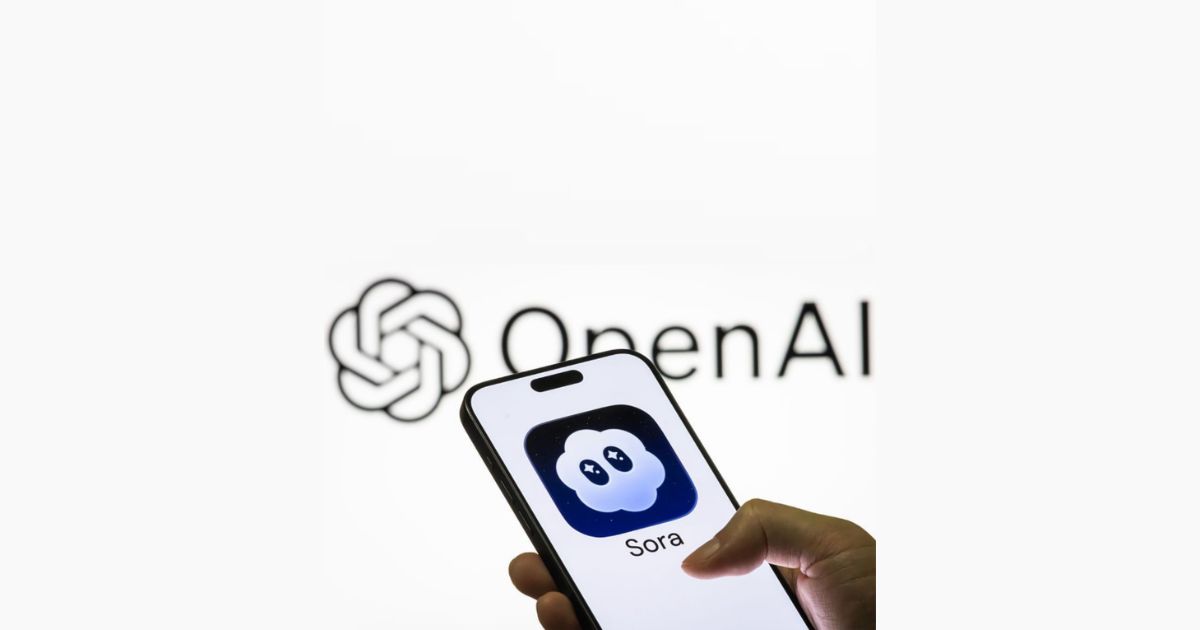
Less than two years after its unveiling, which became headline news due to its ability to create realistic videos based on a prompt, OpenAI has shut down its AI video generation app, Sora.
In its announcement, OpenAI also revealed its plan to wind down its $1bn content partnership with Disney, a leading media and entertainment company, the BBC has learned.
In its announcement to the BBC on Wednesday, OpenAI revealed its reasons for shutting down its AI video generation app, stating that they are doing so to concentrate on other developments, such as robotics, “that will help people solve real-world, physical tasks.”
In response to the news, a spokesperson from The Walt Disney Company said, “We respect OpenAI’s decision to exit the video generation business and to shift its priorities elsewhere.”
The Disney spokesperson also revealed its plan to partner with other AI platforms and find ways to use them without violating intellectual property laws.
In its statement, OpenAI also revealed its plan to wind down its internet-based platform, which professionals install to generate videos, along with its consumer app, Sora.
The BBC has learned that, as a result of the closure of Sora, OpenAI will no longer be developing video-generating tools.
However, the company said it will continue to develop other types of advanced artificial intelligence, including “agentic” technology, which will enable robots to independently carry out tasks without human intervention.
OpenAI will use the same technology it has been developing to teach artificial intelligence how to make realistic videos to train robots.
What went wrong?
Sora was launched in 2024 to huge interest from across the world due to the high quality of the artificial intelligence-generated videos.
However, the question remained as to how much money could be made from the platform.
Since the launch of the platform, Sora has made $1.4m in global net in-app revenues, compared to $1.9bn in the same period for ChatGPT, according to data from Seema Shah, VP of insights at market intelligence firm Sensor Tower.
Forrester analyst Thomas Husson said, “It has been a resource black hole, a project with limited monetisation.”
“The platform was having trouble preventing non-consensual media creation and realistic misinformation, not to mention large-scale copyright infringement,” he said.
Husson added that this decision may have been made now “to minimize the associated risks” in advance of a possible stock launch, which would cause OpenAI to become a publicly traded company where its shares can be publicly bought and sold.
“Given OpenAI is still unprofitable and pressure from investors and rivals is building, this is money they likely decided they can’t afford to continue burning as initial interest fades,” Henry Ajder, an expert on AI and deepfakes, told Fox News.
The app had raised concerns over copyright infringement and its impact on the media industry.
In December, Disney became the first major studio to license its intellectual property to OpenAI for its video creation tools.
The three-year agreement allows Sora app users to create videos with Disney characters such as Mickey Mouse and Yoda from Star Wars.
The agreement was considered a milestone in the tech and Hollywood industries, as it came after the major studios had sent legal challenges to the AI companies over the use of their IP.
Concerns have also been raised by some in the media industry that the agreement could signal the beginning of the end for talent in the entertainment industry, as the AI replaces them.
According to Reuters, no money had actually changed hands between Disney and OpenAI before the agreement was cancelled.
Sora is not the only company in the video production using AI, as the list now includes China’s Seedance, which caused controversy in February after videos created using the app, depicting Hollywood characters, went viral online.