The International Monetary Fund’s Executive Board completed its 2026 consultation under Article IV with Morocco on March 20, 2024, and also finalized the mid-term review of the Flexible Credit Line arrangement approved on April 2, 2025.
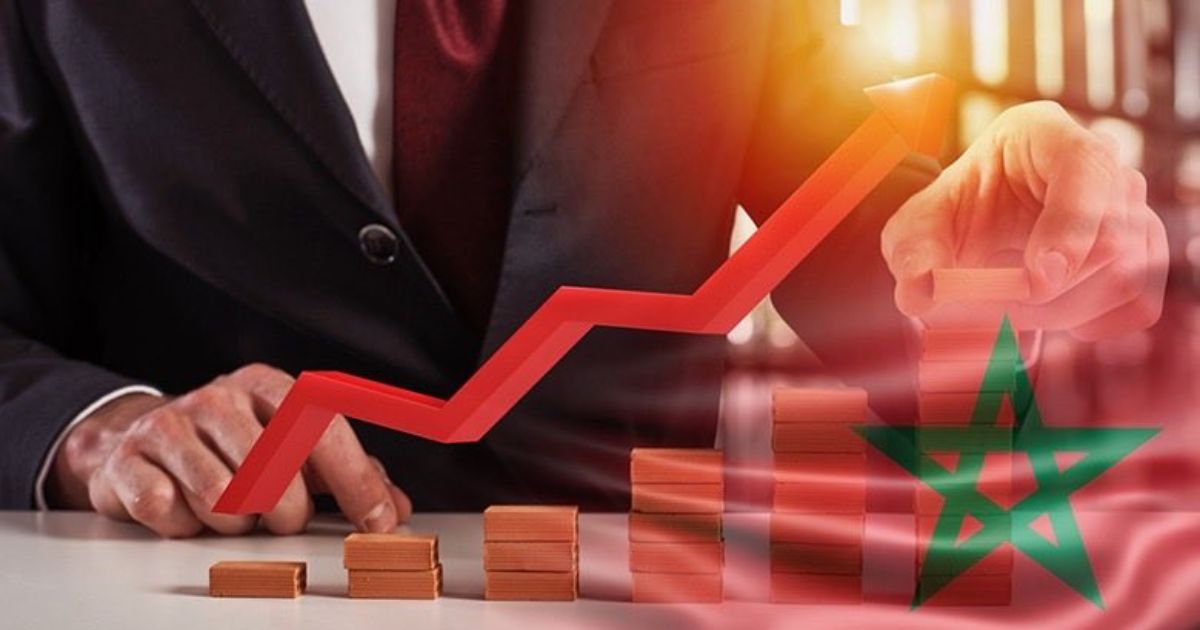
As the International Monetary Fund stated, “Real GDP growth is projected to have accelerated to 4.9 percent in 2025, driven by the rebound in agricultural growth and the strong pick-up in large-scale infrastructure projects. However, unemployment is still one of the major challenges.”
The inflation rate is still low at an average of 0.8%. This is why the Bank Al Maghrib is still in a neutral position, as the interest rates were reduced previously. The current account is in deficit at 2.1% of the GDP due to an increase in imports resulting from investment projects.
As the revenue is strong, the overall deficit is reduced to 3.5% of the GDP, which is less than the expected. This is due to an increase in public investment as well as an increase in transfers to state-owned enterprises.
In the future, the growth is still strong with domestic support. The real GDP growth is expected to be 4.4% in 2026 and 4.5% in 2027. In the medium term, the real GDP growth is expected to be 4%. This is based on the normalization of agricultural production as well as infrastructure investment with the participation of the private sector.
Impact of Middle East tensions
The short-term outlook for growth is being held back by the conflict in the Middle East, which is impacting Morocco via global commodity markets and external demand due to rising uncertainty. Inflation is forecasted to rise before stabilizing around 2% over the medium term due to rising energy costs.
The current account deficit is forecasted to widen due to the high import intensity of infrastructure investment and rising commodity costs. The level of reserves is forecasted to remain adequate. Consolidation of public finances is forecasted to continue, and the debt-to-GDP ratio is forecasted to decline gradually to 60.5% by 2031.
The external risks comprise rising volatility in commodity prices, ongoing uncertainty in the global environment due to the Middle East conflict, and possible trade barriers that could impact activity in the Eurozone.
Domestic risks pertain to possible lower returns from investments in public infrastructure, which could impact growth and employment. In such a scenario, there would be sufficient space to cushion the impact through the Flexible Credit Line.
Regarding the Flexible Credit Line, “Morocco remains eligible to benefit from the Flexible Credit Line arrangement,” said Kenji Okamura, IMF Deputy Managing Director and Acting Chair. “This reflects the very strong macroeconomic policies in place in Morocco, as well as its extremely solid economic fundamentals and institutional frameworks.”
He further said, “The authorities remain committed to continuing to use the Flexible Credit Line on a precautionary basis and to exiting the arrangement over time depending on the evolution of external risks.”