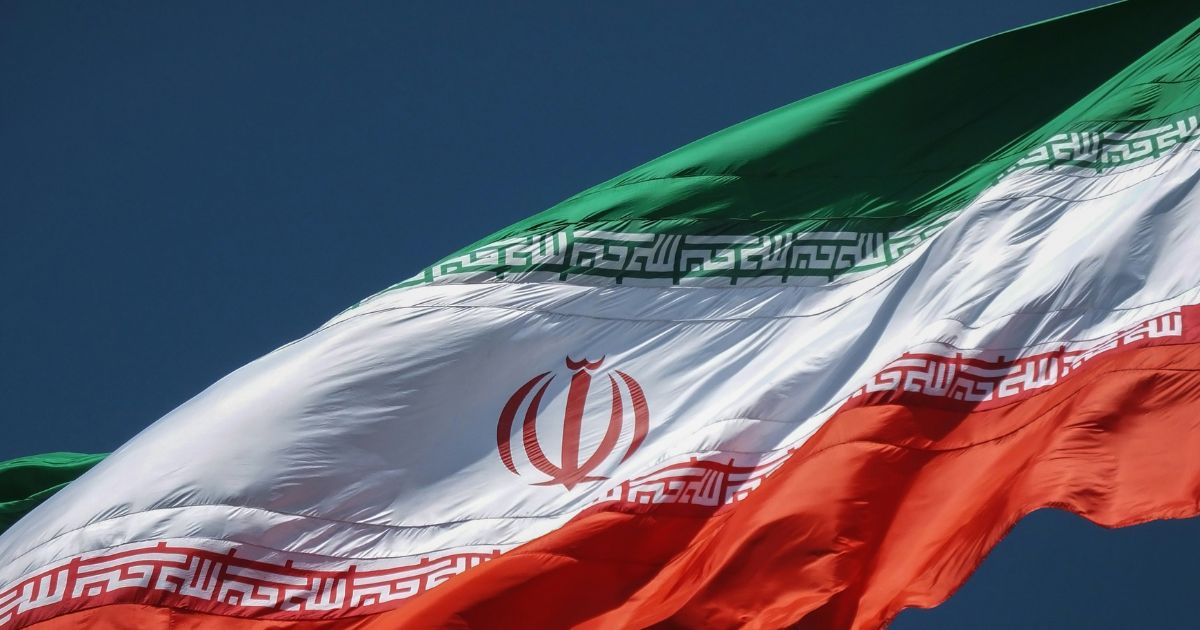
On 28th January, the Iranian foreign minister threatened to retaliate without delay and with force against any US military action; however, Trump had just announced that time was running out in its effort to avert such an action, but did not discard the possibility of a new deal on Tehran’s nuclear programme.
Top diplomat of the Islamic Republic, Abbas Araghchi, warned that their “fingers are on the trigger” to “retaliate with power” in the case of any US attacks, but again spoke in very similar terms to Trump when he spoke of a potential deal to diffuse the stand-off by making a new nuclear deal.
“Iran has always been open to a win-win, fair and equitable NUCLEAR DEAL – on an equal footing, and without coercion, threat and intimidation- which will mean that Iran will enjoy rights to PEACEFUL nuclear technology, and that there will be no NUCLEAR Weapons,” Araghchi posted on X.
“There should be no such weapons in our security calculations, and we have NEVER attempted to make the acquisition of them,” he reiterated long-standing insistence of Tehran – ignored by sceptical Western capitals – that its nuclear programme was purely for research and civilian energy generation.
Previously, prior to the previous announcement by Trump, Araghchi had indicated that diplomacy by military threat could not be effective or useful.
However, when others might have interpreted his tonal change as a point of contact, Ali Shamkani, an advisor to the Supreme Leader of Iran, Ayatollah Ali Khamenei, sent stronger wording that there would be war and retaliation against US ally Israel.
He wrote on X, “A limited strike is an illusion.”
“Any military intervention, regardless of the source and nature, by America will be viewed as the commencement of war, and it will react to it in an unprecedented, full-scale, and direct attack on the centre of Tel Aviv and all those who back the aggressor.”
Massive armada
Trump had warned hours earlier that a US naval fleet of ships with a massive armada was heading to the waters off Iran and was prepared “to swiftly complete its mission, swiftly and violently, should the need arise.”
However, just like Trump, Araghchi wrote: “Iran will soon hopefully come to the table and reach a decent, fair and equitable agreement – NO NUCLEAR Weapons – and agree that it is good for all.”
Following his latest threat, Trump’s top diplomat, Secretary of State Marco Rubio, warned that the Iranian leadership has never been in a worse situation, and German Chancellor Friedrich Merz said that the Islamic Republic’s “days were numbered” following the murderous crackdown of anti-government demonstrations in September.
Individually, Germany, an ally of Germany and an ally of Berlin, and France, signed the push of the European Union to designate the Iranian Islamic Revolutionary Guard Corps (IRGC) as a “terror group.”
The IRGC is perceived to be the ideological army of Iran with the mandate of ensuring the remnants of the Islamic revolution of 1979.
Canada and the United States are already declaring it a terror group, but the EU and the UK have not done so yet.
The latest protests against the government were held in late December and reached their climax on January 8 and 9. More than 6,200 people were murdered, said a rights group.
Washington has been pro-rebellion, although the more recent words of Trump have been on the nuclear programme of Iran as opposed to the destiny of the protestors.
Last June, the US used strikes on Iranian nuclear targets in the 12-day war that Israel had waged against the Islamic Republic.
Severe damage
According to the analysts, the US has the choice of either staging strikes against military installations or launching direct attacks on the leadership under Khamenei in a full-scale attack to eliminate the system that has dominated Iran since the 1979 Islamic revolution that toppled the Shah.
After a phone call to the Iranian president, Masoud Pezeshkian, and the de facto Saudi prince, Mohammed bin Salman, on Tuesday, Iran called other allies of the US in the area.
The Iranian Supreme National Security Council secretary, Ali Larijani, also talked to Qatari Prime Minister Sheikh Mohammed bin Abdulrahman Al Thani, who is also the foreign minister and said he supported any attempt to taper off escalation, the foreign ministry of Qatar said.
Separate calls between Egyptian Foreign Minister Badr Abdelatty and both Araghchi and Witkoff took place, and he emphasised the need to “work towards de-escalation”, the Egyptian foreign ministry said.
New dimensions of crackdown
Human Rights Activists News Agency (HRANA), based in the US, announced that they had verified that 6,221 people were killed in an updated toll, with 5,856 of the protesters, 100 of them minors, 214 of them being members of the security forces, and 49 of them bystanders.
However, the group also included the other 17,091 potential deaths that it was still investigating. It said that at least 42,324 have been arrested.
HRANA threatened to alert security officials that they were hospital-hunting injured demonstrators, since this demonstrated fresh shades of the ongoing security crackdown.
Monitor Netblocks reported on Wednesday that internet connectivity had returned to approximately 95 per cent, almost three weeks after the authorities had enforced the blackout; however, it warned users that they continued to encounter “heavy filtering.”