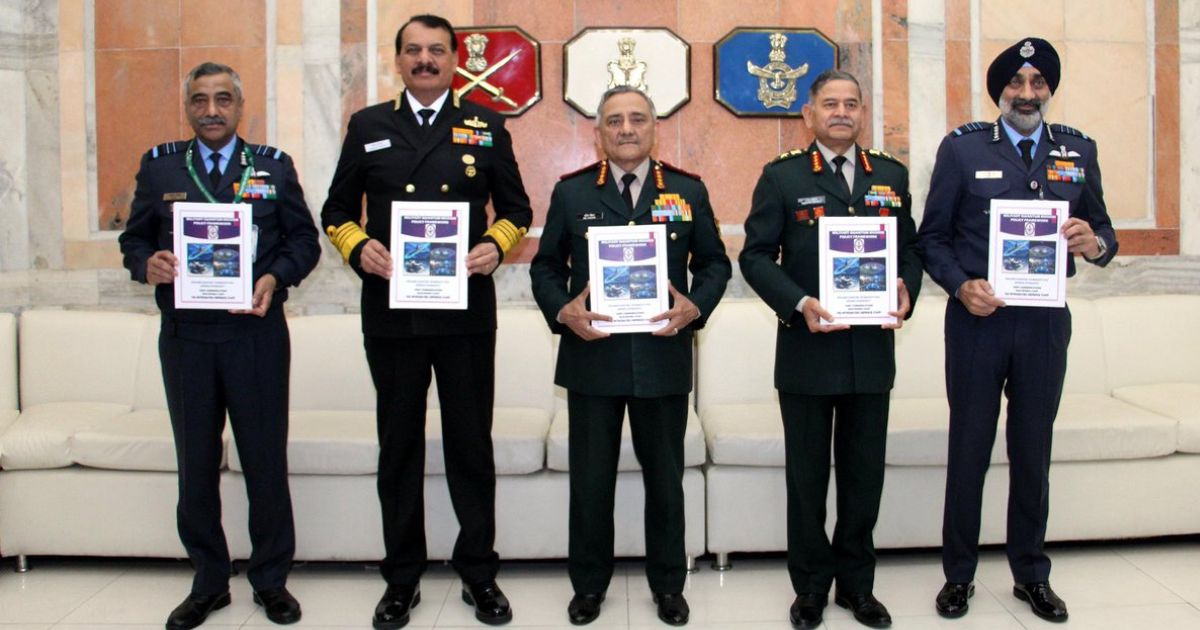
The Chief of Defence Staff of India, General Anil Chauhan, has published a new policy framework detailing the way quantum technologies will find their way into the nation’s armed forces as New Delhi aims to prepare itself to fight the battlefields of the future and to enjoy technological superiority.
A roadmap of integrating four pillars of quantum technology into the tri-services, quantum communication, quantum computing, quantum sensing and metrology, and quantum materials and devices, is outlined by the Military Quantum Mission Policy Framework, which was released on 21st January..
The defence ministry believes that the framework will synchronise military action with the National Quantum Mission in India and will ensure that the armed forces form a focal point in the overall national quest to develop a sophisticated quantum framework.
The document provides an indicative policy and implementation roadmap to facilitate the armed forces to embrace the latest quantum technologies involving the integration of the army, navy and air force. It highlights the significance of jointness and integration in the implementation of such capabilities to attain what the officials term technological domination in future battlefields.
The structure also emphasised the importance of civil-military fusion, in which special bodies of government are to be established to be composed of representatives of various sectors of the government to speed up the integration of quantum technologies into defence applications.
The release was attended by senior military officers such as the chief of the naval staff, Admiral Dinesh K Tripathi; the chief of the army staff, General Upendra Dwivedi; the chief of the air staff, Air Chief Marshal A P Singh and the chief of the integrated defence staff, Air Marshal Ashutosh Dixit.
The policy is a big stride by the Indian government in its attempts to incorporate the new technology into the modernisation strategies of its military since quantum capabilities are being looked into by global military forces as the most secure means of communication, sophisticated sensing and next-generation computing.