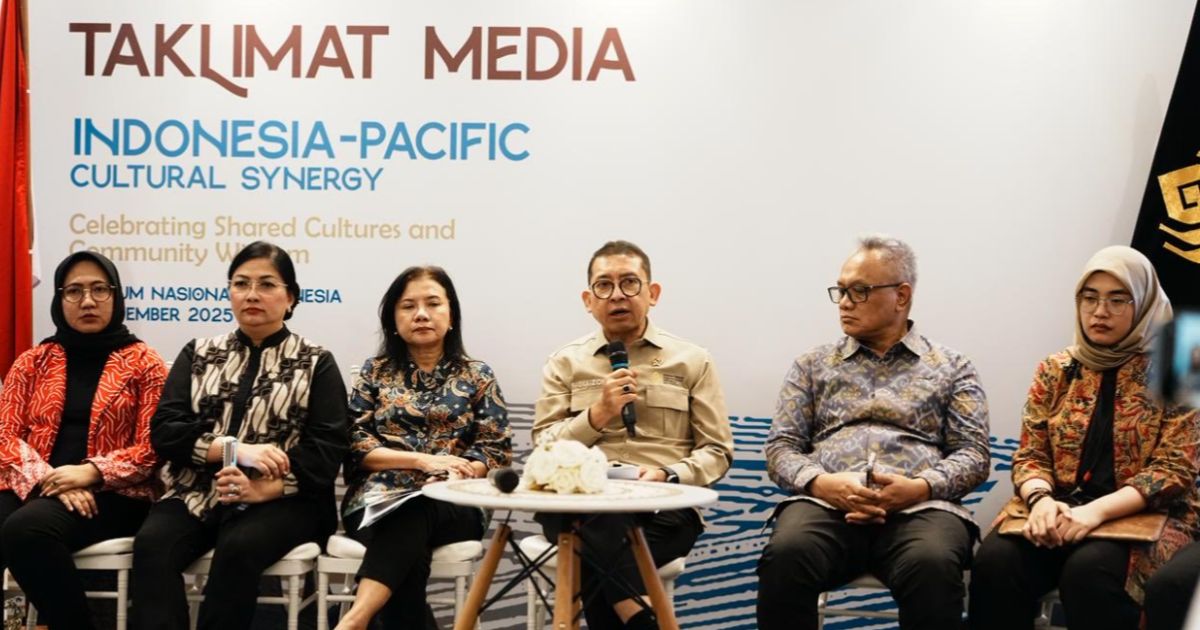
The Ministry of Culture is making special emphasis on the formulation of regulations on the intellectual property (IP) of the cultural heritage because it is seen as a key stepping stone to the enhancement of economic competitiveness and as a means of enriching the cultural heritage of the country.
Minister of Culture Fadli Zon stressed the need to control the cultural heritage IP in order to create economic gains without compromising its cultural worth.
He pointed out that most imaginative actors can come up with IP products guided by traditions and culture; however, there must be an effective regulatory structure that will facilitate the state to benefit, at least in part, when the products are used.
“IP is very important. There are a lot of individuals who are capable of making IP based on their cultural heritage. Made well, it can add to the creation of heritage, but has to be controlled in such a way that the state does not lose out on some applications of IP,” as he said here on 6th November.
As Fadli pointed out, “The management of the cultural heritage IP is highly connected with the national economic development of the country as a driving force.”
“The Ministry,” he said, “is not only involved in ensuring that cultural IP is not abused, but also mapping its possibilities as a source of economic value.”
According to him, “The Ministry will open wide cross-sector cooperation to draw up cultural IP rules that will benefit the country economically without misappropriation of culture.”
Andi Syamsu Rijal, who is the head of the Digital Culture Development at the Ministry of Culture, shared the opinion of the Minister by emphasizing that culture is the upstream pillar of national development.
He also spoke of the need to develop economic development based on values, and those values lie in culture when addressing a focused group discussion called “Synergy Between Culture and Economy: Building a Sustainable Culture-Based Economic Ecosystem.”
This discussion is not only a gathering, but it is also an attempt at strategizing how to take concerted action such that culture is not just a part of identity, as he said.
He also mentioned, “There are a number of important outputs that the forum would create.”
There will be a common vision that culture is the base of national economic development, as well as a teamwork approach that combines cultural values with innovation and digital technology.
The other objective of the forum is to recognize challenges and opportunities of the cultural economy, forge a joint partnership of the cultural economy with the purpose of enhancing the cultural value chain between preservation and global marketing, and develop a collaborative roadmap to build the contribution of culture to the national development and to the attainment of the Sustainable Development Goals (SDGs) 2030.
In the meantime, Jakarta Creative Economy Committee Chairman, Ricky Pesik, emphasized the significance of the paradigm shift and systematic management to empower the cultural economy.
He observed that Indonesia already has a sound legal environment to promote the synergy between culture and the economy with a number of laws, such as the Law No. 24 of 2019 on the Creative Economy, the Law No. 5 of 2017 on the Cultural Advancement, and the Law No. 28 of 2024 on Copyrights.
Ricky noted that the shift by the global economy towards a digital economy has become a significant factor in the growth of the creative industry.
Here, the cultural diversity and demographic advantage that Indonesia has placed the country at the centre stage as a prospective source of intellectual property within the Asian region.
“Indonesia is going to be a formidable entity in the intellectual property sphere due to its demographic bonus and high cultural diversity,” according to him.
The efforts of the Ministry of Culture to reinforce cultural IP control are likely to become one of the milestones in creating an economy that is based on culture and cultural identity, and heritage is transformed into a lasting reservoir of national wealth.