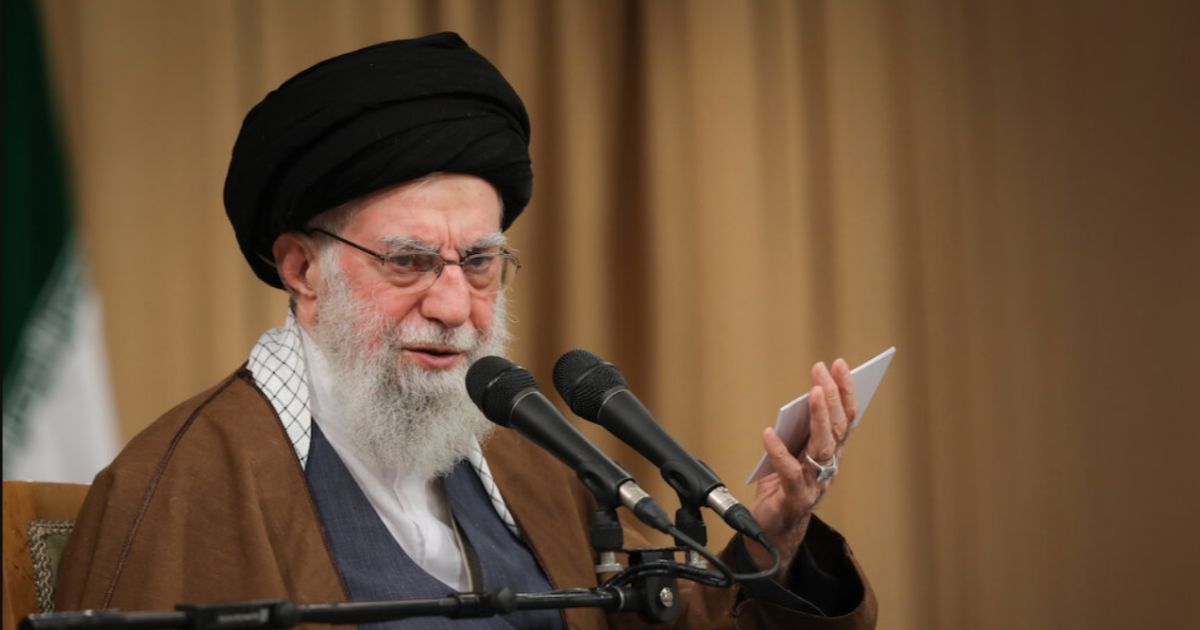
The supreme leader of Iran, Ayatollah Ali Khamenei, promised on 9th January that the Islamic Republic would not retreat under the largest protests in years past, and authorities tightened an internet blockade as part of a crackdown that has already killed dozens of people.
The 13 days of protests across Iran have been caused by the anger over the increasing cost of living, which today is characterized by a demand to eliminate the clerical regime that has governed Iran since the Islamic revolution of 1979 that ousted the pro-Western Shah.
The largest demonstrations in the movement thus far occurred late Thursday with great numbers of demonstrators processing the capital of Tehran, shouting such slogans as “death to the dictator.”
Internet monitor Netblocks(s) reported that the authorities had now issued a “nationwide internet shutdown” for the final 24 hours, which was infringing the rights of the Iranian citizens and disguising regime violence.
In a different statement, Amnesty International reported that the “blanket internet shutdown” is meant to conceal the actual scope of the gross human rights abuses and crimes against international laws that they are committing to suppress the protests.
In an earlier toll of 45, raised the previous day, NGO Iran Human Rights based in Norway, reported that the security forces have killed at least 51 protesters, including nine children under the age of 18, and injured hundreds.
The protests can be described as one of the largest threats so far to the Islamic Republic during its existence of more than four and a half decades.
‘Stained with blood.’
Thursday’s protests were the largest in Iran since the 2022-2023 protests across the country following the death in custody of Mahsa Amini after she was arrested over the allegations of breaking the strict clothing code in the Islamic Republic.
However, Khamenei made a defiant first strike in his opening speech on the intensifying protests since January 3, declaring the demonstrators to be “vandals” and “saboteurs,” in an address on state television.
In apparent reference to US President Donald Trump, Khamenei claimed that his hands were stained with the blood of over a thousand Iranians, though this was a reference to the June war against the Islamic Republic by Israel with the backing of the US and its own strikes.
His prophecy about the US arrogant leader was that he was going to be overthrown just like the imperial dynasty that ruled Iran until the revolution in 1979.
In an address to his supporters, he said that last night in Tehran, a group of vandals had come there and burned down a building belonging to them, in order to please the US president, and as men and women in the audience shouted the mantra of death to America.
Everyone knows that the Islamic Republic was put to power with the blood of hundreds of thousands of honourable people; it will not turn around against the saboteurs.
Later on Thursday, Trump indicated that the eagerness to dismantle that regime is astounding and threatened to strike Iranian officials hard should they opt to counter the protests by killing them. “We’re ready to do it.”
Trump, in the Fox News interview, “even proposed that the 86-year-old Khamenei might be considering exiting Iran.”
“He is going to go somewhere, ” he said.
Iranian Foreign Minister Abbas Araghchi, who had paid a visit to Lebanon on Friday, accused Washington and Israel of taking a direct role in trying to turn the peaceful demonstrations into divisive and bloody ones.
‘Red line’
Reza Pahlavi, the son of the ousted Iranian shah in 1979, a US-based activist, asked Trump to intervene and assist the demonstrators, saying that the people would be back on the streets within an hour.
But the chief of the judiciary, Gholamhossein Mohseni Ejei, threatened to be decisive in punishing the rioters to the maximum possible extent without any legal mercy.
In response to the protests, a statement quoted by the state television said a district prosecutor in the town of Esfarayen in eastern Iran and a number of the security forces were killed late on Thursday.
The Revolutionary Guards, which is the intelligence arm of this security establishment, charged with the responsibility of ensuring that the Islamic Republic is maintained, stated that the continuation of such a situation was not acceptable and that safeguarding the revolution was its red line.
In the meantime, on Friday, the Iranian state television showed photos of thousands of participants in anti-demonstrations and waving signs in support of the authorities in certain cities in Iran.
“Security forces opened fire on demonstrators in Zahedan, the capital of Sistan-Baluchistan province, after Friday prayers, killing an unspecified number of demonstrators,” said Haalvsh rights group, which targeted the Baluch Sunni minority in the southeast.
Late Friday, there were not many videos that ran of other new protest activities, and some of the sources attribute this to the internet shutdown.
In a joint statement, Amnesty International and Human Rights Watch revealed that since the protests began on December 28, the security forces have illegally fired rifles, shotguns loaded with metal pellets, water cannon, tear gas, and used beatings to break up, harass, and punish them.