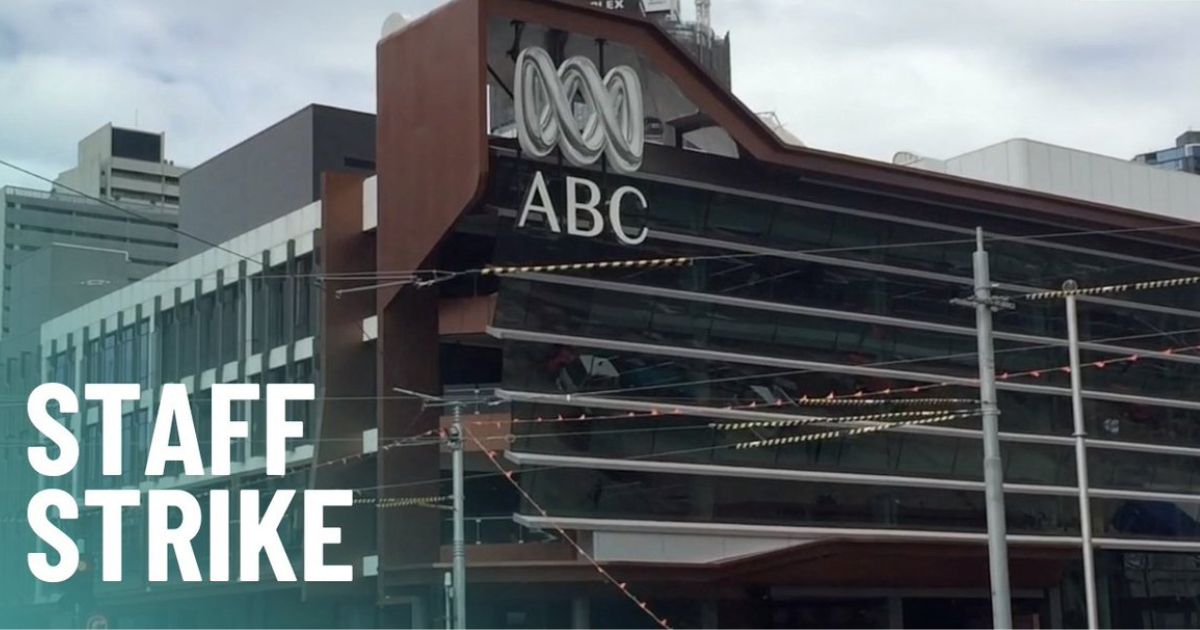
Hundreds of journalists have gone on strike at the Australian national broadcaster on 25th March over pay, conditions, and the potential use of AI to replace them.
It is the first time the journalists at the Australian Broadcasting Corporation (ABC) have gone on strike in 20 years, following the rejection of the pay offer, which was below the rate of inflation, by the majority of the union members.
The flagship shows, including the 7.30 evening current affairs show, and the breakfast shows, will not be broadcast on Thursday, with reruns and other shows, as well as the BBC, being shown instead.
The ABC said the pay offer “reflects the maximum level” the government-funded broadcaster “can sustainably provide”.
“Public broadcasting is the hope of the future of journalism,” ABC veteran David Marr said to the BBC as he left with his colleagues, “and it has to keep up with wages… and promise secure futures for those who invest their lives in it.”
The staff began their strike from 11:00 local time (00:00 GMT) on Wednesday and will not resume their duties for 24 hours, although emergency broadcasts will continue as usual.
Radio programs, including Triple J and ABC Classic, are expected to have little live content and will only play music.
ABC has over 4,400 staff, with 2,000 working in the news division, the largest division in the organisation.
The staff was offered a staggered 10% pay rise over three years, with a 3.5% increase in the first year, followed by 3.25% in the two following years. The country’s inflation rate was 3.8% in January.
Employees were also offered a one-off bonus of $1,000, but this would not be offered to casual workers, who make up a large proportion of the workforce.
ABC Managing Director Hugh Marks said the offer on the table was financially responsible and competitive in the industry.
“The pay offer reflects the maximum amount the ABC can sustainably provide, and it is balanced when we look across all the factors we need to take into consideration,” he said.
The offer has been rejected by 60 per cent of the union members who voted, but a majority voted in favour of taking industrial action.
Employees are also demanding better rates of pay for working nights, better career advancement prospects, and fewer short-term contracts. There is also anger about the ABC’s refusal to rule out the use of artificial intelligence to replace workers.
The ABC will refer the matter to Australia’s workplace tribunal, the Fair Work Commission, in an attempt to settle the dispute.
Hours after the strike began, several hundred people, some dressed in black, assembled outside ABC offices in Sydney and Melbourne.
Veteran ABC broadcaster Fran Kelly, who had been at the helm of the ABC’s breakfast radio show for nearly two decades, addressed the crowd outside ABC headquarters in Sydney, saying she was once on rolling contracts at the beginning of her career until union pressure was applied to give her a permanent position.
“I want you all to have the same choice. It’s not acceptable that you get stuck at a pay level that is not enough to live on in Sydney or Melbourne or wherever you are.”
Many ABC journalists interviewed by the BBC agreed to talk only on condition of anonymity for fear of jeopardising their own short-term contracts.
One young woman, who works in podcasting on a short-term contract, described working for the ABC as her “dream job,” but just a few hours earlier, she was offered a permanent contract at a rival media outlet.
“It’s really stressful, I love my job, and I want to stay, but that’s the decision that I have to make,” she said.
Earlier, Melissa Donnelly, a spokesperson for the Community and Public Sector Union, said that ABC employees wanted salaries that would take into account cost-of-living pressures and the work that a public broadcaster does.
“The Australian Broadcasting Corporation plays an important role in our society and in the stories that are told in Australia. It is really important that the people in charge of the Australian Broadcasting Corporation work with others to make things better.”
Sarah Henderson, who is in charge of talking about communications for the opposition and used to work as a journalist for the Australian Broadcasting Corporation, said she thinks the strike is a thing because the offer of pay seems like a good deal when you think about how the economy is doing.
“There has never been a time when we need the Australian Broadcasting Corporation journalists and the people who make content for the Australian Broadcasting Corporation to be out in the field telling Australians what is going on as much as we need them now.”