A historic mission with global attention
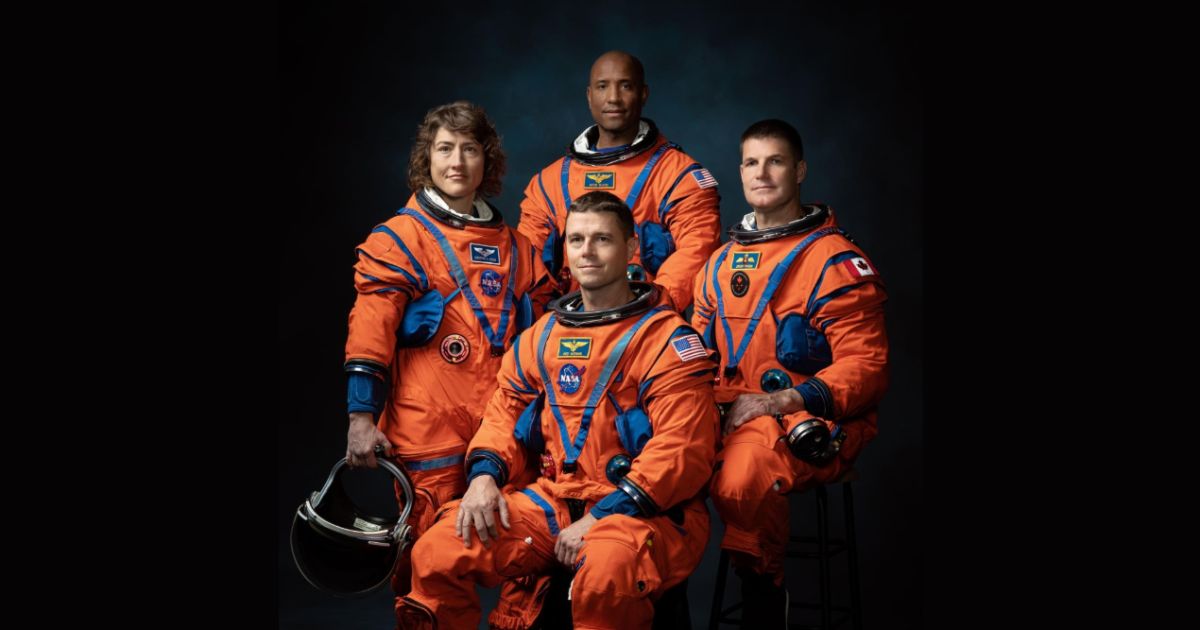
Artemis II is bound to be one of the most monitored space missions that have occurred in recent years, with NASA preparing to launch astronauts around the moon in the first instance in over fifty years. Four astronauts (three Americans and one Canadian) will be sent to the moon on the Orion spacecraft, the first manned mission under the Artemis programme and an important milestone towards putting humans back on the moon.
The takeoff at Cape Canaveral, Florida, has attracted the attention of the world, with hundreds of thousands of people anticipated to come and observe the launch. But it is not only a spectacular launch that is Artemis II. It marks the start of a new era of space exploration, but not that which is solely informed by scientific interest, but also by geopolitical competition, strategic alliances and the struggle to influence the future of the Moon.
From Cold War rivalry to a missed chance for cooperation
The Moon had become the centre of world power politics more than half a century ago. In September 1963, President John F. Kennedy of the United States appeared before the United Nations and made an incredible offer: the United States and the Soviet Union should collaborate in a mission to the moon. Kennedy wondered why the first trip to the moon surface would be marked by competition between nations and believed that astronauts would be able to travel as the representatives of the whole nation, not a single flag.
It was a phenomenal vision during the peak of the Cold War. But the thought never came to pass. The offer was not accepted by Soviet leader Nikita Khrushchev, and the two superpowers proceeded along different courses. The United States became the sole winner of the space race by landing on the Moon less than six years after the assassination of Kennedy in 1969. The 12 American astronauts visited the lunar surface in 1969, 1970, 1971, and 1972, and the Soviet Union never achieved a crewed landing on the Moon.
Space law evolved, but tensions never disappeared
Even with the first space race going on, countries started to formulate regulations on outer space. In 1967, the Outer Space Treaty was signed, which formed the fundamental legal framework of peaceful exploration and utilisation of space, including the Moon and other celestial bodies. It proclaimed that no nation could claim sovereignty over the Moon and that outer space was to be utilised for the good of all humankind.
Subsequent accords covered rescue missions and satellite ownership, and collaboration broadened following the Cold War with endeavours like the Mir space station and subsequently the International Space Station. But despite the peaceful end of the ideological rift of the 20th century, competition in space did not actually cease.
Even the United Nations is today warning that increased security threats in outer space are outpacing the moves to ensure that it remains a weapons-free zone. Attempts to establish new agreements have been frozen in recent times, and increased militarisation of space has given increased urgency to the argument on how mankind should behave off Earth.
Artemis is about staying, not just landing
In 2017, the Artemis programme, initiated by the presidency of Donald Trump, was not meant to repeat Apollo. It is not merely aiming at another flagging of the Moon, but to create a long-term presence. Artemis II will be a test mission to evaluate the systems required to land on the Moon in the future, with future missions scheduled to land astronauts on the lunar south pole, which is of particular interest due to possible water ice reserves.
It is this long-term vision that makes Artemis so important. NASA is interested in establishing the bases of the lunar economy: it will test how to make bricks using lunar soil, how to produce fuel, how to send solar power to the surface and even how to operate a civilian nuclear power plant. In this respect, the Moon will no longer be a symbolic destination. It is increasingly considered a frontier of operation.
Artemis is very international as well. The programme has significant input, along with NASA, Canada, the European Space Agency and Japan JAXA, with the support of the United Arab Emirates and individual industrial collaborations with countries such as Italy and France. Europe, in particular, has come up with the European Service Module, which is a crucial component of the Orion spacecraft that supplies and sustains the crew during deep-space journeys.
Private companies are now central players
Governments are no longer operating in isolation, as they were during the Apollo era. Now, the core of lunar aspirations lies with private enterprises, particularly in regard to landing systems and infrastructure. Both Blue Origin and SpaceX are also significantly engaged in the Artemis architecture and should have significant roles to play in taking astronauts to the Moon.
It is a significant change in the dynamics of space exploration. NASA can put astronauts into deep space, yet commercial companies are increasingly tasked to supply the equipment to go to the moon, deliver cargo and create infrastructure. The next era of human spaceflight has become the SpaceX program of the Starship and the Blue Origin program of the Blue Origin lander.
Innovation and controversy are the two things that come with commercialisation. It shortens the timelines and reduces expenses, yet it also brings about the issue of resource ownership in space and who is going to own the lunar resources in case mining, fuel production or permanent settlements become a thing.
A new Moon race is taking shape
The Artemis programme is not to be confused with the Artemis Accords, the US-led legal framework that was developed in 2020 to regulate cooperation and use of space resources. The accords are controversial, with around 60 countries signing them. Russia and China were not a part of the initial process and now consider the framework to be overly US-oriented.
The International Lunar Research Station (ILRS), a different lunar program, is also aiming to pursue a separate vision in both countries that could end up creating a competing system to Artemis. It implies that the Moon is becoming again a battleground of warring blocs not only between the US and Russia this time but a broader war that involves China, India, Europe and up-and-coming space powers.
The most controversial aspect of the discussion is a challenging legal and political issue: amidst no ownership of the Moon, who will be allowed to utilise the resources of the Moon? The establishment of safety zones around lunar activities and the increasing involvement of private companies have added to the anxieties that access may become controlled.
The Moon may become the next global test
Artemis II is thus far more than a lunar orbit mission. It will mark the first scene in a new period of space exploration where collaboration, rivalry and business will come into conflict on the moon’s surface. The Americans, the Chinese, the Russians, the Indians, and the others are all likely to work on the south pole of the Moon in the years to come, and they will have their own bases, landers, and ambitions.
The Outer Space Treaty of 1967 states that space is to benefit all nations. However, now that mankind goes back to the Moon, this ideal will be tested more than ever before. Artemis II is not about revisiting the past; it is about who will create the future when we get there.