The ancient Silk Road is a significant part of the cultural heritage of Kyrgyzstan that still enhances its collaboration with China and other nations in this sphere, according to a Kyrgyz specialist.
In a recent interview with Xinhua, Mars Sariev, a Kyrgyz political scientist and analyst of the issues of Central Asia, stated that the ancient Silk Road has become a universal cultural language in global cooperation, which connects nations with different political and economic systems on common historical and cultural values. He pointed out that Kyrgyzstan has been building steadily on its cooperation with China and other parties on the ancient Silk Road in the preservation of cultural heritage.
He indicated the UNESCO World Heritage Site, “the Silk Roads: the Routes Network of Chang’an- Tianshan Corridor,” as a useful example of a transnational nomination, which has seen collaboration in archaeological research, scholarly consultation and exchange, and the cooperation of specialists of China, Kazakhstan and other nations.
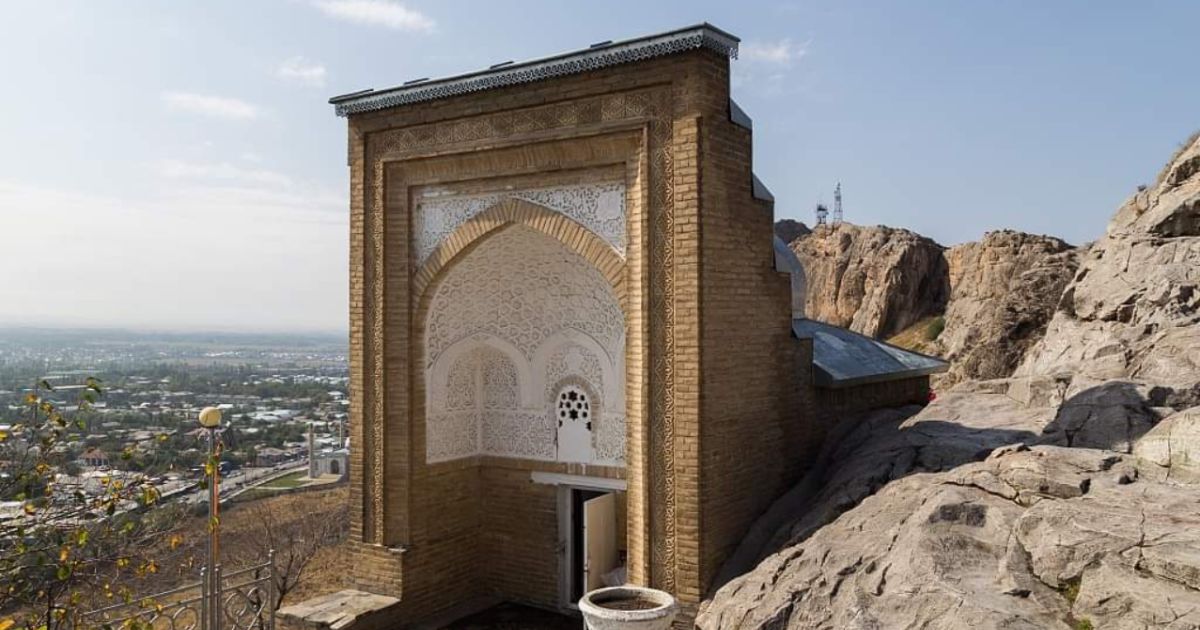
“The cultural heritage of the ancient Silk Road is of essential significance to Kyrgyzstan, historically and culturally, as well as today in social and international aspects,” according to Sariev, since historically, the modern Kyrgyzstan territory was one of the most important transcontinental routes that connected China, Central Asia, the Middle East, and Europe. There existed ancient hubs like Suyab, Burana and Osh where cultural, religious and technological exchange was intense.
He observed that the “legacy of the Silk Road is useful in modern social development in promoting intercultural tolerance, local identity of Central Asia, building cultural tourism and creative industries and Kyrgyzstan’s soft power at the international level.”
However, modern technologies have become available today, such as remote sensing, 3D modelling, artificial intelligence, virtual and augmented reality, and Sariev explained that they have provided new opportunities for preservation and promotion of the Silk Road heritage.
According to him, the technologies will allow conducting non-invasive archaeological studies, producing digital replicas of monuments, simulating absent sites and ancient landscapes, and expanding the reach of cultural heritage to young people and the global community.
Sariev proposed to consider the ancient Silk Road in terms of its cultural heritage to be transmitted and preserved oriented, on the one hand, to such directions as joint nomination of the UNESCO objects, on the other hand, to joint work on the development of a single digital database of ancient Silk Road objects where new approaches are standardized in describing, monitoring and preserving them, to joint research on modern conservation technologies and training and to the development of transnational tourist routes not only and not only to the mass tourism, but also to the scientific, educational and cognitive tourism.
Speaking about the “spirit of the Silk Road,” whose main principles are peace and collaboration, openness and inclusivity, mutual learning and mutual benefit, Sariev said that, in his opinion, modern intelligible forms of heritage interpretation, such as interactive museums, digital exhibitions and VR routes, will become prominent.
Thus, he has said, “the cultural heritage of the Silk Road cannot be merely a subject of protection, but also a source of living resources to create the values of the future with the help of knowledge, technology and international collaboration.”