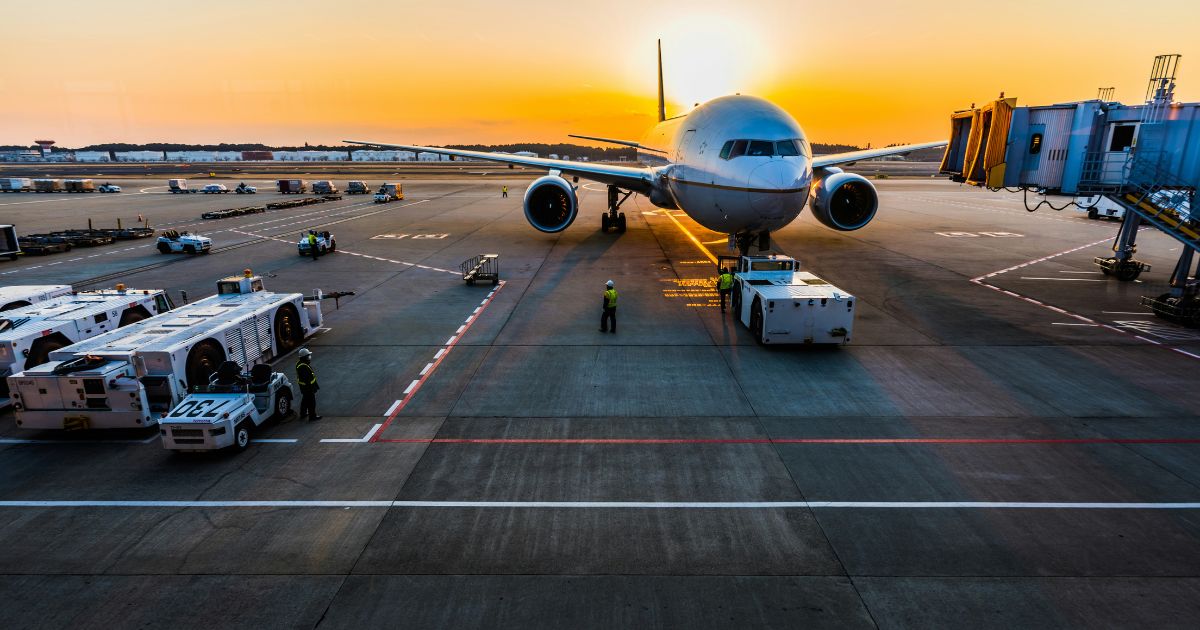
Dubai, the busiest international travel port in the world and major airports in the Middle East were closed on 28th February following U.S. and Israeli attacks on Iran and Iranian retaliation through missiles that shook global air travel in several years.
The international airport of Dubai, which has a daily flight capacity of over 1,000, was damaged in one of the retaliatory attacks by the Iranians on sites of the Arab Gulf states during the night, and the international airports of Abu Dhabi and Kuwait were also affected.
Key gateways of the region, such as Dubai, Doha and Abu Dhabi, were closed because countries in the Middle East closed their airspace because of the strikes and retaliation by Iran. Flight maps had no skies above Iran, Iraq, Kuwait, Israel and Bahrain and airlines in Europe and the Middle East made far and wide cancellations.
Dubai and nearby Doha are gateways in the east-west air travel, as long-haul traffic across Europe and Asia passes through a narrow timetabled system of connecting flights. Any sustained closure of its airstrips has far-reaching effects that require airline companies to either reroute their flights or even cancel flights across the globe.
“It is so large in the scale of these hubs today. You will get hundreds of thousands of people trapped in the wrong places of the world with no idea when they could move again,” said UK-based aviation analyst John Strickland.
“It hits at so many levels. The immediate question is what occurs today and the ricochet impact of how long this goes on, but Strickland adds that other significant players in the Gulf, such as Emirates and Qatar Airways, are also some of the largest cargo carriers in the world.”
Dubai Airports cancelled all the flights at the Dubai International and Al Maktoum International until further notice and advised the passengers not to travel.
AIRSPACE might be shut down, at least temporarily.
On Saturday, the U.S. and Israel executed the most ambitious attack on Iran in decades, assassinating the Supreme Leader Ayatollah Ali Khamenei of Iran and prompting an Iranian response in missile and drone strikes, putting the Middle East at a higher risk of the outbreak of a larger conflict.
It is likely that airspace will probably be closed down for a long period of time, according to Eric Schouten of Dynamics aviation security advisory, the head of the passengers and airlines.
On Saturday, the United States and Israel initiated strikes on Iran, and airlines cancelled approximately 28 per cent of their operations to Kuwait and 50 per cent of their operations to Qatar and Israel, according to preliminary Cirium data. Overall, approximately one-fourth of flights to the Middle East were cancelled, the statistics indicated.
Given that the war between Russia and Ukraine has displaced airlines using the airspace of the two countries, the area has gained significance in international aviation.
Operational risks increase the occurrence of conflict zones and lead to more concerns of accidental shoot-downs and long routes that escalate fuel costs.
Stranded passengers all over Europe
Students on a trip from Paris to Dubai claimed that their college trip had been called off. Benjamin Gnatek said that they still had students who had been there earlier and were stuck in Dubai, and that they were not sure when they could get back to their school.
Charles de Gaulle airport traveller Roman Simon, who was bound for Thais, said that his flight through Doha was cancelled. He told Reuters that “they are now trying to find a way to still make their trip to Thailand.”
At the Hamad International Airport in Doha, the gates were almost vacant because trapped passengers were waiting in line to book accommodation in hotels, according to a Reuters witness.
With the countries in the region shutting down their airspace, planes had no choice but to bypass Larnaca, Jeddah, Cairo and Riyadh. Flightradar24 experienced a short-term crash because of high traffic.
On Saturday, the European Union aviation authority EASA advised its airlines against flying in the airspace in the area of the ongoing military intervention.