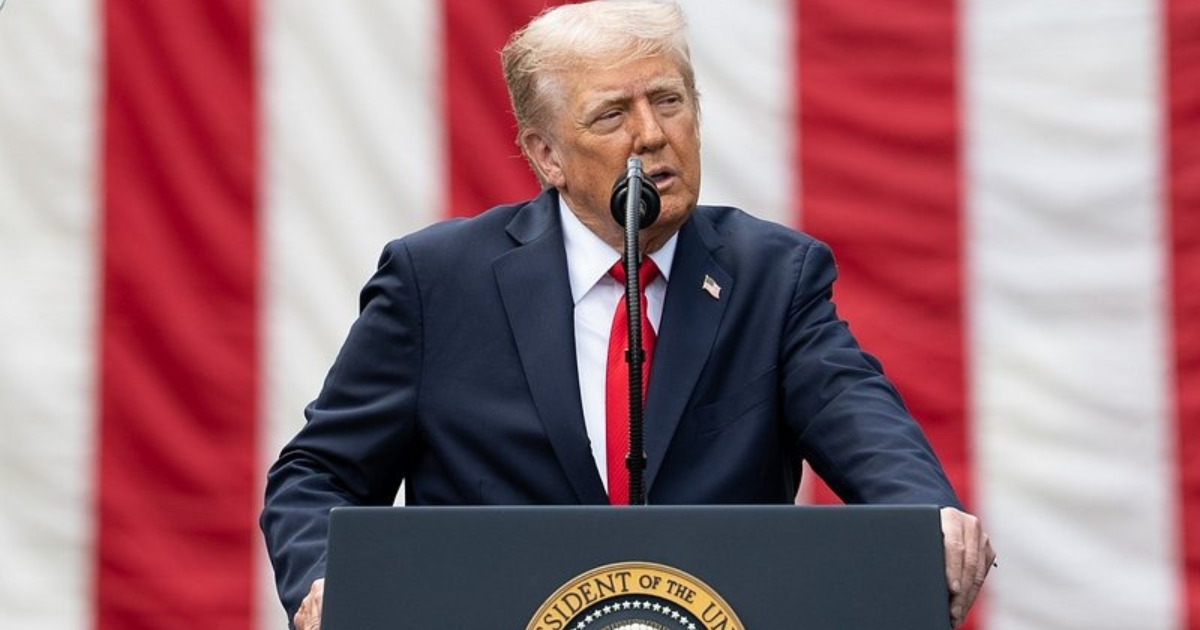
Donald Trump is running for re-election in mid-term elections that could be pivotal for his second term in the White House, as they will decide which party will control the United States Congress. It is in those pivotal elections at a perilous time for the GOP, when soaring gas prices are the top concern of voters.
Prices of food and fuel have risen, in part due to the president’s aggressive tariffs globally and the unpopular war with Iran. Trump has been campaigning heavily in recent months, holding dozens of rallies around the country in an effort to shore up Republican candidates, as approval ratings for the president have been at record lows.
The president, in a closing speech in Washington D.C., claimed the Republicans have made a very good effort on the campaign. But the economic burden is the issue of both parties, and Trump campaigned heavily in former Republican strongholds such as Iowa and Kansas.
The party also has made big bets on some of its more predictable races, like the Kansas Senate race. Governor Mike Bevin is on record as saying that he is worried about voter turnout and sentiment.Republican worries in voter sentiment and turnout are evident in defensive spending in states that they should have no trouble winning, political analysts note.
Trump isn’t, of course, on the ballot, but he’s asked rally attendees to imagine he is on the ballot more than once. That is a key issue for the GOP: Is the president still a net positive for their campaign?
After a resounding win in the 2024 election, Trump came into the White House with high approval ratings, and his blessing was sought after. But the conflict in Iran has taken a toll on the American wallet, too, as diesel prices rose to a record $6.52 per gallon in September and inflation rose to 3.7%.
These have meant that, in places like Texas, Ohio and Kansas, they have seen the typically safe Republican contests become competitive. Political strategists caution against concluding from unfavorable presidential approval that that means their party is popular.Even as many complain about the economy, political strategists are not so sure that bad approval numbers for the president are necessarily bad ratings for their party. The president’s approval rating is currently at 38%, while only 29% have a positive opinion of the Democratic Party, according to recent polls.
Several Republican voters who are dissatisfied with the policies of the current government assert that they will not shift parties, as they consider the Democrats too liberal. Nonetheless, Democratic strategists remain optimistic about an increase in their representation in the House of Representatives due to the fact of there being ongoing “undeclared war,” and dissatisfaction with the rising costs of living.
If negotiations in the House of Representatives are successful, Democrats may possibly start working on an extensive investigation or block policies proposed by members of Congress. However, in reality, Trump frequently bypasses Congress thanks to his executive powers.
For the Democrats, winning the Senate is a much more difficult proposition, as they must win 4 more seats. The key battleground states to watch, which are mostly within polling margin of error, are Michigan, Texas, Ohio, Iowa, Maine, Alaska and North Carolina.
To sum up, the elections are the first test for both parties in preparation for the presidential election of 2028. These elections will give the voters an understanding of the state of politics in the country and of the efficiency of the current government.