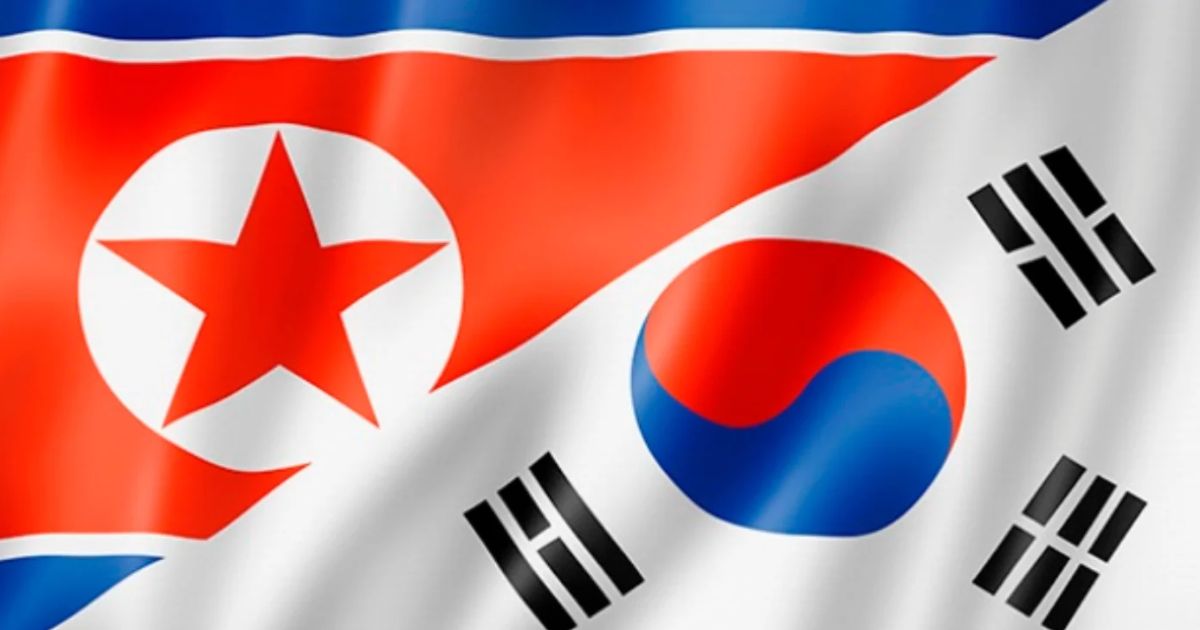
Seoul on 23rd October proposed military talks with Pyongyang to resolve disputes over the location of their border and prevent accidental clashes in frontline areas, seeking to defuse tensions after landmine blasts recently injured three South Korean soldiers.
Whether North Korea will agree to talks is uncertain. North Korean leader Kim Jong Un has taken a hard line toward Seoul and in recent years has suspended virtually all dialogue and cooperation with the South. Meanwhile, North Korea has been building mines, barbed wire fences, tactical roads, anti-tank walls and other fortifications along what is already one of the world’s most heavily armed borders.
South Korea’s military said North Korean soldiers crossed the border’s military demarcation line 50 times this year during fortification work and responded with warning shots and broadcasts.
In November, the South’s military proposed similar talks, which the North rejected. Seoul has been more eager to ease tensions since the Sept. 21 mine explosions on the border that the South’s military blamed on North Korean mines placed south of the military demarcation line.
“Our Ministry of National Defence officially suggests to North Korean authorities to hold South-North military talks to mutually confirm the exact location of the ground military demarcation line between the South and the North, discuss restoration of military communication lines and discuss measures to prevent accidental clashes in border areas,” South Korea’s deputy minister for defence policy, Kim Hong-Cheol, said in a televised statement Friday.
He said the South was also open to three-way talks involving the U.S.-led United Nations Command.
The proposal came days after Kim Jong Un’s powerful sister toured front-line areas where North Korean troops are reinforcing the border. On her visit, she renewed a threat to respond to any South Korean provocation over the fortification work.
Kim Yo Jong also said the North intends to activate border loudspeakers for anti-Seoul propaganda broadcasts, a psychological warfare tactic long employed by both Koreas, and has put unspecified “new counter means” on alert along the border. She accused the South of firing warning shots and issuing warnings toward North Korean soldiers reinforcing the border under what she called a false pretext that they were crossing the demarcation line.
South Korean officials say recent border activity by North Korea has highlighted the Koreas’ disagreement over the precise location of the military demarcation line. The line was drawn up under the 1953 armistice that stopped the fighting of the Korean War, and some boundary markers dating back decades have been lost over time.
However, the location of last month’s mine explosions was not in a disputed area, South Korean Defence Minister Kang Shin-chul said. The North has denied involvement in the incident and rejected Seoul’s demand for an apology and removal of its remaining mines.
“If the issue of the military demarcation line is left unresolved, the risk of accidental clashes will increase as troops from both sides act on their own understanding of the line,” South Korean military official Kim Hong-Cheol said. He said that this situation is also related to the recent increase in North Korean activities along the military demarcation line, and our warning broadcasts and warning shots.
“Our army knows better than any other army where our borderline is,” North Korean Army Marshal Pak Jong Chon said Wednesday while visiting front-line areas with Kim Yo Jong, denying that North Korean soldiers were breaching the border during fortification work.
He accused the South of making “deliberate, premeditated and absurd” claims to shift blame over the rising tensions and threatened an “overwhelming response” to provocations from South Korea.