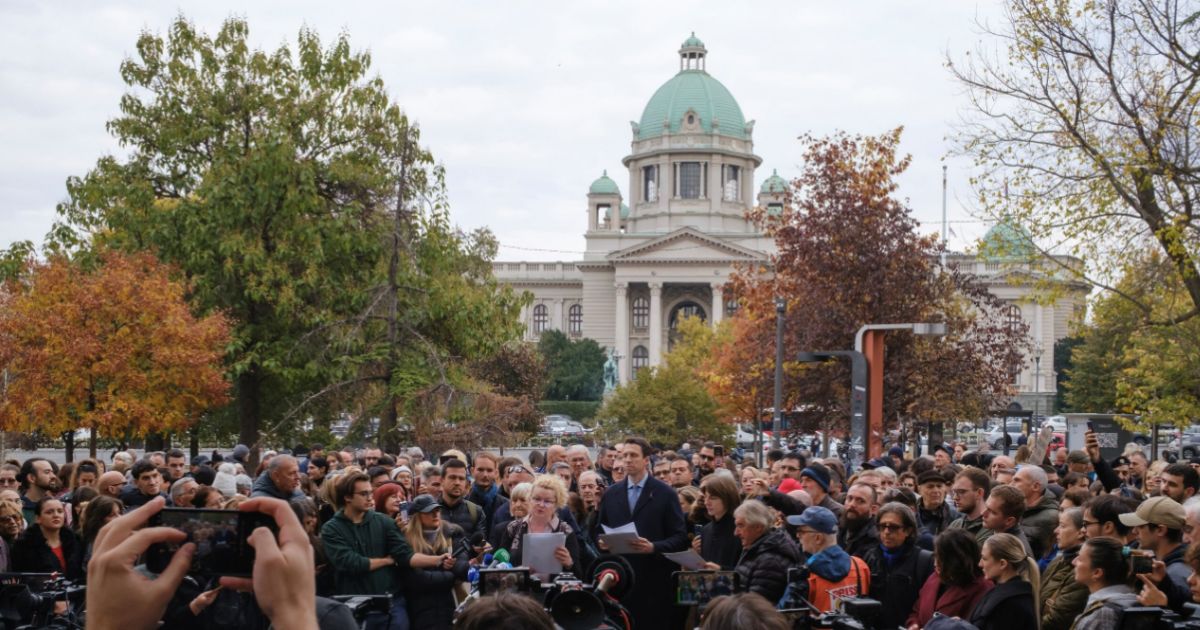
Albania’s protests have raged for days, with demonstrators clashing with police and demanding political change. The unrest is revealing a mounting public frustration with corruption, the state of education and government accountability.
High school and university students have joined the protesters who demand the resignation of Prime Minister Edi Rama. Demonstrations have also raised concerns about the treatment and conduct of demonstrators by the police.
Official figures showed hundreds injured in the unrest, including police officers. Protests have also been held against government buildings and a police station in the capital, Tirana.
Police have fired water cannons and tear gas to disperse people. Riot police chased protesters through public spaces, while volunteers and medical assistants helped victims of tear gas.
Human rights advocates have expressed concern about the arrests and the way they were carried out, questioning whether enough evidence is being presented in some cases. Legal representatives have also expressed concern about people being detained who were apparently not involved in violent incidents.
Protesters say the demonstrations have been fueled by frustration over political accountability, corruption and lack of opportunity. Young activists say “people want better governance, more transparency and a stronger democratic system.”
The protests also point to wider concerns about migration and job opportunities. Many young people are disillusioned with the country’s economic and political situation, and families are searching for better opportunities abroad.
The government has blamed the violence and defended itself, whereas the protestors have been calling for political reform and change in the government. The unrest is indicative of the problems Albania is facing as far as its attempt at implementing democratic reforms and becoming an EU member state.