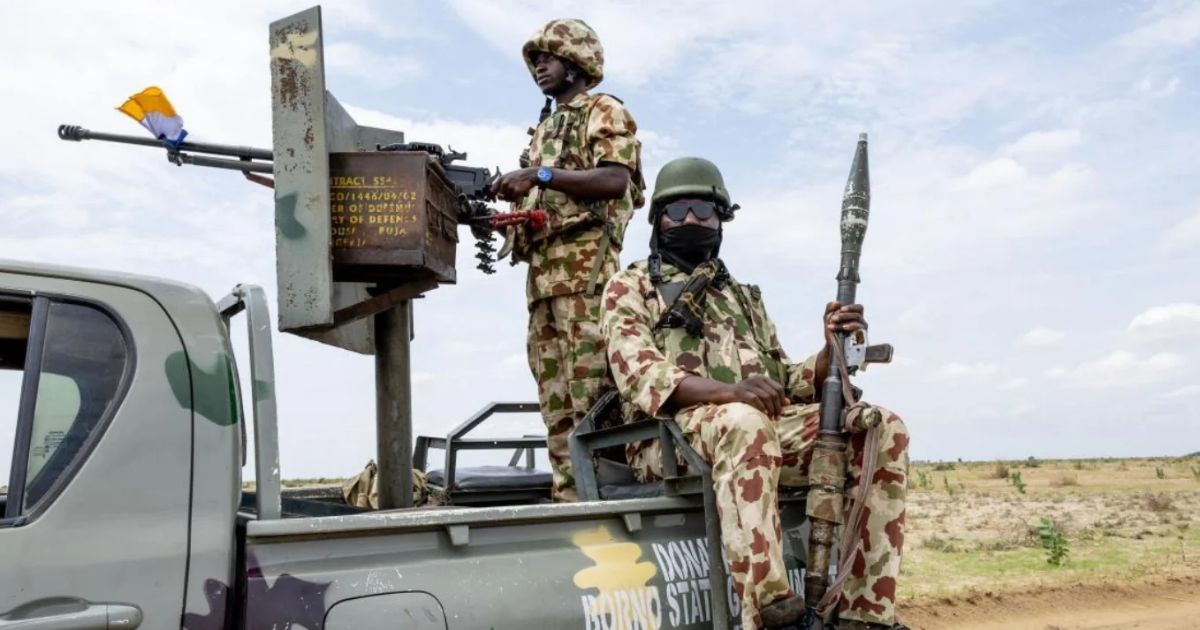
Sources to the agency said the attackers, from the Islamic State West Africa Province (ISWAP), stormed the base in Mairari village in the Lake Chad area overnight from 13th October to 14th October. They looted weapons and then burnt the base down. A Nigerian military officer told AFP that 15 soldiers and five civilians who were members of an anti-jihadist militia (JTF) that had been helping soldiers during the attack were killed.
The officer said troops made it to the garrison town of Monguno, some 18 kilometres (11 miles) away, after the militants “razed” the base to the ground. The military source told the agency that several soldiers have gone missing and colleagues are concerned the jihadists could have captured them.
People living in the region say they have seen ‘a prolonged battle ‘
A Mairari resident, Grema Butari, said the fighters attacked about 2200 GMT and forced a withdrawal by the troops after a “prolonged battle”. All they could do was remain at the base until dawn. Butari said they took everything they could carry and burned the rest, including several vehicles, which resulted in the same death toll.
Ahmad Sherif, another resident, said that the base was “totally destroyed” and that the jihadists were thought to have attacked from their base in neighbouring Guzamala district’s town of Gudumbali.
A week later, they attacked again
According to military and local sources, about 20 militants and soldiers were killed and weapons stolen in an attack on a military outpost in neighbouring Kukawa last week before they were repelled with the assistance of fighter jets.
The epicentre of Boko Haram and later its splinter group, ISWAP, insurgency in Borno is the epicentre of the insurgency that erupted in 2009. Violence had been abating for a decade but has picked up in the last two years. According to the United Nations, the 17-year insurgency has claimed the lives of tens of thousands of people and forced some two million to flee their homes in north-eastern Nigeria.
Nigeria is going through its most violent period in over 30 years. The second quarter (April to June) of the year 2026 witnessed violence on a higher level than that ever before recorded by the ACLED project from 1997.