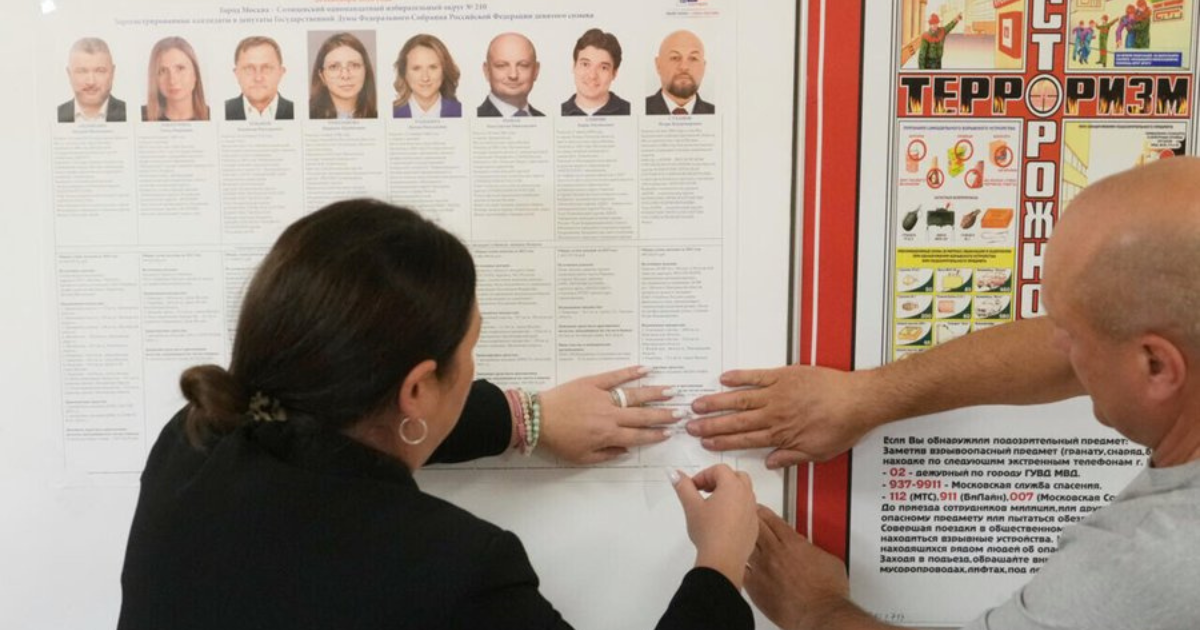
The parliamentary elections in Russia are being held while the ongoing fighting is going on. It is expected that the United Russia Party, which is the key political party supported by the State, will continue its overwhelming majority at the State Duma.
This election is the first one that is taking place while fighting is still happening. The ballots have been extended to add residents from four territories of Ukraine, which Russia has taken over, however, the action has been condemned as illegal by the Ministry of Foreign Affairs of Ukraine as well as other international experts.
The Russian authorities have intensified the control over the electoral process. Just before the elections started, Yabloko—the only political party daring to criticize the war—was removed from the ballot by a decision of the Supreme Court.
Many of those who opposed the war are already in prison or are pushed into exile. Thus, the only remaining “systemic opposition” parties, such as the Communist Party and the Liberal Democratic Party, will be completely loyal to Vladimir Putin.
The elections are taking place at a time of increasing domestic problems and economic turmoil. Ukrainian drones have caused significant damages to Russian oil refineries and transportation hubs, causing severe fuel shortages over the summer. The initial increased military spending in the economy created a good impulse to the economy but with the time, the economy starts to stagnate, domestic borrowing increases, and the budget deficit grows.
The Russian authorities realize the damage done to the economy by Ukrainian strikes but believe that the country will survive this financial battle. Besides, Moscow denies the rumors about a potential mass mobilization of reservists. These accusations are mentioned repeatedly by the President of Ukraine, Volodymyr Zelenskyy, who warned about the possible conscription of people after the elections.
Political scientists point out that the main goal of these elections is to demonstrate a rally of minds in order to foster mass support for the war. It should be mentioned that although public fatigue regarding the war is increasing and the economy is also under pressure, state-sponsored sociological polls show high rates of approval for the current authorities.
The Russian Federation Ministry of Foreign Affairs and other diplomatic channels continue their display of confidence on the world stage. In the aftermath of meetings with American political leaders, the Kremlin indicated it feels relatively advantageous in the war theater and will proceed with its previous course of pursuing maximum demands at the negotiating table.