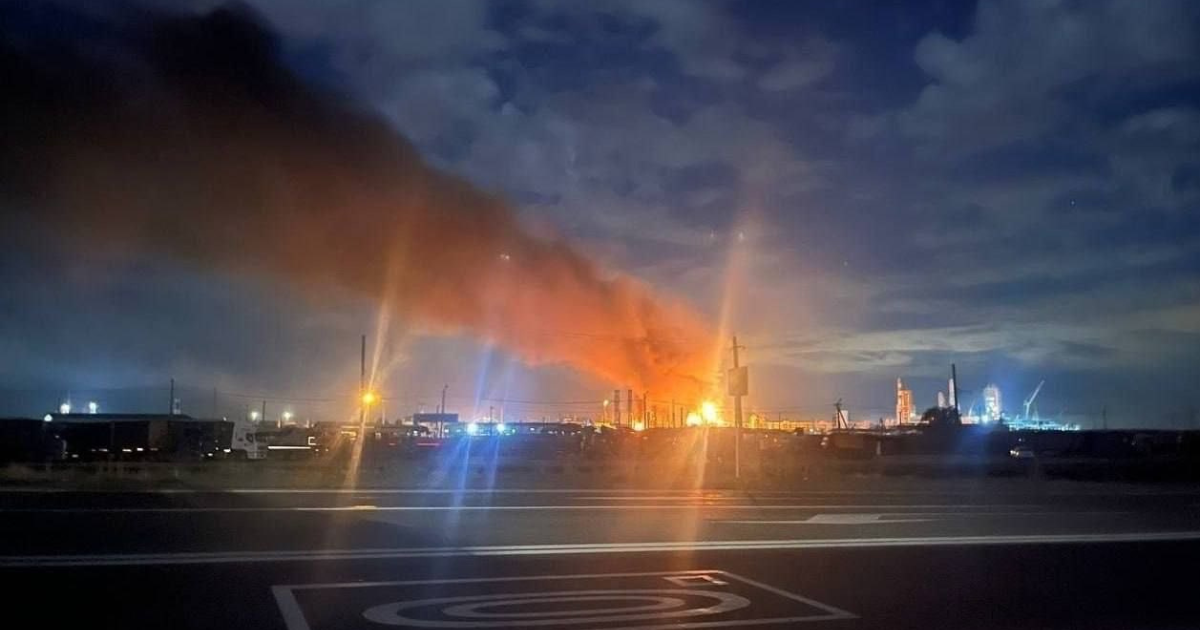
Ukraine’s military forces reportedly destroyed a Russian military base in Rostov-on-Don and a large oil refinery in Yaroslavl on September 17, sending a clear warning to the Kremlin.Ukraine’s military forces reportedly struck a Russian military airfield in Rostov-on-Don and a major oil refinery in Yaroslavl overnight on September 17, giving a clear warning to the Kremlin. The series of drone attacks are part of a larger campaign of coordinated, long-range attacks by Ukrainian drone forces that aim to disrupt Moscow’s military supply routes and fuel movements.
The strike started a huge fire and secondary explosives on the targeted Rostov Oblast airfield. Ukrainian military estimates put the success rate for the attack at two An-26 transport aircraft that got hit and one An-12 transport aircraft hit and three helicopters. Regional officials, who are in charge of reporting to The Kremlin, minimized the incident, though there was visual evidence of the explosions floating around online. Rostov Oblast Governor Yuri Slyusar said his air defenses had to intercept the drones over the Millerovsky and Kamensky districts but there were no casualties and no damage to the ground.
The drone was deliberately dropped in the industrial area of the oil processing plant in Yaroslavl, which is one of the biggest in Russia and is run by PJSC Slavneft. The strike led to a major fire and to damage of the AVT-3 main crude oil processing unit, Ukrainian authorities said. The capacity of this refinery is about 15 million metric tons per year of production of gasoline, diesel, aviation fuel and fuel oil, which are used by the Ministry of Defence of the Russian Federation’s operations.
These concerted attacks on the critical energy infrastructure are a most effective economic and military measure approved by the Ukrainian President, Volodymyr Zelensky. Kyiv is trying to gradually erode Russia’s capacity to fight its full-scale war by repeatedly attacking Russian airfields, defence facilities and oil refineries.
The impact of these operations on the economy is becoming more and more evident. The continuing assaults have caused some fuel shortages in Russia and hampered the nation’s domestic fuel production significantly during the summer, a macroeconomic trend that is always keenly watched by energy watchdogs around the world, including the International Energy Agency.