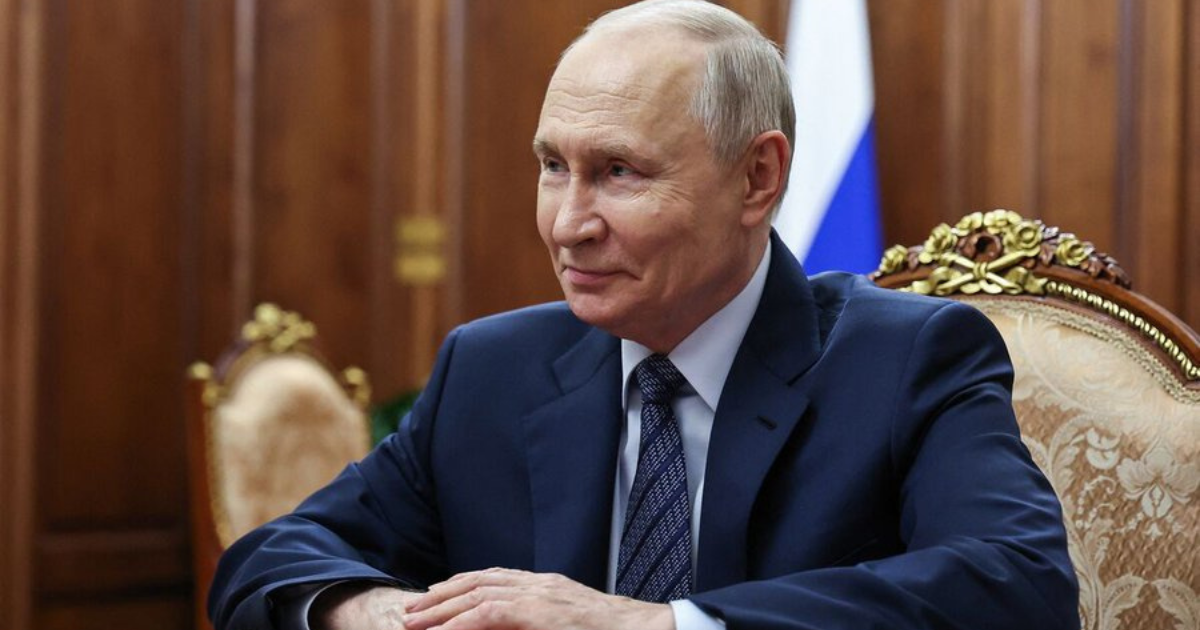
Russian President Vladimir Putin has landed in India for the two-day annual summit of the BRICS nations in New Delhi. The main diplomatic forum begins on Saturday, but is marred by the ongoing conflicts in Ukraine and the Middle East and the uncertainty of international trade and energy markets.
It is also expected that Chinese President Xi Jinping will be among the dignitaries who will be welcomed at the summit. The visit comes in conjunction with the Ministry of Foreign Affairs of the People’s Republic of China and is Xi’s first visit to India since 2019. It’s a big development in the cautious diplomatic thaw between the two rivals after a deadly military stand-off in their disputed Himalayan border.
Contacts are slowly resuming, flights are returning, and visas are being processed, but there is still a lot of mistrust. Bilateral relations remain difficult due to the contested border, regional competition and the continually increasing trade imbalance. To mark the arrival of the leaders, the Prime Minister of India, Narendra Modi, shared a Sanskrit message on social media to welcome them, proclaiming that diplomacy and friendliness is the way forward.
Modi is set to meet Putin face-to-face on Friday. The city of Moscow is still one of the most significant strategic partners of New Delhi. The energy crisis due to recent wars in the Middle East has made India a big buyer of energy from Russia, albeit a contentious supplier. On Friday, Iranian President Masoud Pezeshkian is also to attend a meeting with Modi for the first time in the President’s visit to India, putting the Middle East conflict firmly on the agenda of the BRICS.
The BRICS (Brazil, the Russian Federation, India, China and South Africa) forum was established in 2009 for those five major emerging economies looking for more influence in the institutions of the West. Recently, the bloc has been expanded to include Iran, Saudi Arabia and the United Arab Emirates. But geopolitics experts say the enlarged group could be tested to the breaking point, as national attitudes toward the current Middle East conflict differ.
In this context, India is striving for a balance in its geopolitical relations. It maintains good relations with Iran and Israel and is cautious in its relationship with Washington. India’s officials recently visited Kyiv to attend the other major global conflict. The officials from the Ministry of External Affairs of India visited Kyiv recently for discussion on the other major global conflict. In that diplomatic visit, the President of Ukraine, Volodymyr Zelensky, formally thanked India for its support to find a solution to end the war in Eastern Europe.