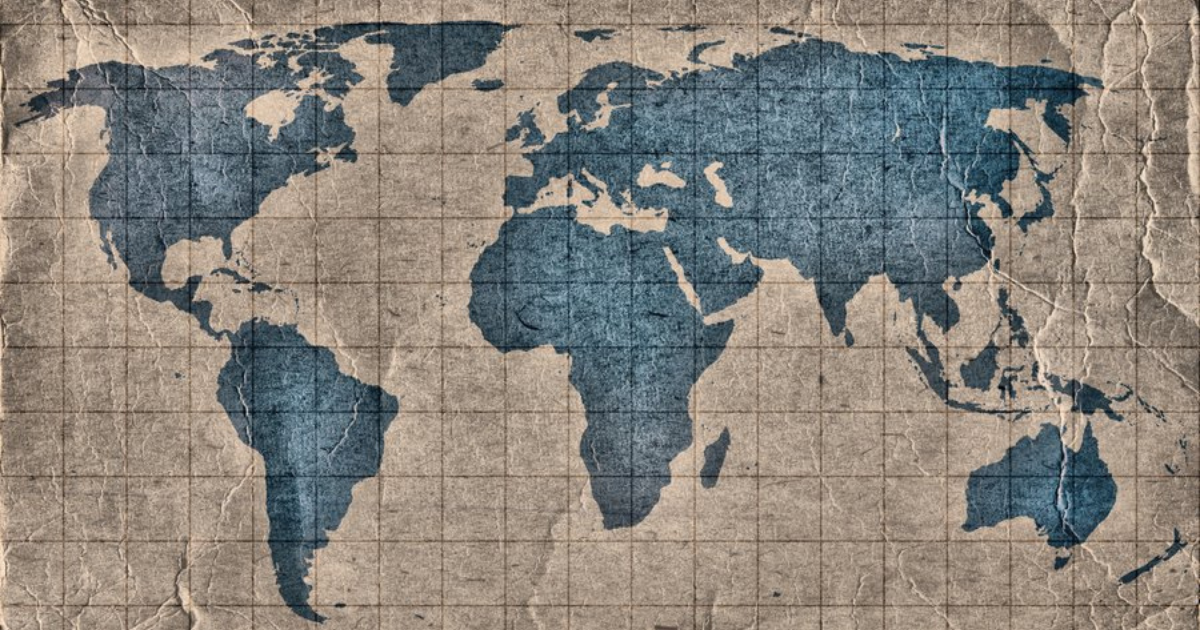
The United Nations General Assembly has passed a non-binding resolution calling for a switch from the classic Mercator map of the world. The “Correct the Map” resolution calls for using equal-area projections that consistent with the continents’ true dimensions, especially Africa.
It was backed by the African Union and spearheaded by Togo and passed by a vote of 164 countries to six abstentions, with the United States being the only country to vote against.
The popular Mercator projection was created in 1569 for use in European maritime navigation, and it enhances the size of land masses in the north and the south and shrinks them in the tropics. Because of this mapping compromise, Africa looks about the same size as Greenland, whereas in reality Africa is 14 times the size of Greenland.
Cartographic gurus and advocacy organizations point out that the United States, China, India, Japan, Mexico, and most of Europe could all fit into Africa, with room to spare. The UN resolution officially calls for the use of the 2018 Equal Earth projection, a new projection that correctly represents the relative proportions of land in a two-dimensional map.
Togolese Foreign Minister Robert Dussey was proponent of the initiative, saying the maps affect the perception of the world and a fair world starts with a fair map. The Mercator map’s distortion is a story problem, one that has long been criticized by the United Nations Office of the Special Adviser on Africa and other advocacy groups, including Africa No Filter.
European countries, including France, showed a lot of support for the resolution. The Ministry of Europe and Foreign Affairs of France says it will stop using the Mercator projection, calling the cartographic adjustment an “act of truth.
On the other hand, the United States Mission to the United Nations (UN) was strong against the measure. US representatives challenged the resolution, saying the world forum should be concerned with real issues of international peace and prosperity, and not 16th century maps and concepts of cognitive justice.
Although the opinions are not binding, the resolution marks a major shift in global attitude and a new and big opportunity for educational institutions, governments, and technology firms around the world to change the way our world is represented geographically to a more accurate reflection of the true physical size of the planet.