German police were on 2nd September probing a second attempt at sabotage in the country’s energy network – just 24 hours after Russia was accused of a drone strike at one of Berlin’s airports.
The incidents coincide at a delicate moment: Before a state election, the far-right “Alternative for Germany” (AfD) – which wants a closer relationship with Moscow – is leading in the polls and Berlin is increasingly under threat of hybrid warfare.
The government said on Tuesday it had concluded that Russia was behind the attempted drone attack on a Ukrainian cargo plane at Leipzig/Halle airport last month – an incident which European Union foreign policy chief Kaja Kallas said on Wednesday bore all the hallmarks of state-sponsored terrorism.
Moscow says there is no evidence to support the accusations that it was behind the attack, but German authorities are on high alert for attacks on vital infrastructure.
‘PREMEDITATED VANDALISM’
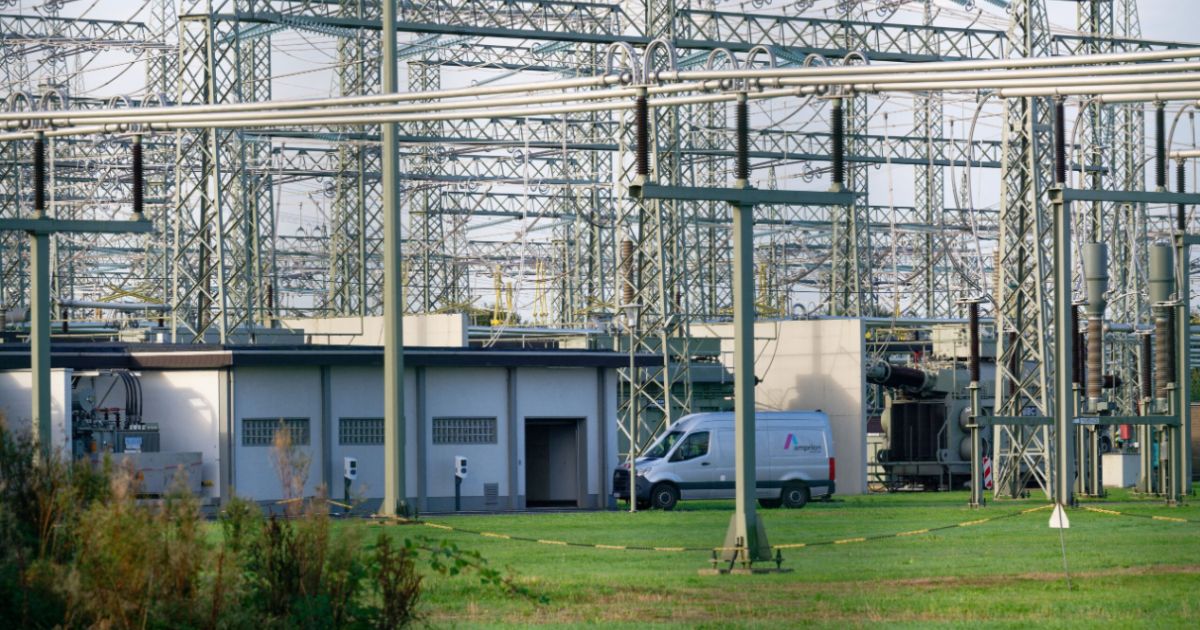
Local police said they were investigating an act of premeditated vandalism on the technical infrastructure of a power substation near the western city of Bergheim at 1800 GMT on Tuesday.
The police spokesman did not provide details of the damage but explained that the region’s electricity supply was not impacted.
The incident was probably caused by external interference, and electricity supply and grid stability were maintained, said Amprion, which is majority-owned by Germany’s biggest power producer RWE.
RWE said in a separate statement that the incident had prompted five lignite power plant units with 4,200 megawatts (MW) in combined capacity to go off the grid.
One of the affected blocks covering 600 MW has been reconnected, the company said.
The Sabotage of the Eastern Power Grid
On Tuesday, devices with conductive material were also able to damage power lines at one of the most important high-voltage nodes in the eastern German state of Brandenburg.
“Couldn’t find any parallels between the attacks, but investigations were very early,” said Brandenburg’s interior minister Jan Redmann.
He said the Brandenburg attack was different, but not significantly different, from an attack carried out last year by far-left extremists who set fire to the power supply of Tesla’s German plant, but he could not exclude any suspects for this attack.
Alexander Throm, the head of the parliament’s domestic affairs committee in Germany, told Reuters there were “extremely suspicious” numbers of disruptive incidents before this weekend’s election in the state of Saxony-Anhalt.
The AfD, a party that is against immigration and has a high voter share in the east, could be in a position to gain power for the first time at state level, opinion polls indicate. The party has demanded that Germany cease supporting Ukraine and resume energy deals with Moscow, which it enjoyed until supplies were cut in 2022, following Russia’s invasion of Ukraine.
Leonhard Birnbaum, the CEO of Europe’s biggest network operator, E.ON. Last month, ON said that full protection of grid infrastructure was “illusory” and that the operators could make it as difficult as possible for those who attack, but could not completely prevent attacks.
Redmann said that only a few weeks ago they were talking in great detail about our airports, but now the discussion was back to energy supply facilities, and they wanted to better protect them.