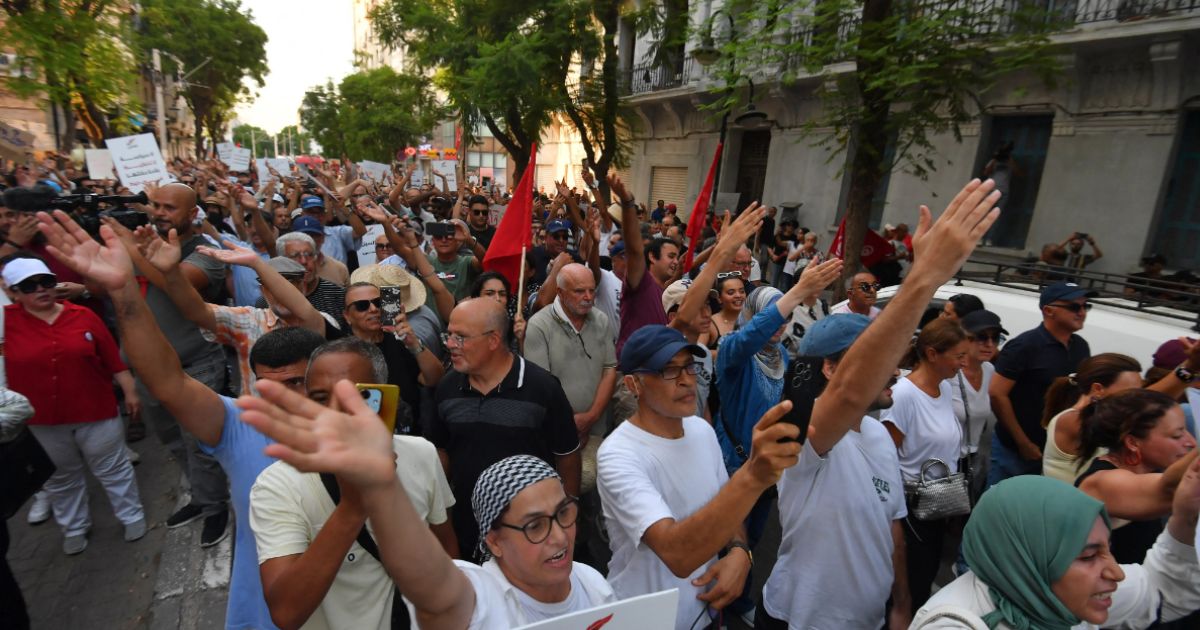
In the latest protest against Tunisian President Kais Saied’s rule, activists and opponents of the president took to the streets in Tunis on 20th August demanding his resignation and the return of democracy, amid increasing political and economic grievances.
Hundreds of protesters denounced “one-man rule” and “a slide towards dictatorship” and demanded the release of jailed opposition figures, activists and journalists.
The same act was done last month, coinciding with the anniversary of the dismissal of the government by Saied on July 25, 2021, and the dissolution of the elected parliament and his starting to govern by decree.
Saied later dismissed the Supreme Judicial Council and purged dozens of judges, claiming he was tackling corruption in the judiciary. This was widely condemned, and international rights groups criticised this as a move to taint judicial independence.
The protests aren’t a sign of a political change on the horizon, but they point to a rising tide of pressure against the president and demonstrate the strength of Saied’s opposition in the streets despite their divisions.
They held banners calling for restoration of freedoms, and criticised the country’s worsening economic and social situation.
“Enough of the failure, enough of the injustice and enough of the absurdity. The nation is in full “collapse,” said Wissem Sghaier, an activist.
Economic and cost-of-living pressures on the Tunisian people are growing, as is the lack of some basic goods and medicines, as well as declining public services.
In recent weeks, public frustration has intensified in some parts of the country with the lack of water and power and environmental issues, beyond the political disagreement with Saied, suggesting that the public’s anger is spreading beyond the boundaries of politics.
Human rights groups charge Saied’s government with a sweeping repression of opposition leaders, independent civil society organisations, journalists and activists. They say Saied has used the judiciary and security forces to suppress opponents.
Saied rejects claims of political repression and claims to be operating on the basis of the law and investigating those he suspects of being involved in financial corruption or conspiring against the country.