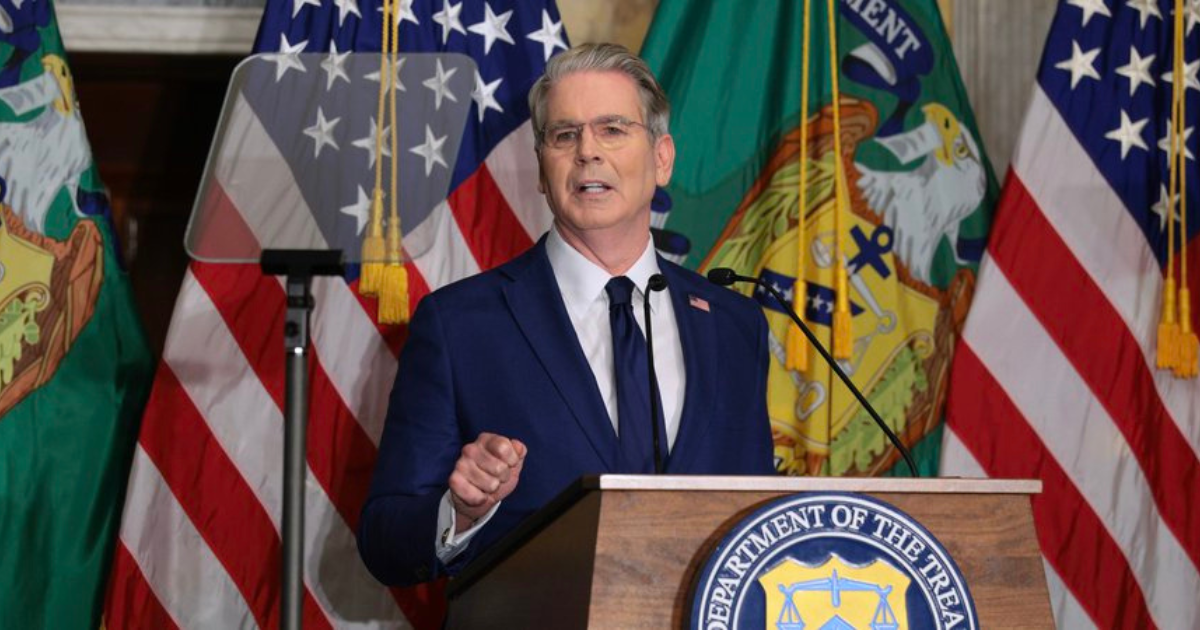
U.S. Department of the Treasury Secretary Scott Bessent has threatened that the U.S. will place “unprecedented economic isolation” on Iran. “There’s sweeping new measures that we’re looking to look at, that we’re expecting to be starting soon, as early as next week,” Bessent told television in a recent interview.
The secretary has described a two-pronged approach, through severe financial pressure and a tight containment in physical terms. He stressed that the continuing work will ensure that no products will be able to enter or exit Iranian ports.
Last week, Vice President JD Vance explained the administration’s strategy. On White House behalf, Vance said the first priority is to lower domestic oil and gasoline prices for Americans, the second is to stop Tehran from getting a nuclear weapon.
This aggressive move comes in contrast with earlier this month. The stock markets rallied briefly and global crude prices fell on Aug. 4 when Bessent said a diplomatic deal to reopen the Strait of Hormuz could be struck within days.
Strait of Hormuz Blockade and Stalled Negotiations
The present war erupted on February 28 after the American and Israeli forces joined together for a strike on Iran. The first attack resulted in the deaths of several senior military officials, longtime Supreme Leader Ali Khamenei and hundreds of civilians.
In response, the Iranian foreign ministry and the country’s military forces essentially took over the Strait of Hormuz. Tehran has severely destabilized the region, by blocking this critical chokepoint (which normally moves one-fifth of the world’s oil supply), and by attacking the US-backed monarchies in the Gulf.
American military stocks have been seriously depleted by the drawn-out war. The U.S. Department of Defense has reportedly wasted billions of dollars on expensive high-tech missiles over the last several months, and that’s likely to have cut down President Donald Trump’s current options for resuming strikes in the immediate future.
President Trump recently announced that he would refrain from additional attacks until he reached a speedy deal to open up the crucial shipping routes. But there is no sign of negotiations moving.
Tehran has come with a set of demands which the U.S. Department of State is likely to reject. They include the end of the war on all fronts, the lifting of port blockades, the cancellation of all sanctions, the release of assets that have been blocked, and the provision of war compensation – all of which are directly inspired by a collapsed June agreement that proposed a $300 billion reconstruction fund.