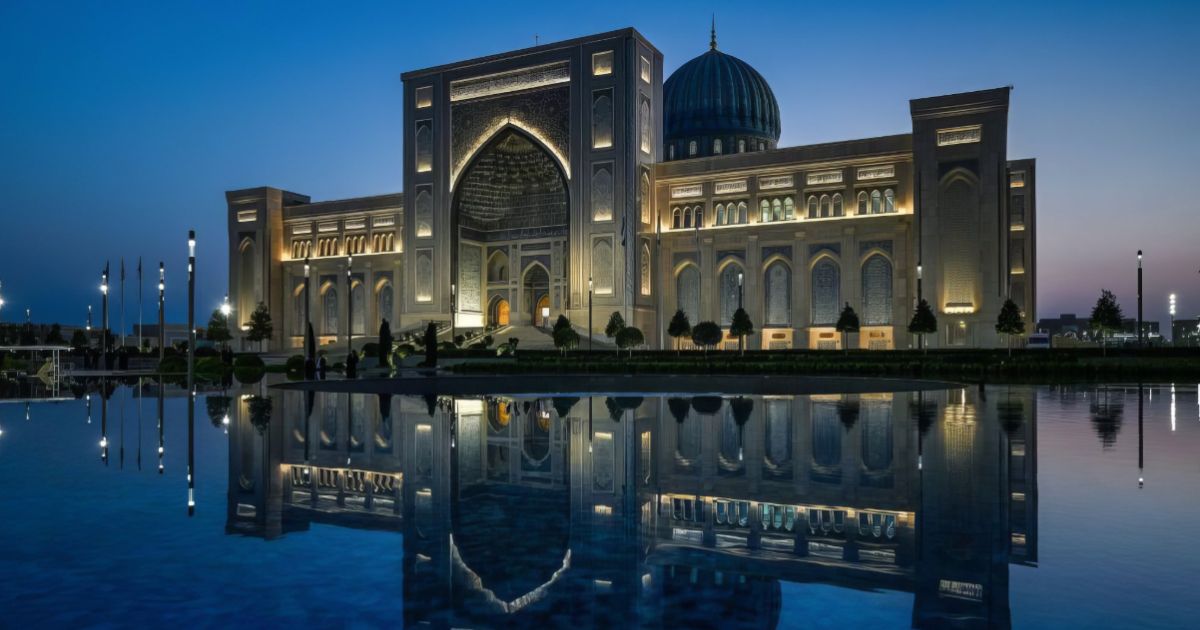
At its 48th session in Busan, the Republic of Korea, the UNESCO World Heritage Committee has included the modernist architecture of Tashkent on the World Heritage List. These include 10 buildings in Tashkent – dating from the 60s to the early 90s – that are each considered a landmark in the city.
From the 1930s, Central Asia was an early participant in the evolution of the international modern movement of architecture. The second, more innovative part of twentieth-century modernisation in Tashkent is the architecture of the 1960s–early 1990s. These buildings have been added to the World Heritage property because of their OUV and the synthesis of international modernity and Uzbekistan’s social aspirations, material culture, climate and spatial traditions at the time.
The sites, inscribed under criterion (iv), represent cultural, civic, commercial, infrastructural, scientific and residential architecture. The buildings in various programmes and scales include standardised systems and site-specific construction, environmental and seismic performance, expressive forms, modernist abstraction, courtyards, loggias, geometric ornament and monumental art.
The UNESCO recognition is another step towards the president’s vision for Uzbekistan, which emphasises cultural heritage as a key element of national development and renewal. It underscores the country’s past as a vibrant and evolving entity that has historically been able to combine diverse elements, ancient and modern, and different cultures and traditions into a unified and lasting sense of nationality.
Gayane Umerova, Chairperson of the Uzbekistan Art and Culture Development Foundation and Chairperson of the National Commission of Uzbekistan for UNESCO, states:
“Completing this inscription introduces a significant chapter of Uzbekistan’s recent architectural history to the international history of twentieth-century heritage and the modernist movement in general, and it has an ongoing responsibility: to ensure the diligent preservation of these buildings, their continued presence in the city, and the transmission of these buildings’ knowledge to posterity.”