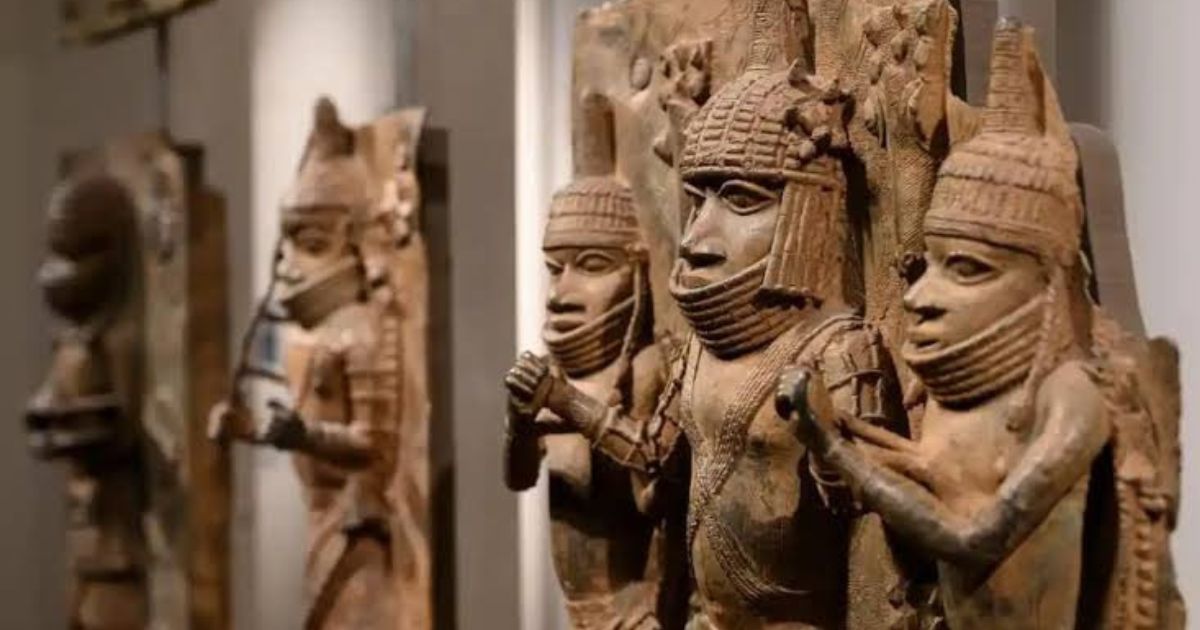
The United States and Nigeria have further strengthened their collaboration in the preservation of cultural heritage through the unveiling of an immersive digital platform that utilises virtual reality (VR), augmented reality (AR) and other cutting-edge technologies to protect the ancient Nok culture.
The initiative was unveiled in Abuja on Tuesday under the Wheyham Project, and is also set to see over 250 Nok artefacts being digitised, the Nok Museum being upgraded, and the training of Nigerian youths in digital preservation.
The Charge d’Affaires of the U.S. Embassy in Nigeria, Keith Heffern, said the project is a symbol of American innovation and a strategic investment for safeguarding Nigeria’s cultural heritage.
He said that the results speak volumes: “More than 250 Nok artefacts have been digitally preserved, the museum has been fully upgraded, 50 Nigerian youths have been trained in the latest digital skills, and 50,000 people in the country have been introduced to Nok.”
He said that the project also has a tracking system based on non-fungible tokens (NFTs) to safeguard artefacts against illegal trafficking.
This system would include the tracking of artefacts by NFT, which will create a digital barrier to the trafficking of Nigerian artefacts and improve law enforcement co-operation between Nigeria and this nation to safeguard the security of both nations, Heffern said.
He revealed the Nigerian government had been financing cultural heritage preservation activities in 21 states of the country under the auspices of the Ambassadors Fund for Cultural Preservation in the United States, to the tune of a total of $1.2 million over the last five years.
“A united, secure Nigeria is a good thing for America,” he said, “and when Nigeria’s heritage is protected, criminal networks are disrupted, and the foundation for prosperity for both our nations is secured.”
Minister of Arts, Culture, Tourism and the Creative Economy, Hannatu Musawa, indicated the project was part of a grant agreement signed with the U.S. Embassy to document and protect the Nok terracotta artefacts of Kaduna State.
Digital preservation is an essential addition to traditional conservation practices, she said.
“It does not supplant the physical task of protecting a site or conserving an object, but ensures that that work is made available to people who will never come to Kaduna State, and that the record is preserved when the objects are endangered.”
“Preserving the cultural heritage was also an investment in national unity and security,” the Minister of Defence, Gen. Christopher Musa (rtd), said.
A secure country is also a country where there is an understanding of its people, its heritage and its culture, which enhances national identity, he said.
He said the documentary and immersive technologies would make the Nok civilization more accessible to young Nigerians and the world at large, also protecting the country’s cultural assets from theft and illicit trafficking.
Wheyham Foundation Chairman, Yahaya Maikori, added that the project was an innovative work that involved technology and community participation in the preservation of Nigeria’s cultural heritage for posterity.
He stated that the project had digitally documented over 250 Nok artefacts, improved exhibition facilities in the museum and reached more than 50,000 visitors with cultural exhibitions, whilst also bringing up young people in the digital documentation and conservation of heritage.
“Our vision is to create a globally recognised model for preservation of heritage, which is innovative, sustainable and community-owned,” he said.