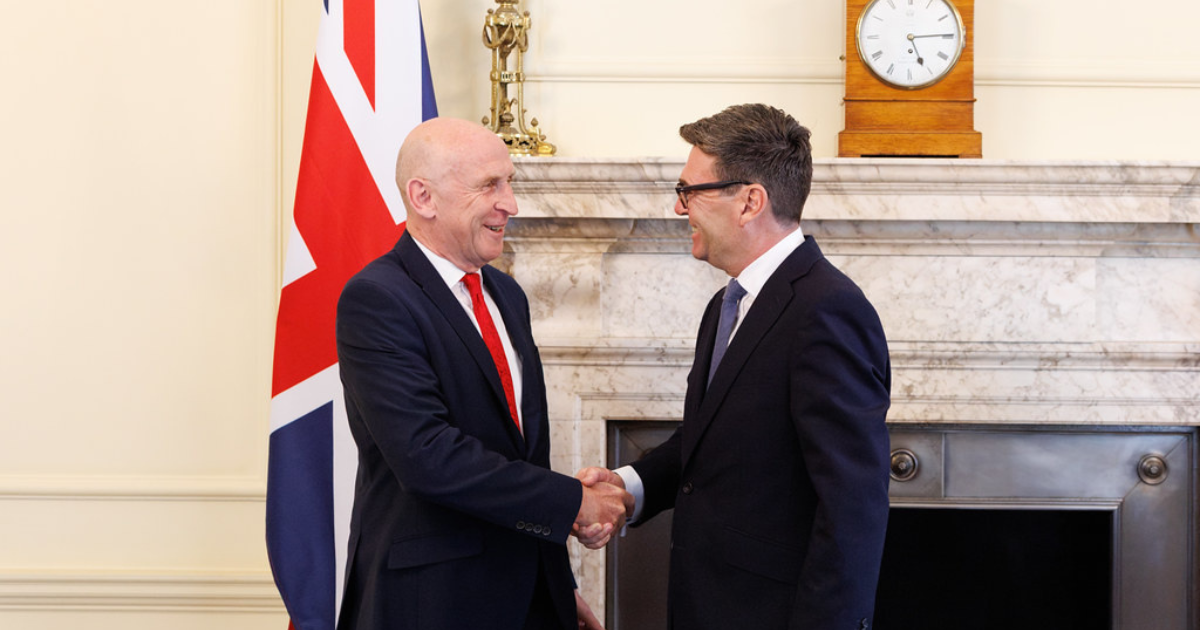
Andy Burnham is officially declared the victor of an uncontested leadership contest at the Labour Party on Monday, when he will assume the job of Prime Minister at 10 Downing Street from Keir Starmer. The 56-year-old was the overwhelming favourite of 379 out of 403 Labour MPs, and no other candidate collected the 81 nominations necessary to run against him in the three elections he won in a row as Greater Manchester mayor.
Following poor performances in 2010 and 2015, Burnham has finally made it to the top in his third bid – and only four weeks after turning up in UK Parliament for an unprecedented appearance after his absence of nine years. Burnham, a member of the left flank of the party, has managed to morph into a “man of the people,” using a folksy manner to communicate and yet having a slick social media persona. He will meet the King Charles III on a formal basis next Monday to formally request his appointment to be the next Government.
Devolution, Economic Reforms, and Pressing Domestic Challenges
Burnham’s return to power follows a tumultuous period for the Labour government over the past few months. Following his party’s landslide general election win in July 2024, Keir Starmer’s leadership was soon caught up in internal party squabbles. After putting Peter Mandelson in the role of ambassador to Washington, combined with a May local election debacle, an unassailable body of pressure was building inside his own party.
Burnham’s by-election win sort of sent a pretty strong message to Starmer to just give up on him, and then he resigned pretty fast on June 22, after the huge majority of Labour MPs formally did the same too. French President Emmanuel Macron later gave Starmer the Légion d’honneur at the Élysée Palace for his continued efforts for European and Ukrainian security.
Now Labour MPs are hoping Burnham can offer a more effective grip on public communication and offer more radical reforms to mend the UK’s ailing public services. Burnham has pledged a “circuit breaker” for the country, his signature policy, which will be based on mass devolution. He intends to establish a “No. 10 North” in Manchester to help drive up the attention and investment which is being neglected for areas outside the British capital, with a primary focus on combating the surge in popularity of Nigel Farage’s anti-immigrant Reform UK party ahead of the anticipated 2029 general election.
Burnham has an enormous amount of problems to deal with, and is incredibly popular within the party. He is confronted by a lukewarm economy, low cost of government borrowing and the continuing problem of the irregular migrants coming in in small boats. Moreover, he needs to secure new funding to plug a £4.7 billion deficit in the defense investment plan for the next four years – and he has adamantly refused to raise significant tax hikes – as his 2024 manifesto commitment to the Labour Party not to raise “major taxes” is to be respected.