Two major attacks were launched on Iran’s coastal defenses and missile sites on Wednesday by the United States. Escalation follows restrictions on Iran’s ports by the U.S. Navy.The military escalation follows a severe naval blockade of Iran’s ports by the U.S. Navy. In response, Iran had attacked various U.S. military facilities in its neighbors, calling the fighting an “existential war” with the U.S.
The latest battle comes days after a fragile truce broke down, prompting concerns that the conflict could once again erupt in large-scale fighting. Since Iran declared the Strait of Hormuz shut late on Saturday, hostilities have grown by leaps and bounds. Military efforts are underway to block ships from traversing the critical shipping lane that formerly shipped about 20% of the world’s oil and gas. This has pushed the price of Brent crude oil recently to a one-month high of $84.95 a barrel.
American forces began their attack on coastal defense systems, cruise missile storage and launch sites on Greater Tunb Island, according to U.S. Central Command. A second round of strikes came nine hours later, affecting several cities and lasting an hour.
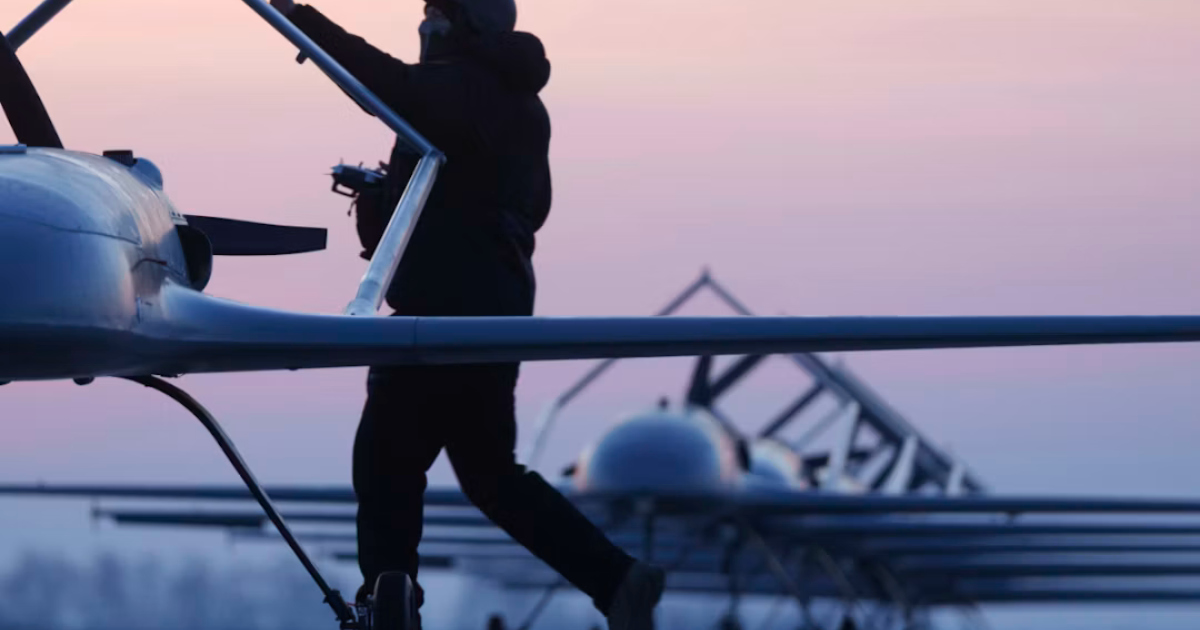
American officials said they hit Iran’s command centres, air defence installation and drone bases. Bandar Abbas, the site of Iran’s biggest port and important naval bases used by the Revolutionary Guards, were also attacked. Three U.S. officials told Reuters the strikes are meant to force the strait open and destroy important Iranian military capabilities before more complicated operations are undertaken.
At the same time, the U.S. military destroyed an empty oil tanker that was attempting to head toward Kharg Island after it failed to heed several warnings and was reported to have been fired upon by Hellfire missiles in the ship’s smokestack.
Iran Retaliates and Declares ‘Existential War’
The Islamic Revolutionary Guard Corps (IRGC) managed to target U.S. military bases in the region in response to the American offensive, including in Bahrain, Kuwait and Jordan. The Guards singled out a joint missile and drone strike on an American radar system and an American radar team at the Ali Al Salem air base in Kuwait.
A series of massive explosions were also reported in the domestic news media in Iran. The U.S. military attacked close to a hospital in Ahvaz with a pediatric cancer center, forcing the evacuation of the hospital, the state-run Islamic Republic of Iran Broadcasting reported. Other strikes were also recorded in coastal regions such as Bandar Abbas, the cities of Konarak, Sirik, Qeshm and also Khondab. According to Mehr News Agency, air defenses in Tehran were engaged to counter any other hostile threat.
After the first round of assaults, Iran’s chief negotiator Mohammad Baqer Qalibaf said Iranian security is solely based on the control of the Strait of Hormuz. He was unalterably opposed to any compromise with America: “We are at an essential and existential war with America,” he declared.
Meanwhile, President Donald Trump sounded victorious at a roundtable from the Pennsylvania Defense and Innovation Summit. He also said that the U.S. is going to beat Iran soon, and that Iran negotiators are, like, in a real desperate need for some settlement or accord, really. He claimed that the U.S. will soon defeat Iran and asserted that Iranian negotiators are desperate for a settlement.
Although the fighting was violent and the soldiers were exchanged, one eventual act of good faith was a release of an American citizen by Iran. Human rights lawyer Jared Genser recognized the released man as Dena Karari, who was barred from leaving Iran since December 2024. The gesture was publicly applauded by Trump, who said that the United States of America was “very grateful for the gesture.
Despite the fierce military exchanges, a rare gesture of goodwill occurred when Iran released an American citizen. Human rights attorney Jared Genser identified the released individual as Dena Karari, who had been prevented from leaving Iran since December 2024. Trump publicly praised the move, expressing the appreciation of the United States of America for the gesture.