After weeks of anti-government demonstrations over “high levels of living costs and economic pressure” that have since spiralled into a burgeoning political crisis, Bolivia’s President Rodrigo Paz declared a state of emergency on 20th June.
Workers’ unions, farmers, and supporters of former President Evo Morales are demanding Paz’s resignation in a protest. Food, fuel and medical supplies have been in short supply in some areas, and the economy has ground to a halt in the last 50 days. At least 14 people have been killed in the conflict since May 1 and 15, Bolivia’s ombudsman’s office reported.
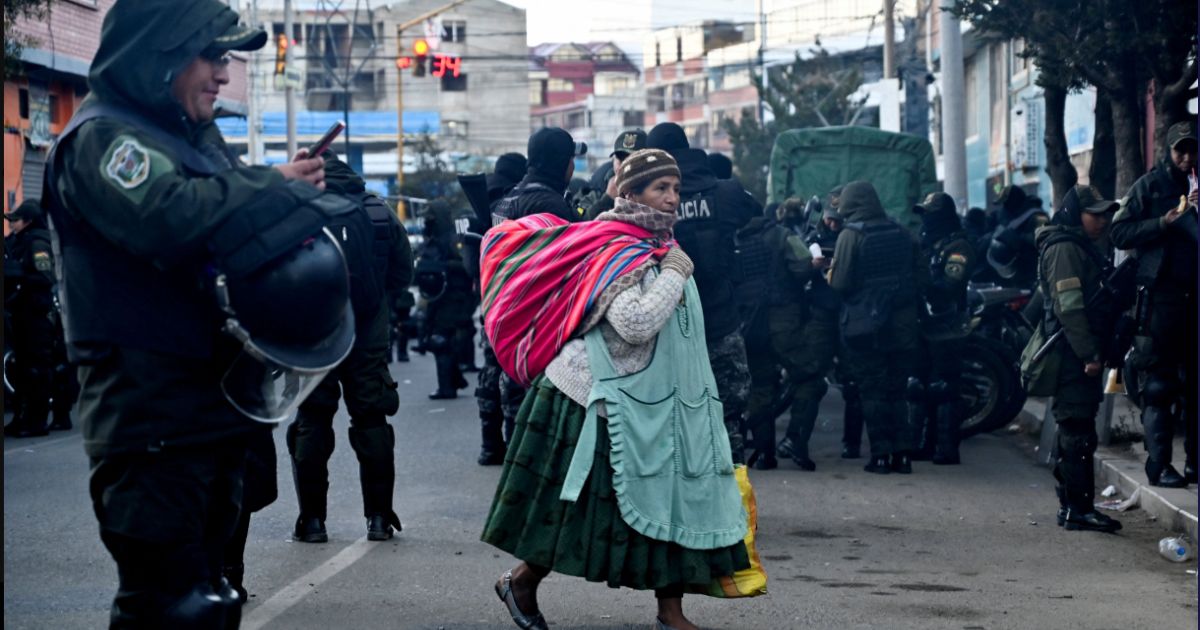
In a speech to the nation, Paz said that she has ordered the State of Exception to be implemented, which will keep the vehicles from clogging the roads of the country. “Bolivians can no longer be hostages to the blockades that stop them from working, learning, going to the hospital, buying their own supplies, and feeding themselves.”
The move is aimed at facilitating the action of the military and the police to restore order, the president said.
The state of emergency aims to “restore” normalcy to Bolivia, he said, where “organised groups are still using violence to paralyse the country.”
Last month, Paz signed a law permitting the military to be called into action in cases of internal conflict, but he had earlier stated that declaring a state of emergency would be a measure of last resort if dialogue failed.
“Once we have used all discourse, once we have made agreements with those who have some legitimate demands and once we have clearly identified those who have tried to destabilise Bolivia using violence, we have decided to declare a state of exception throughout the national territory,” Paz said in his speech Saturday.
Centrist Paz came to power seven months ago and was tasked with steering the country out of its worst economic crisis in a generation, which helped sweep the end of almost 20 years of leftist rule. His victory signalled a turning point for the South American nation, which had been under the rule of the Movement to Socialism (MAS) for almost a decade since 2006.
Paz has tried to improve relations with Washington, which have been tense since 2009, and announced in September a potential $1.5 billion economic cooperation agreement with US officials to guarantee fuel supplies.
The State Department’s readout of the call from Secretary of State Marco Rubio to Bolivian President Paz explained that the United States’ “unwavering support for Bolivia’s democracy and the Paz Administration as it rebuilds the country after 20 years of failed socialist policies.
“The Secretary expressed concern about the illegal road blockades that are causing acute food and medical shortages for many people in Bolivia and are designed to destabilise Bolivian society, and is mobilising emergency assistance and logistics operations support to alleviate that situation,” Pigott said in a statement.
David Pacheco, a resident in La Paz, Bolivia, told Reuters he is in favour of the state of emergency declaration.
“For me, it is a good measure because many of us in the city of La Paz have suffered from hunger, from a lack of food, and from the high price of food and other essentials. Declaring a state of emergency, it was good work from the government, good work from President Rodrigo Paz”.
The current unrest first burst forth in May as the government slashed longstanding fuel subsidies to reduce the deficit. Bolivia’s crisis-hit economy is low on foreign currency, its once plentiful natural gas exports have plummeted, inflation is at a 40-year high, and fuel is scarce.
Along with the president’s resignation, unions are asking for wage increases and the end of fuel and dollar shortages.