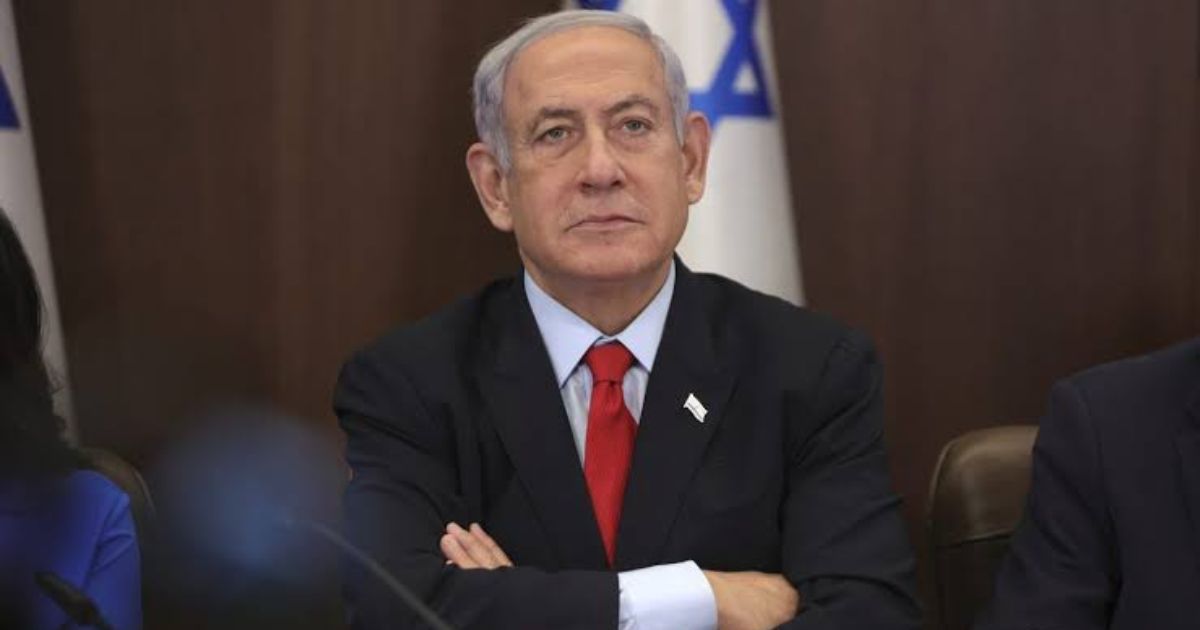
A new and unanimous effort by the leadership of Israel is to position the successes of the Iran war as having transformed the Middle East without regime change in Tehran, which has been highlighted by the prime minister of Israel.
Benjamin Netanyahu has long been planning this confrontation with Iran; it is his long-term political career based on his commitment to protect Israel against its Iranian rival.
With the opportunity to go directly to war against the regime, and the strongest military in the world, his speeches on the war have been lavish, calling it “a fateful struggle for our very survival.”
The Israeli military Chief of Staff has referred to it as “an exercise to make our existence and future in the land of our forefathers in the generations to come.”
It has been called by one of the former national security advisers of Netanyahu as a “golden opportunity to turn the whole Middle East around.”
“This is what [Netanyahu] has been attempting to rebrand as the War of Redemption, what he perceived as beginning on October 7, 2023, in his mind. And this is – not the final war but the big war against Iran,” which is the opinion of Neri Zilber, a Tel Aviv journalist who works as a policy advisor in Israel Policy Forum, a think tank in the US.
He also mentioned that Benjamin Netanyahu is still selling a great win, and how Israel had still been discussing the possibility of regime change long after Trump had ceased doing so.
The change of regime would leave many of the regional opponents of Israel, such as Hezbollah in Lebanon, or Hamas in Gaza, without Iranian funding, training and weaponry, which would likely change the security of Israel.
However, since he assassinated the Supreme Leader of Iran, Ayatollah Ali Khamenei, in an air attack, and repeatedly urged the Iranian people to take this opportunity and revolt, Netanyahu has now indicated that the war might not end as long as the regime remains in power.
He explained to Israelis in his maiden press conference, since the war started, that the bombing campaign had already given Israelis the edge in the Middle East.
“This is not the same Iran, not the same Middle East, not the same Israel,” he said, “and all this is certain.”
In Israel, some will interpret it as an indication that Israel is being invited to draw a close to the war, in spite of indications that soaring oil prices are straining the US government to invite a cease-fire in the war.
The Israeli backing of this war was based on the fact that it would put an end to the repetitive campaigns against Iran and its proxy forces in the region.
In June 2025, following the final war between Israel and Iran, the prime minister of Israel declared a historic win that would be remembered for generations, that the nuclear weapons program of Iran, which Tehran has denied any ambition to build, and its ballistic missiles, were eliminated.
He said that it took Israel back to war only eight months after, as Iran was fast re-establishing its missile programme, and intended to deploy it – and its nuclear programme – far underground.
The question Netanyahu is now asking is: without Tehran changing regimes, what is the next time?
Military leaders indicate that this time, the destruction of the weapons programmes in Iran is much more profound than ever before, as its manufacturing facilities and commanders are also attacked, as well as missile arsenals and launchers.
The military objective, whereby the threats could be eliminated over a long time, is said to last permanently and semi-permanently, with Lt Col Nadav Shoshani, spokesman of the Israel Defence Forces (IDF), saying that the military aim is to eliminate threats.
Former Israeli national security adviser and current senior fellow at the Jerusalem Institute of Strategy and Security, Maj Gen Yaakov Amidror, indicates that despite the absence of the Iranians in the streets, Israel can get what it desires by ensuring that the regime is too weak to pose any threat to it.
“With regime change, that would alter the Middle East. But we are aware of our weaknesses, and we are not a superpower; we need to be humble in our choices,” he said.
One of the largest-selling circulation papers in Israel, Yedioth Ahronoth, has quoted an unnamed military official stating that there has been an initial indication of tension within the Iranian security structure, which “includes internal tensions within the Revolutionary Guard and the occasional desertion.”
Netanyahu has opined that since he had provided the grounds in which regime change was possible, Israel could now step aside and allow the internal forces in Iran to run their course.
However, it is a political risk for Netanyahu not to change the regime.
The analyst, Neri Zilber, explains that the threat to Netanyahu is that his grandiose talk about the complete victory over the network of allies of the Iranian state in the region will remain bombastic expressions.
“About half of Gaza remains under the control of Hamas. Goods, Hezbollah is currently staging a significantly larger fight than many people here had been made to imagine following the ceasefire in 2024, [and] following last June in the war against Iran, [the US and Israel] are engaged in an even larger war against Iran,” he said.
“It is there that Netanyahu will be haunted by his past promises, and even the present-day campaign, with all its might and the largest army in the world, will not really provide the outcome that he has promised the Israeli citizens.”
The unresolved conflicts between Israel and Hamas and Hezbollah on its own soil are a reality check concerning the shortcomings of military strength, despite the dramatic change in the strategy of Israel’s defence following the 7 October 2023 Hamas attacks.
“We would like to be in future times in a place where no creatures can be brought up on our borders,” said Amidror. “We ought to consider pre-emptive wars as something we must avail ourselves of whenever we find on the opposite side of the border something that is gradually getting stronger.”
Here, however, waging wars is a much easier thing to do than to quit.
Israel is now fighting on a second front against Hezbollah in Lebanon, following the assassination of Khamenei, as the Iran-backed group reacted to the assassination and joined Iranian attacks on Israel.
Following decades of being involved in recurring conflicts with Hezbollah, and a ruthless campaign in 2024 that left the group feeble, the opportunity to put an end to the threat on its northern border has been viewed as the opportunity of a lifetime in Israel.
Israeli troops are advancing towards the southern part of Lebanon, in what they have termed, up to this point, a defensive operation. But the head of their staff, Lt Gen Eyal Zamir, has declared his goal to disarm Hezbollah, and that all that was required now was persistence and patience.
“It will not be an easy task,” he said, “and the present struggle, he called, is the war of our generation: a war of necessity, a war of decision, which will settle our future, and guarantee our safety many years to come.”
Senior military officials declare privately that one of the options under discussion is a ground invasion over such a large area of Lebanese land.
One of the issues to consider is whether the fight will persist on this front even in the event that Washington declares the campaign over in Iran. And whether military benefit, of Gaza or of Lebanon, is to result in peace, which is not secured by the reliance on political partners and political accords.
Although complete war weariness exists, after over two years of unremitting war, the Israeli public opinion has still been overwhelmingly in favour of this regional war. And Benjamin Netanyahu is strongly anticipated to use this occasion to salvage his own political career, following the security lapse that contributed to the 7 October attacks, and call forth elections later this year.
The so-called War of Redemption, which began with Netanyahu after the events of those attacks, has already transformed the Middle East and put Israel right in the middle of a conflict with its adversary in Tehran.
Netanyahu has taken the Iranian threat to make his own career. This clash has now put him in a new political phase, regardless of the threat.