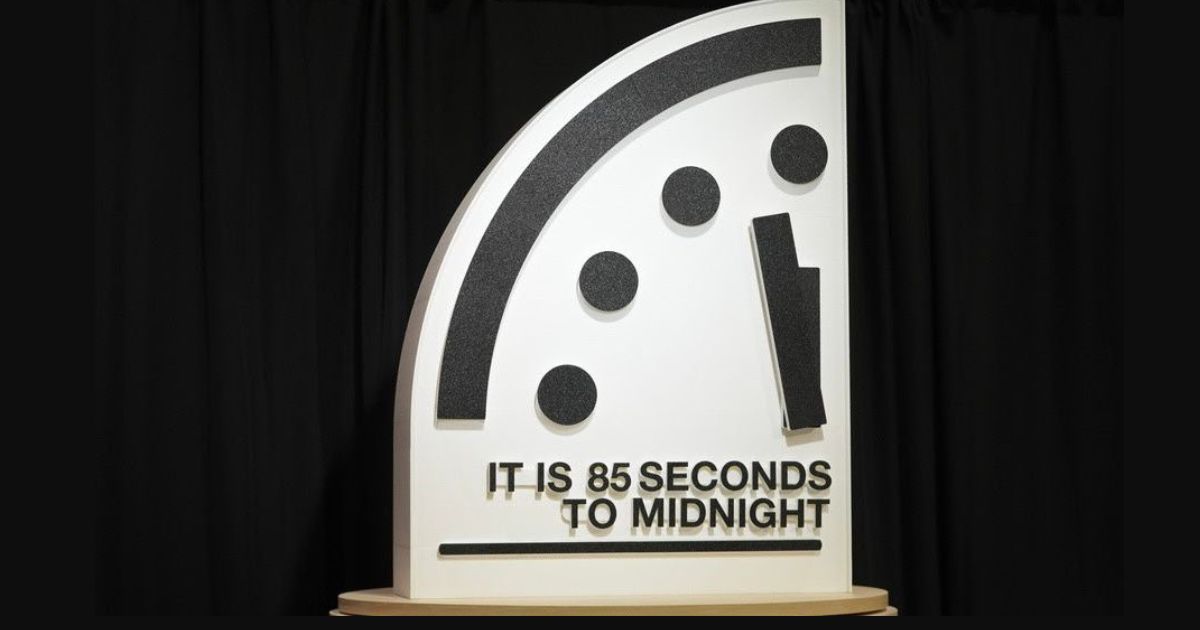
When the nuclear age began, scientists came up with the Doomsday Clock, a mere message to humanity, a visual representation of the proximity of the world to the brink of self-destruction. The Bulletin of the Atomic Scientists, in its 2026 update, put the clock as close as it has ever been to midnight, at 85 seconds. Midnight is an apocalyptic stage where the earth is no longer habitable because of the threats that man has created.
The clock was invented in 1947 by The Bulletin, which was established by scientists who had been involved in the Manhattan Project in 1945 to gauge the nuclear threat. Its scope has been broadened over time. In 2007, it began to take into account climate change in its calculations, and nowadays the clock also takes into consideration biological threats, artificial intelligence threats, geopolitical instability, and misinformation.
The clock was last year at 89 seconds to midnight. It had been fixed at 90 seconds in 2023 and 2024. The 2026 change is seen as an indication of a second failure by world leaders to take existential threats seriously. The Bulletin claims that humanity has not achieved enough in terms of weakening nuclear weapons, halting climate change, controlling the development of new technologies, and enhancing international collaborations.
Bulletin president and CEO Alexandra Bell added that the ruling points to the increasing dangers to the planet. She cautioned that the tensions in the nuclear sector are escalating, the climate is getting worse and that disruptive technologies are evolving beyond the control mechanisms of the regulatory systems. Time is of the essence, and the risks are compounded and related, she stressed, as the risks relate to each other.
The most common pattern is that of increasing world conflicts and hostility between the world powers, as pointed out by Dr Daniel Holz, the chair of the Bulletin of the Atomic Scientists and the Science and Security Board. In 2025, a number of military actions were carried out involving nuclear-armed states, which caused more concerns about the threat of escalation.
What is also troubling is the fact that the remaining nuclear arms treaty between the United States and Russia is about to expire. The lapse of the agreement without any renewal would be the first in the last 50 years, since there would be no official limits to the two largest nuclear armies of the world, increasing the likelihood of the recurrence of the arms race.
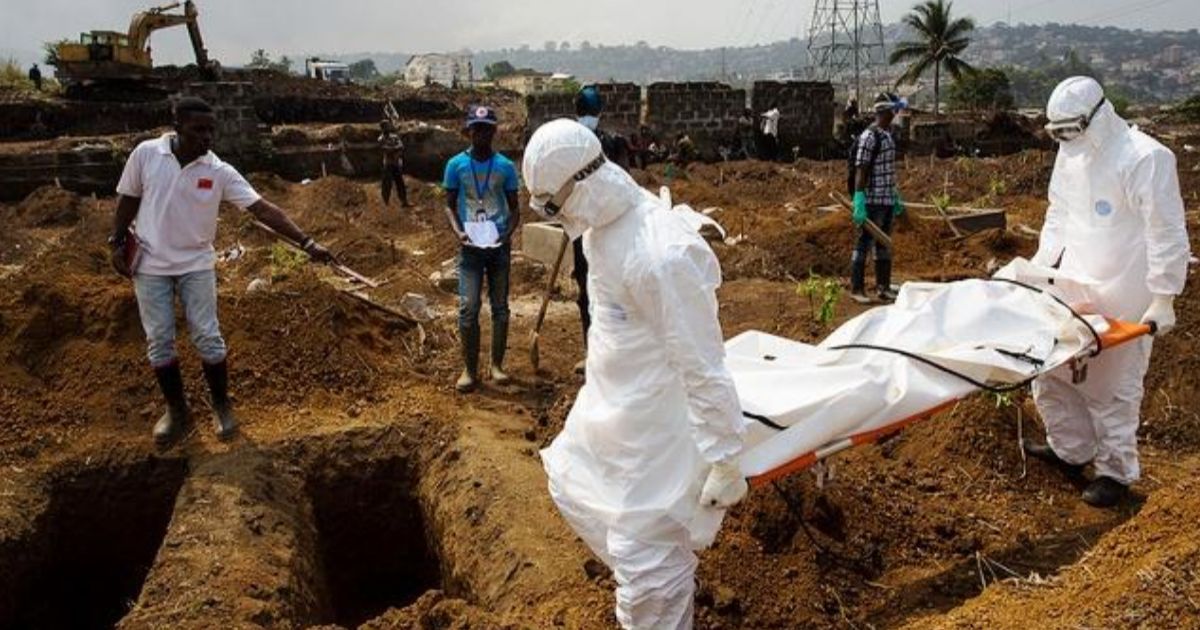
Scientists are also fearing biological threats besides nuclear threats. Innovations in life sciences, such as the study of synthetic biology and so-called “mirror-life” forms, hold colossal proportions of benefits, and at the same time, pose a danger when abused or improperly controlled. According to experts, the world is still not ready to face another huge biological crisis, especially without coordinated global planning.
Another complexity dimension is that of artificial intelligence. The development of AI and its rapid progress have increased the spread of misinformation and disinformation due to a lack of control. The Bulletin claims that these distortions negatively impact the public trust, undermine democratic institutions, and impede the effective response to climate, health, and security threats. Nowadays, in the age of illusory stories, it is harder to preserve common facts.
Although the message that Doomsday Clock conveys is alarming, it is not a predictive tool. It is a figurative speech that was meant to provoke and to act. The time is set by the science and security board of the Bulletin with the advice of the board of sponsors, which previously included Albert Einstein and J. Robert Oppenheimer. In the present day, the board is composed of several Nobel laureates and prominent specialists in the fields of science and security.
Opponents believe that the clock is not a sufficient measure of the complex global risks by lumping together various threats that may have different timelines. But still, it has been justified by many experts as an effective means of communication. They say that its symbolic quality draws the attention of the people and challenges the policymakers and the citizens to face some unpleasant truths.
Notably, the clock has shifted to the reverse. By 1991, when the United States and the Soviet Union signed the Strategic Arms Reduction Treaty, the margin stood at 17 minutes to midnight – the most distant it had ever been to disaster in the history of its existence. The change proved that the risk in the world can be greatly diminished with the help of diplomatic cooperation and strong leadership.
Scientists underline that it is still possible to make a significant change. Reinvestment in global health security, renewed arms control agreements, enhanced climate policy, and control over emerging technologies can be made by governments. On a more personal scale, professionals promote the involvement of people, whether it is keeping up to date on news and countering falsehoods or implementing climate-friendly resources like minimising waste, using less energy, and living more sustainably.
Finally, the warning and the call to action are that the 2026 setting of the time to midnight is 85 seconds long. The Bulletin asserts that since these threats are man-made, they can be minimised by other humans. It will need urgency, cooperation, and long-term dedication among states and cultures to do so. The ticking of the clock is not unavoidable, however – scientists say time is running out.