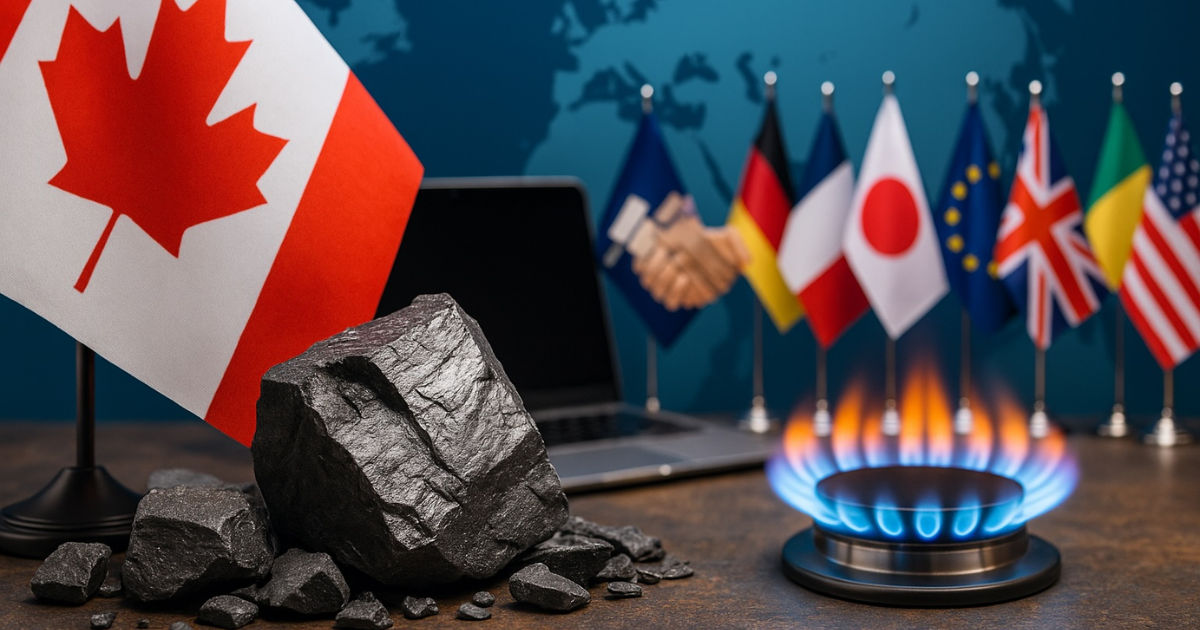
The United States has proposed a new trading alliance with its allies to reduce dependence on China for critical minerals, which are important for defence equipment, clean energy products, and high-tech manufacturing.
The announcement was made by the Trump administration. US leaders said China currently controls a large share of rare earth minerals, which are used in products like fighter jets, electric vehicles, and smartphones.
Vice President J.D. Vance said the recent trade tensions between the US and China showed how vulnerable Western countries are. He said many industries depend heavily on minerals supplied by China. Because of this, the US believes it is important to work closely with trusted partner countries.
Under this plan, friendly countries would create a special trade group. They would buy and sell minerals from each other at steady and fair prices. If cheaper minerals from China try to enter the market, tariffs (extra taxes) could be added to protect local companies. The main aim is to support businesses and boost mining and mineral processing within trusted partner countries.
Vance shared this plan at a conference hosted by Secretary of State Marco Rubio. Officials from Europe, Asia, and Africa attended the meeting. Rubio said many countries have already shown interest in joining the proposed group.
This move comes after China tightened export controls on rare earth minerals last year. Although the US and China later eased some trade restrictions, China’s controls on critical minerals remain strict.
At the same time, the US government is increasing its own production. President Trump announced “Project Vault,” a plan to build a large stockpile of rare earth minerals. The project is backed by a 10 billion dollar loan from the Export-Import Bank and around 1.67 billion dollars in private investment. The government has also invested billions of dollars in domestic mining companies over the past year.
Currently, China controls around 70 percent of global rare earth mining and about 90 percent of processing capacity. Because of this strong position, many countries are now looking for other supply options.
Japan, the European Union, and Mexico have also said they will work with the US to build supply chains outside China. Meanwhile, the US House of Representatives has passed a bill to speed up mining projects on federal land. The bill is now waiting for approval in the Senate.
Experts say the plan may face challenges. It could be difficult to stop companies from buying cheaper Chinese minerals outside the alliance. Still, US officials believe that working together with allies will help create stable supply chains and reduce risks in the future.