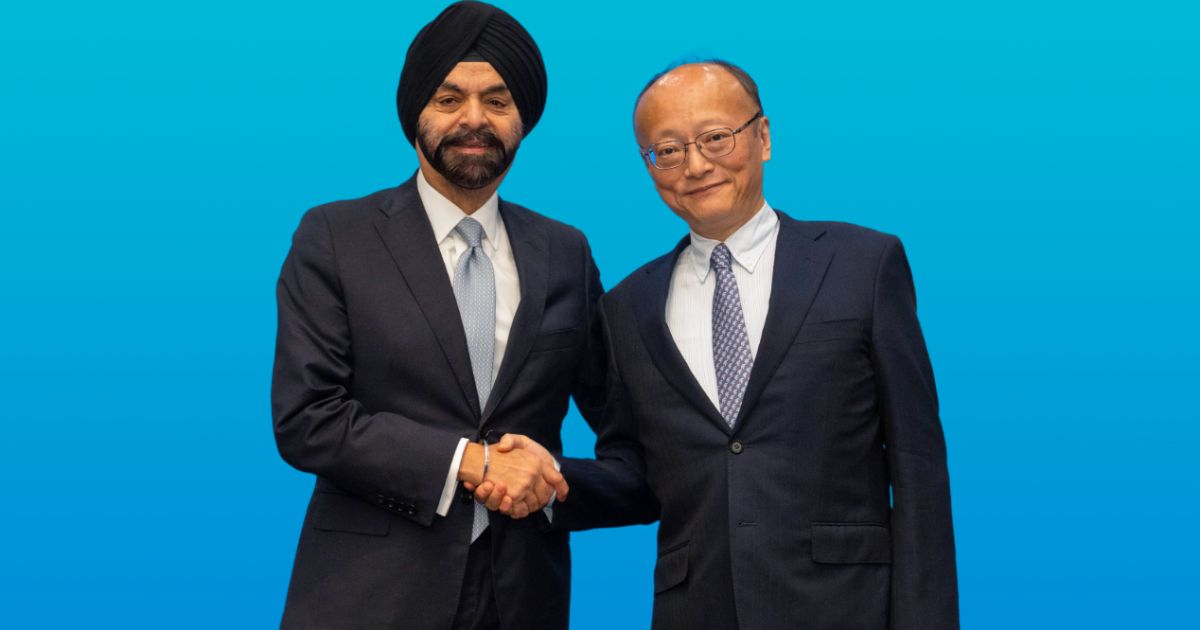
The first two Pacific projects to be implemented today were announced by the World Bank Group President Ajay Banga and Asian Development Bank (ADB) President Masato Kanda as part of an innovative cofinancing model called the Full Mutual Reliance Framework, which will increase the development impact.
The framework will enable countries to engage one lead lender, either the ADB or the World Bank, to lead in all project design, preparation, supervision, and evaluation processes. It will also simplify the processes and minimize duplication between the two institutions. Faster project implementation in countries will be advantageous, as well as reduced transaction costs and the maintenance of high policy standards. The two initial projects that will be included within the framework are a health modernisation project in Fiji on a large scale and a transport, urban, and water infrastructure investment in Tonga.
ADB President Masato Kanda declared, “we are going to simplify, make development finance quicker and more effective. This strategy will enable us to act on the needs of clients to address complicated issues jointly, improve disaster resilience through more connectivity, and help them achieve their long-term prosperity vision.”
“There was a single reason why we adopted this framework, which was that our clients requested us to simplify their lives. To work faster. In order to make better partners, said World Bank Group President Ajay Banga. It is a big stride in the right direction – and to our institutions, it is certainly that, but much to the nations and communities that have placed their trust in us, it means taking a real step.”
The framework operationalization in the Pacific symbolizes the close collaboration between ADB and the World Bank group that already exists in the region, and is in response to the demands of the client states for faster, smoother, and efficient financing of development.
The Pacific Healthy Islands Transformation (PHIT) project, funded by the World Bank, is expected to address the problem of noncommunicable diseases, which are the cause of most deaths in all the Pacific island nations. The operation is going to be the biggest World Bank Group single operation in the Pacific.
The project in Fiji will not only modernize primary health-care networks in the country, but also help fund a new, state-of-the-art regional hospital that will allow people throughout the Pacific to have more access to the treatment of cancer, cardiovascular disease, diabetes, and other serious health ailments. Its funding by the World Bank Board has since been accepted. The proposed cofinancing by ADB will be tabled by its Board at the beginning of 2026.
The second, which was led by ADB, is the Tonga Sustainable Economic Corridors and Urban Resilience (SECURE) project, which was passed by its Board of Directors on 20 November 2025. Once ADB and the World Bank come with their respective shares of grant financing totalling up to $120m, SECURE will be the biggest ever project funded by development partners in the history of Tonga.
The project will involve transformational infrastructure upgrades to the transport network and urban drainage infrastructure in Greater Nukualofa, such as the 720-meter-long Fangauluta lagoon bridge. The investments will ensure that traffic jams are minimized, and market accessibility to rural areas will increase, together with improved connectivity to critical infrastructures such as the airport and the port. They will also offer safe evacuation ways during disaster events, such as tsunamis. The World Bank cofinancing will be introduced to its Board in early 2026.