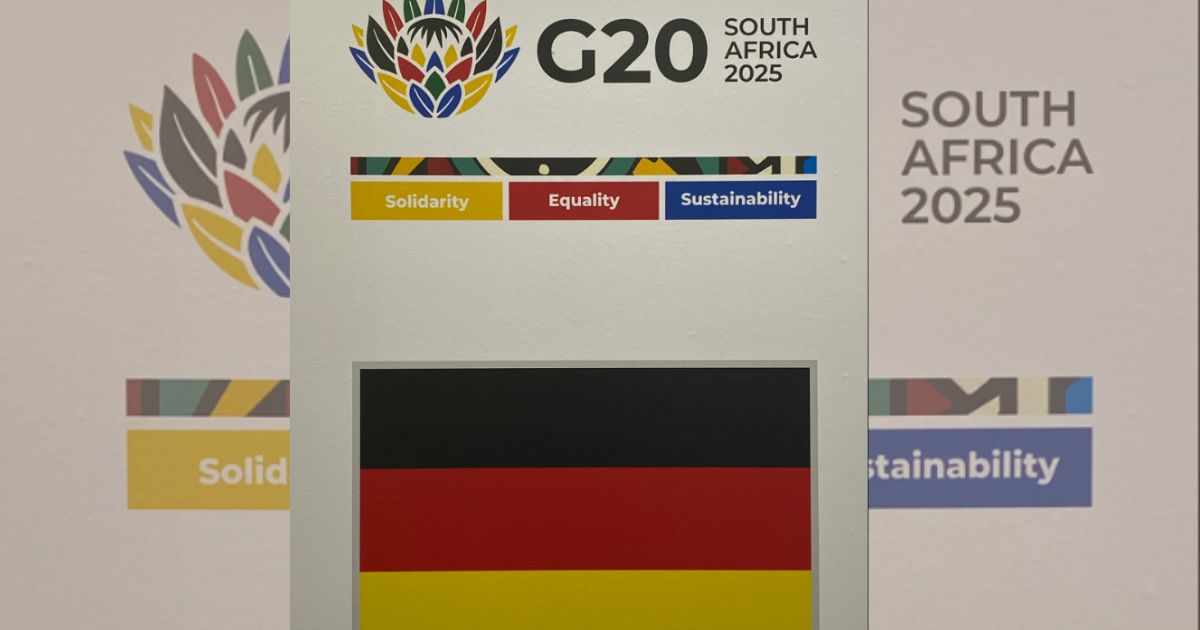
On 22nd November, with the object of the U.S., a group of 20 leaders went ahead with a declaration that covered the climate crisis and other global challenges, leading to charges in the White House that South Africa was weaponizing its leadership of the group this year.
“The declaration was not drafted by the United States, and it cannot be renegotiated,”” according to the spokesperson of South African President Cyril Ramaphosa, who told journalists that it shows the tensions between the United States and the Pretoria government, with the United States boycotting the event.
The spokesperson, Vincent Magwenya, said that they had the whole year to work towards this adoption, and the last week has been very intense.
The White House later said that Ramaphosa was not cooperating to ensure a smooth transfer of the G20 presidency hours later, after stating that he would hand over the gavel to an empty chair.
“This, together with South Africans pressing to release a G20 Leaders Declaration, regardless of consistent and strong objections by the U.S., underpins the fact that they have used their G20 presidency to compromise the tenets of the G20,” said White House spokeswoman Anna Kelly. Trump is eager to legitimize the group again next year, during the time when the U.S. is in the rotating presidency.
Ramaphosa, who is the host of the current Group of 20 leaders meeting, which is being held this weekend in Johannesburg, had previously stated that there was an overwhelming consensus on a summit declaration.
However, Argentina, a close Trump ally that has a far-right President, Javier Milei, pulled out of the talks at the eleventh hour as the envoys were just going to adopt the draft text, South African officials said.
Although Argentina did not sign the declaration, its foreign minister, Pablo Quirno, prepared the speech at the summit by declaring Argentina to be entirely devoted to the spirit of cooperation that has characterized the G20 since its inception. Ramaphosa had observed this and proceeded with it.
In defense, Quirno added that Argentina feared the way the document brought up geopolitical concerns.
“Namely,” he said, “it deals with the old conflict of the Middle East in a way that does not reflect all its complexity. There is only one reference in the document where the members state that they will work towards a fair, all-encompassing, and sustainable peace in… the Occupied Palestinian Territory.”