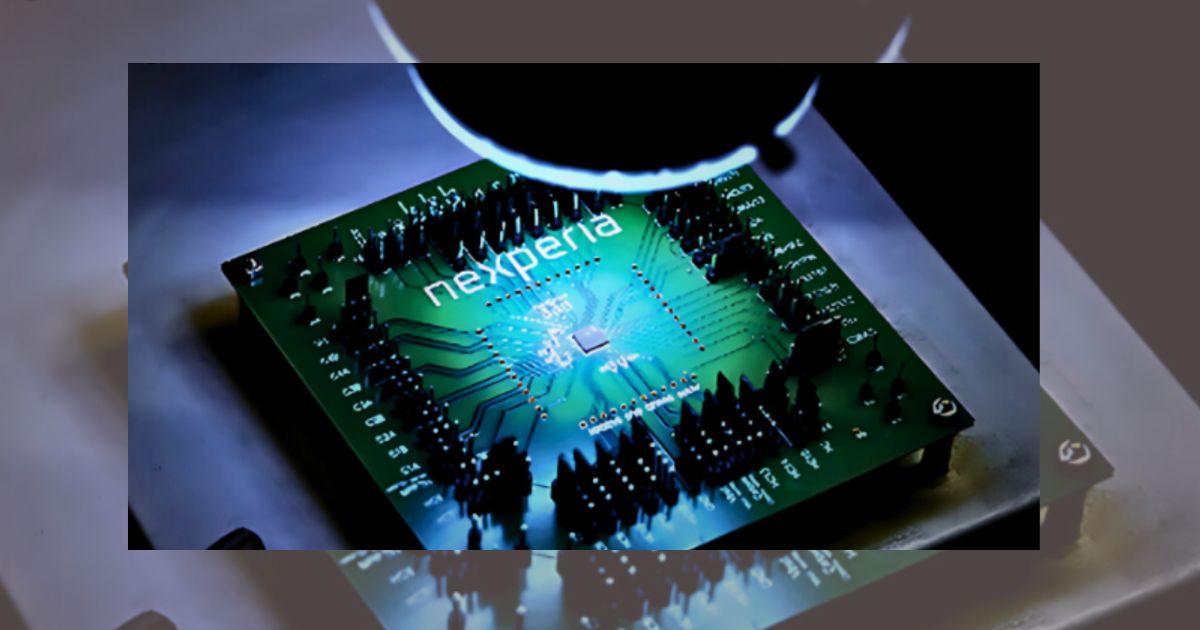
The Dutch government announced it is abandoning control over Chinese-owned chipmaker Nexperia, ending a conflict between China and the Netherlands that could have disrupted semiconductor supplies needed in the world to make automobiles.
Economics Affairs Minister Vincent Karremans announced he was suspending a previously issued order to nationalize Nexperia using a law almost never used, the Cold War.
When it effectively acquired Nexperia, which is based in the city of Nijmegen and owned by Wingtech Technology in China, the Dutch government had cited national security issues and a lack of serious governance in the company. The authorities claimed that they were attempting to avoid the exodus of important technological expertise that could jeopardize the financial well-being of Europe.
Car manufacturers in North America, Japan, and South Korea have a large use of Nexperia chips. Car makers have been citing the shortage of chips during the past weeks, and Honda was compelled to close a manufacturing facility in Mexico that manufactures its popular HR-V crossover to be sold in North American markets.
Karremans announced he was staying his order, which he had passed in late September, in a gesture of goodwill, in a move that was made after a series of fruitful talks with Chinese officials in the past few days.
“Following the recent developments, the Netherlands has found it appropriate to make a positive step in suspending my order in the Goods Availability Act,” he stated in a statement.
“We are optimistic that the Chinese authorities have already taken the measures that are necessary to ensure the supply of chips to Europe and the world at large.”
The move was welcomed by the Commerce Ministry of China, though the ministry claimed it was just a move towards ensuring that the problem is resolved.
The ministry said that a Dutch court ruling, which restricted the control that Wingtech had over Nexperia, was still a major hurdle to the solution of the problem. It also added that both countries should keep cooperating on the issue.
The dispute is a case of how Europe is torn between Washington and Beijing in their trade and technology rivalry, when the Netherlands issued its seizure order after the United States last year declared Wingtech to its entity list of companies subject to export control, and in September, it added subsidiaries such as Nexperia.
The boardroom rivalry involved the replacement of the Chinese CEO of Nexperia, and the founder of Wingtech, Zhang Xuezheng. The court filing cites an American official telling the Dutch government that he needed to be ousted to prevent trade limitations.
This was met by Beijing, which blocked export of the Nexperia chips manufactured in its Chinese plant early in October, which it lifted in recent days as part of the U.S.-China trade truce following the meeting of U.S. President Donald Trump and Chinese leader Xi Jinping.
The white house stated that it would suspend the expansion provision covering subsidiaries until November 10 of this year.
Nevertheless, its Chinese unit and Dutch headquarters have been in constant wrangles on whether it can provide wafers manufactured in the European factories to its Chinese assembly facility.
According to the companies, the dispute has not been resolved completely despite the announcement made by Karremans.
Wingtech indicated that in case the Dutch government is willing to resolve the issue, it ought to give a notice stating that it is explicitly withdrawing its support from the court proceedings that have led to the suspension of Zhang as the CEO.
The court action poses a risk to the existence of the Nexperia and hence to the economic stability of the Netherlands and Europe, which is the same argument the Dutch government put forward earlier in favor of judicial intervention.
Wingtech vehemently denied the allegations by Karremans that Zhang had orchestrated a number of mismanagement incidents, claiming that no evidence had been presented.
Nexperia mentioned the announcement of the Dutch government as an indicator of considerable progress, “but that full recovery of the supply chain is impossible without the active additional cooperation of the entities of Nexperia in China.”
Nexperia used to be a part of the Dutch electronics giant Philips and was later bought by Wingtech in 2018. It renders simple and standardized chips to perform many automotive tasks like operating the lights, airbag, or anti-lock brakes. There can be hundreds of such elements needed by modern cars.