U.S. senior officials pressed European partners to accelerate the process of eliminating Russian gas by increasing the pipeline networks regionally and raising American imports of liquefied natural gas in Europe.
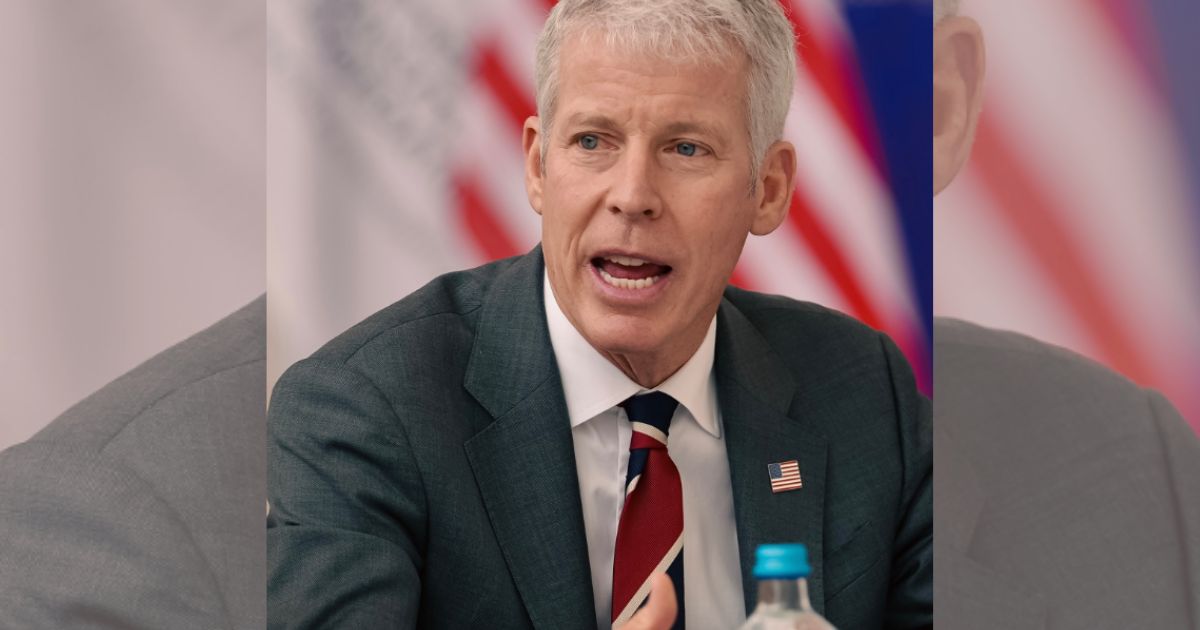
Nearly 80 American officials were also present at the talks together with the EU energy ministers and the top LNG executives in Greece, organized by the Atlantic Council, the Washington-based think tank, with the U.S. Energy Secretary Chris Wright and the Interior Secretary Doug Burgum present.
Burgum struck a solid blow at the gap left by Russian cuts in supply, saying that the United States alone could easily replace all the Russian gas in Europe with what we are constructing.
The push is further facilitated by the fact that President Donald Trump is still capitalizing on how America is the largest exporter of LNG in the world by linking energy distribution to trade relations with Europe and the termination of the war in Ukraine.
U.S. complains about EU climate policies.
Burgum also attacked European climate policies, saying that they could stifle the energy relationships.
“It lacks energy transition, “he said; “there is only energy addition, and the regulatory state in Europe,” he argued, “has threatened to hold the region back from the next round of energy innovation and the creation of energy-hungry artificial intelligence.”
As Europe is already the biggest market for U.S LNG, it has turned to the so-called Vertical Corridor, a new north-south gas route between Greece and Bulgaria, Romania, and Ukraine. The role will be played by export terminals around Athens and in northern Greece.
Greek Prime Minister Kyriakos Mitsotakis proclaimed on 5th November that Greece was a very special geographic location, and it was the natural gateway of the American liquefied natural gas into Europe.
Europe scurries to improve pipelines.
The officials of the U.S and Europe noted that the corridor would play a vital role in assisting war-ravaged Ukraine to deal with the persistent attacks on its energy systems by Russian forces.
After the full-scale invasion of Ukraine by Russia in 2022, the members of the European Union rushed to adjust the pipeline networks in order to substitute Russian exports with the LNG delivered by the U.S. and other key providers.
The U.S. energy secretary Wright cheered on the intention by the European Commission to completely eliminate all Russian gas to the EU within the next two years, claiming that it will not only put Putin and his war machine to starvation but will also create a future relationship between the United States and EU countries that is bound to grow.
In reference to Russia, he said “We have five pipelines that will be delivered to Europe and one that will be delivered to China.
Ukraine is struggling with the worst winter
In an interview given to the Associated Press during the sidelines of the conference in Athens, the CEO of the biggest privately owned energy producer in Ukraine cautioned of the major difficulties.
The DTEK representative, Maxim Timchenko, referred to the meeting in Athens as an extremely important one and requested European and American nations to contribute to the provision of more gas and equipment to restore the power network in Ukraine.
Timchenko believed that this upcoming winter was going to be the hardest winter since the full-scale invasion. “We need help. We require assistance in the shipment of gas, and we require assistance in supplying our power production.”
In early 2013, DTEK opened the Vertical Corridor in Ukraine, and an LNG shipment took place between Louisiana and Greece.
On Thursday, individually, the U.S. and Greek partners declared new investments in the eastern Mediterranean.
Exxon Mobil, together with Helleniq Energy of Greece and Energean, announced new oil and gas exploration in the Ionian Sea, which is one of the additional measures of the U.S firm to increase the energy capacity in the area.