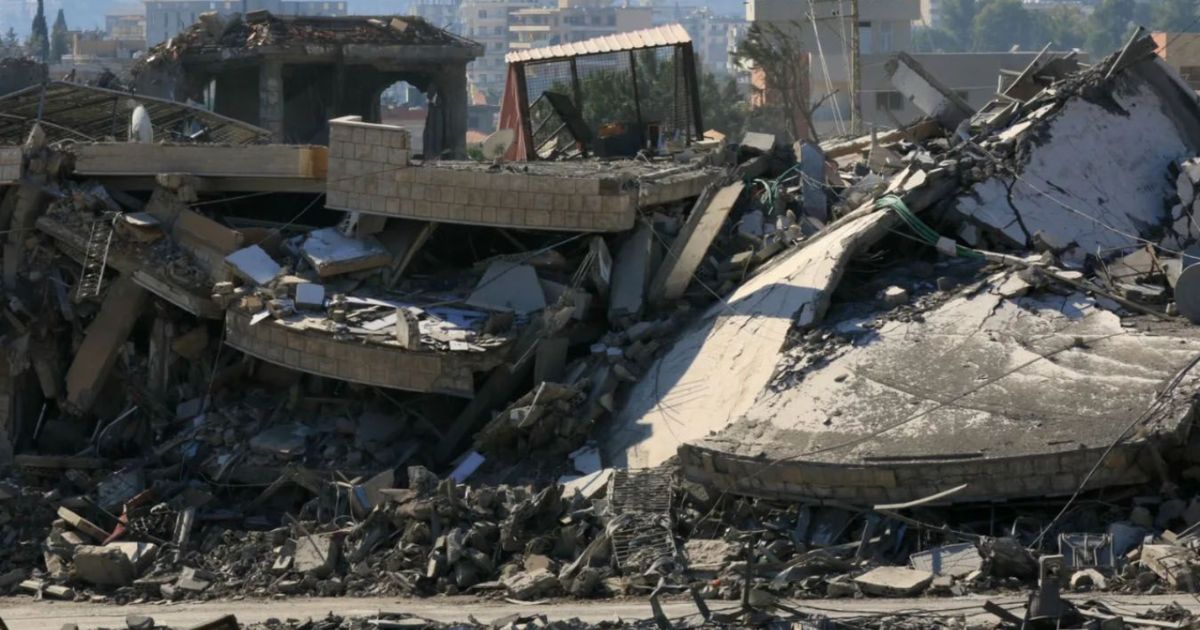
On 6th November, the Israeli military conducted a series of attacks in southern Lebanon claiming that it was acting against Hezbollah as a retaliatory measure against what it termed as the militant group’s efforts to re-establish its activities in the area.
The Israel Defense Forces (IDF) claimed that the attacks were on weapons warehouses of the elite Radwan Force of Hezbollah. It argued that it was seeking to rebuild terrorist bases in southern Lebanon.
The President of Lebanon, Joseph Aoun, however, alleged that the strikes had breached international humanitarian law in that they targeted civilians and displaced them. He condemned the move as a complete crime.
“The less Lebanon declares its willingness to go the way of peaceful negotiation to settle outstanding conditions with Israel, the more Israel increases its aggressiveness toward Lebanese sovereignty,” Aoun wrote on X.
Before the strikes, the Arabic language spokesperson of the IDF, Avichay Adraee, had made numerous warnings to the residents of various villages.
“You are in a building inhabited by Hezbollah. To be on the safe side, you are asked to move out of the building at least 500 meters away. It is dangerous to your lives to stay around these buildings,” issued by Adraee on Thursday afternoon.
Later that day, the United Nations Interim Force in Lebanon (UNIFIL) reported that it witnessed a number of attacks in its environment in southern Lebanon, including in Tayr Dibbah, Taibe, and Ayta al Jabal, and warned that this would endanger the lives of citizens.
UNIFIL requested Israel to cease the attacks, which it alleged were clear violations of Security Council resolution 1701, a resolution that had been passed to put an end to a 34-day war between Israel and Lebanon in 2006, and which provided that the hostilities between Israel and Hezbollah should be fully ceased.
Any military operation, particularly on this level of destruction, jeopardizes the lives of civilians and the already achieved progress towards a political and diplomatic solution, the statement added further.
Violence between Hezbollah and Israel escalated a day following the October 7, 2023, Hamas terror attack on Israel, where the Lebanese militant group attacked Israeli posts under the guise of solidarity. In October 2024, Israel announced a so-called limited ground operation in Lebanon in the southern part against Hezbollah.
In November 2024, a ceasefire agreement between Lebanon and Israel brokered by the US took effect, with Israel to stop offensive operations and begin withdrawing forces from positions in the south of Lebanon, and Hezbollah to withdraw heavy weaponry to the north of the Litani River. Israel has, however, persisted in attacking targets in Lebanon on the basis of Hezbollah’s infringement of the truce, which the group has refuted.
In a brief statement issued on Thursday, the Lebanese Army said that it was in close communication with UNIFIL despite the Israeli attacks and that their cooperation continues operating at a high level of trust and cooperation.
Two Israeli officials said that the Israeli security cabinet was to meet on Thursday evening. CNN was informed by one of the officials that Lebanon will be one of the issues addressed.
According to the authorities, Israel in recent weeks has been threatening that it perceived Hezbollah’s efforts to rearm and reestablish its offensive abilities.
In the past, Israeli Prime Minister Benjamin Netanyahu held security consultations with some of his cabinet ministers last week to discuss how Israel would respond. As an Israeli source with information about the conference stated, the military had proposed a large-scale attack on the supposed rearming of Hezbollah.
It is also reported that Foreign Minister Gideon Sa’ar also remarked last week,” Israel cannot bury its head in the sand because Hezbollah is still increasing its campaigns to restructure and rearm.”
In the news headlines of the past few days, the Lebanese president proposed that his nation had no other option but to talk directly to Israel.
“Negotiating is the only option that Lebanon has, as there are three branches of action in politics, diplomacy, economy, and war. When no outcome is achieved by war, then what is left to do?” This is what he was quoted as saying by local media, which is generally thought to be about Israel.
Thursday saw Hezbollah accuse Israel of constantly breaching the ceasefire agreement that was established in November 2024 and of blackmailing the Lebanese government into accepting Israel.
There is no interest that Lebanon should all fall into aggressive blackmail, or should it be entangled in political negotiations with the Zionist enemy? It expressed a legitimate right to struggle against occupation and aggression and said that such negotiations are not in the national interest of Lebanon and that it is existentially in danger.
The military action of Israel was a few days after the US Special Envoy Tom Barack declared that Lebanon was a failed state that was ruled by dinosaurs. Barrack expressed the uncertainty of whether the forces will ever disarm Hezbollah, which they claimed had far more weapons than the armed forces in Lebanon.
“To us, it does not make sense to say to Lebanon, forcibly disarm one of your political parties. No one wants to die of fright to have a civil war. The thought is: What will you do to make Hezbollah not use those rockets and missiles,” he said.