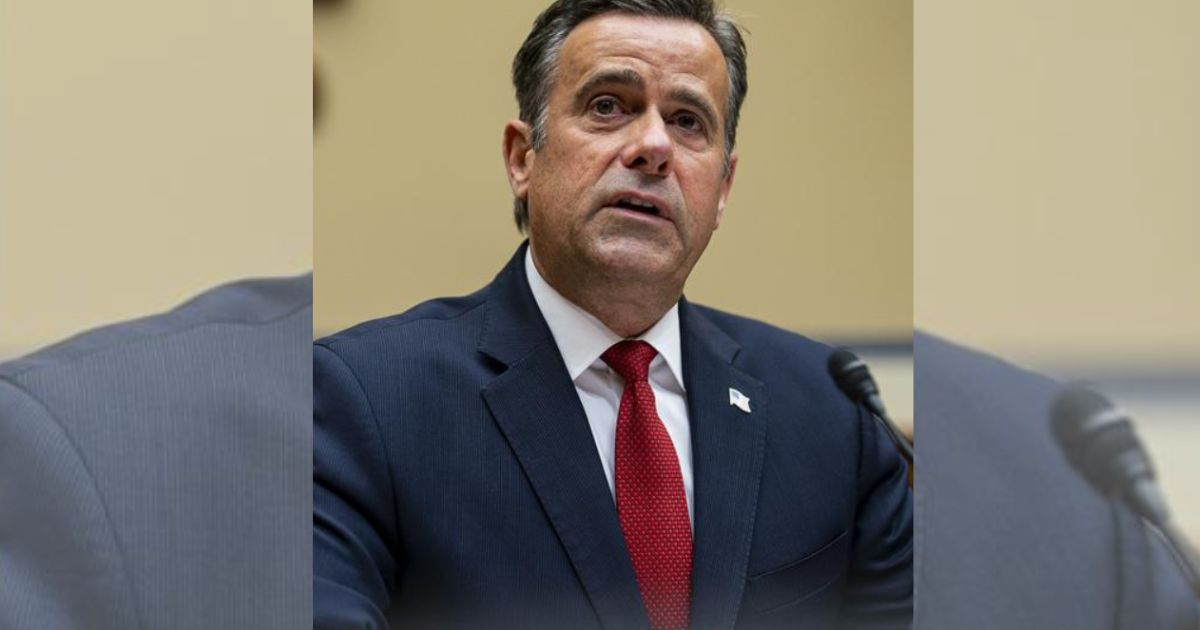
CIA Director John Ratcliffe made a low-key stop in Brussels this week and met top EU foreign and intelligence officials to send a not-so-subtle message: You can still trust us.
Ratcliffe met with the EU’s senior diplomat, Kaja Kallas, as well as senior officials from the EU Intelligence and Situation Center (INTCEN) and the EU Military Staff Intelligence Directorate (EUMS), according to three people who were present for the meeting.
The goal, two officials said, was to steady nerves and reaffirm Washington’s commitment to intelligence-sharing, as some European capitals grow nervous about where the U.S. foreign policy under President Donald Trump is headed.
The Trump administration’s erratic policy changes on Ukraine – including abruptly cutting off the flow of battlefield intelligence to Kyiv last March – and an attempt to politicize intelligence, via the appointment of Trump loyalists, have led to Washington’s lack of reliability being questioned in Europe.
Ratcliffe, a former Republican congressman from Texas, built his reputation as one of Trump’s fiercest defenders on Capitol Hill – even in the first impeachment proceedings, in which he used his perch as chairman of the House Intelligence Committee to attack the inquiry.
Officially, Ratcliffe was in town to brief the North Atlantic Council, the political decision-making body of NATO, one diplomat said. But his side meeting with the EU’s foreign policy arm, the European External Action Service (EEAS), sent out a strong signal: Langley wants to keep lines open.
The expectation is that the meeting won’t be a one-off: “Should be regular from now on,” one official said. Ratcliffe and his EU counterparts also talked of shared challenges, including Russia, China, and the Middle East.
In a comment to POLITICO, CIA spokesperson Liz Lyon stated that Ratcliffe met with European officials to discuss the “evolving threats that Russia and China pose to transatlantic security” in addition to working together to combat these threats. “Any reporting that indicates there were concerns about the U.S. being a reliable partner is untrue and out of step with reality,” she said.
The diplomatic push comes at a sensitive point. European services are scrambling to eliminate decades of distrust to build a common EU intelligence operation to fight Russian aggression as they reconsider their arrangements to share intelligence with the U.S. The Dutch civil and military intelligence service told local paper De Volkskrant earlier this month that they had stopped some exchanges owing to political interference and human rights concerns.